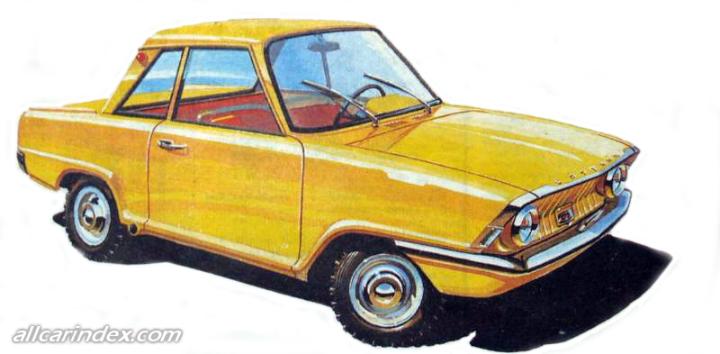


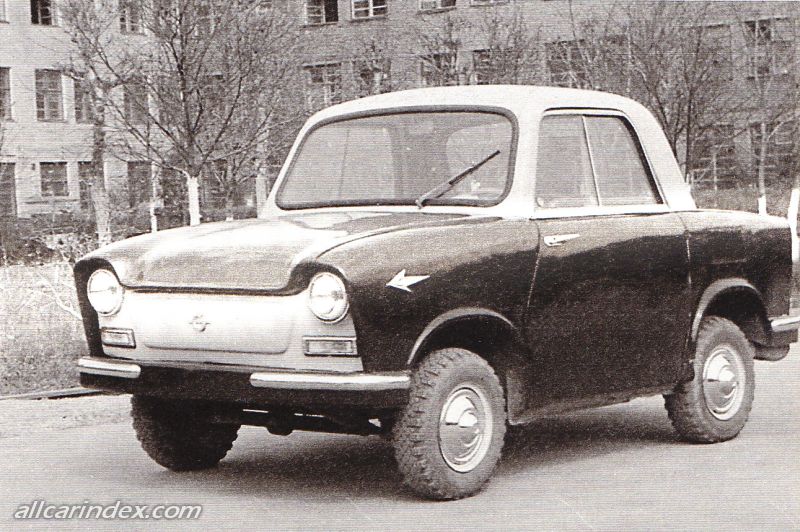
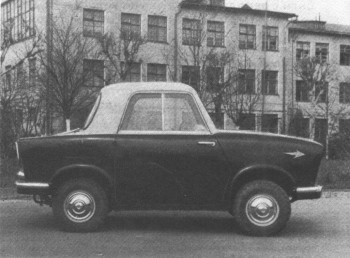
NAMI-031 was a single prototype built in 1957, continuing NAMI's line of microcar development and serving as a prototype for a hand-controlled vehicle intended for disabled drivers. It used a twin-disc clutch, a frame-based chassis, and a fiberglass body produced by NAMI's Experimental Design Plant (ZOK). The rack-and-pinion steering and torsion-bar rear suspension developed on this car were later applied to the S-3A, built by the Serpukhov plant.
The car measured 2,750 mm long, 1,400 mm wide and 1,400 mm tall on a 1,600 mm wheelbase, with a rear-mounted engine driving the rear wheels in a two-seat coupe body, reaching a top speed of 50 km/h. It used a two-cylinder opposed gasoline engine of 498 cc with 4 valves in an overhead arrangement, producing 13.5 hp (9.9 kW) at 3,000 rpm, paired with a four-speed manual gearbox. Suspension was independent and torsion-bar at both ends, with hydraulic drum brakes front and rear, a 6-volt electrical system.