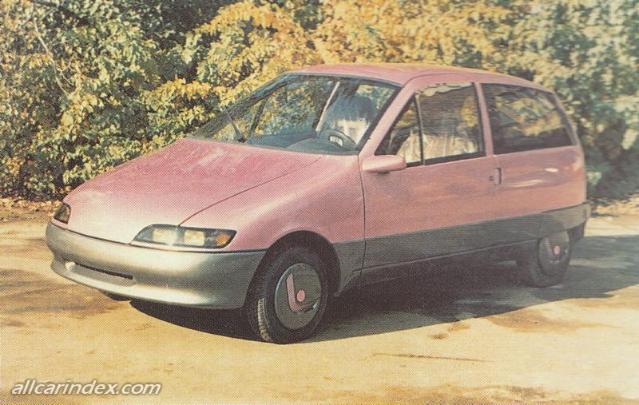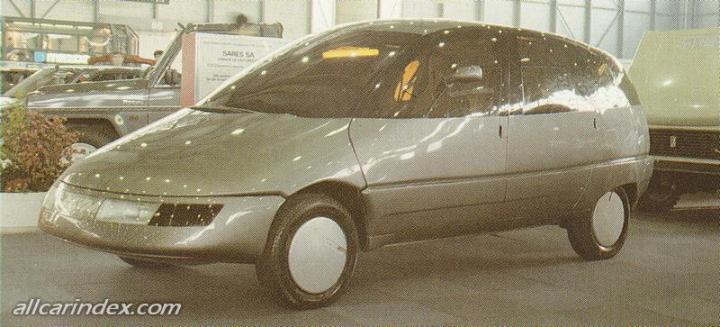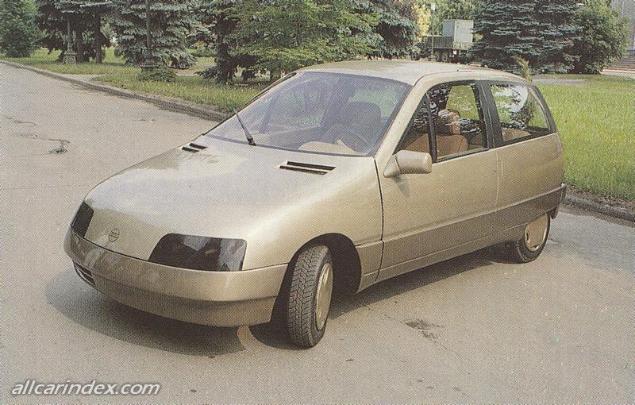


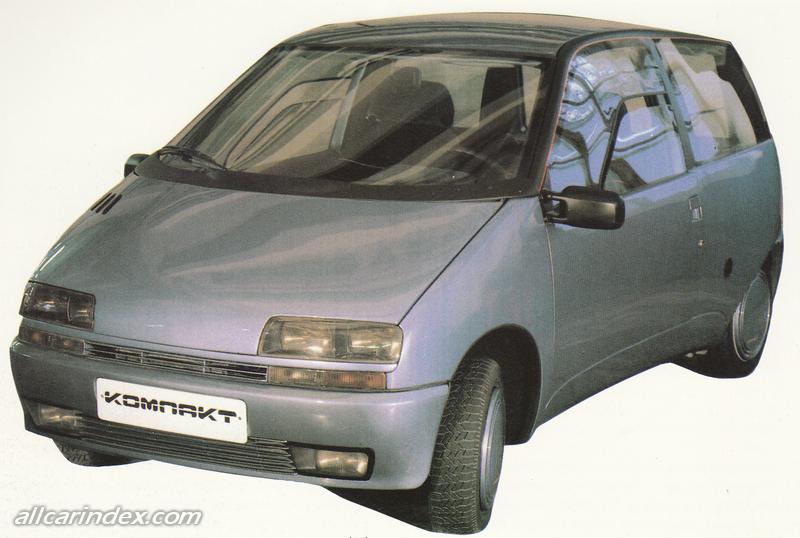
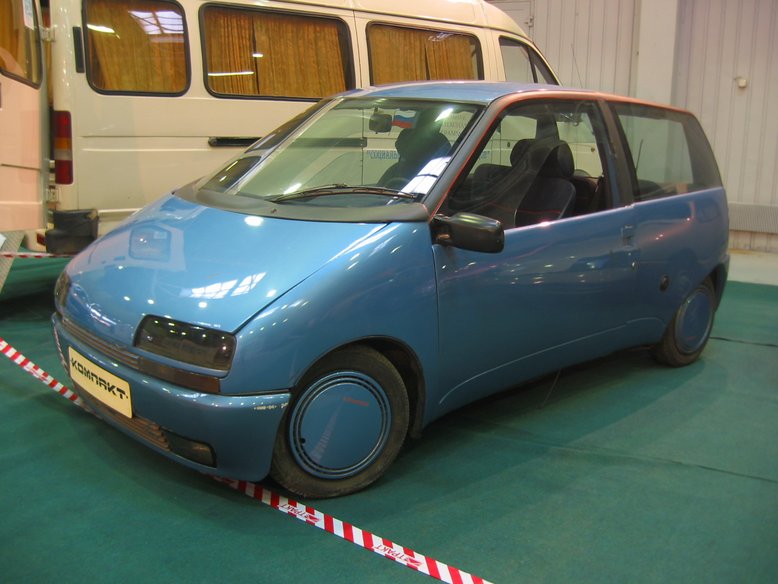
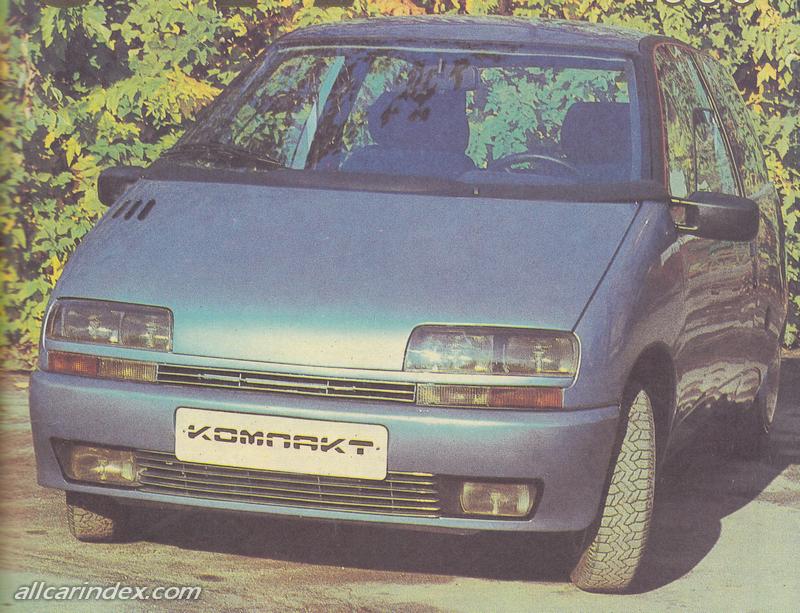
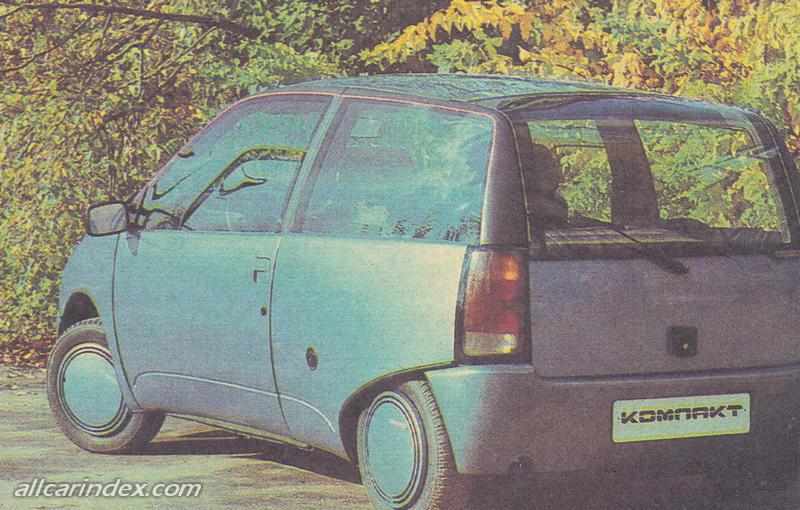
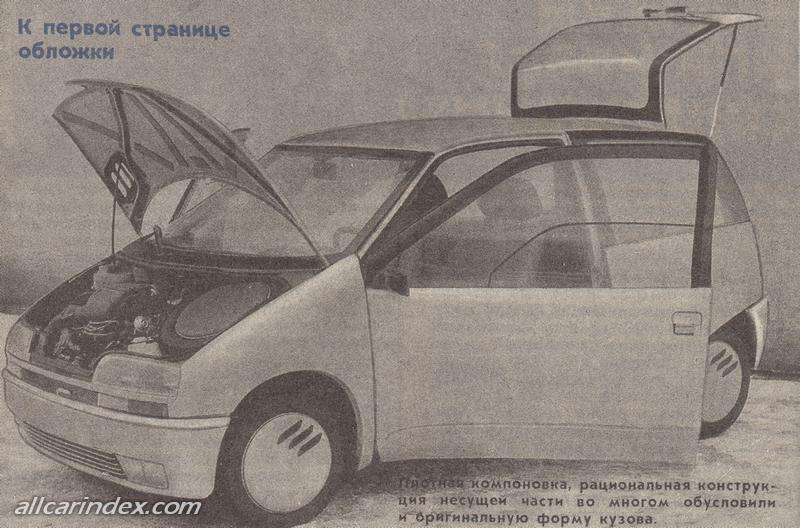
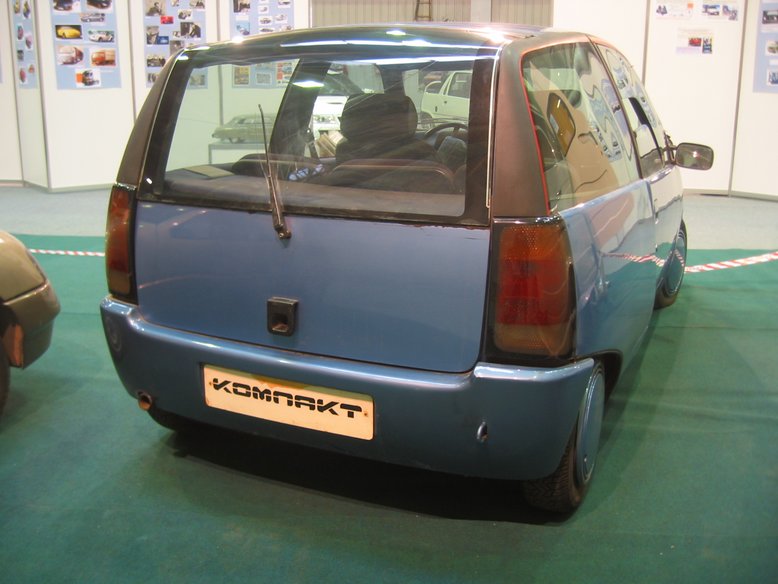
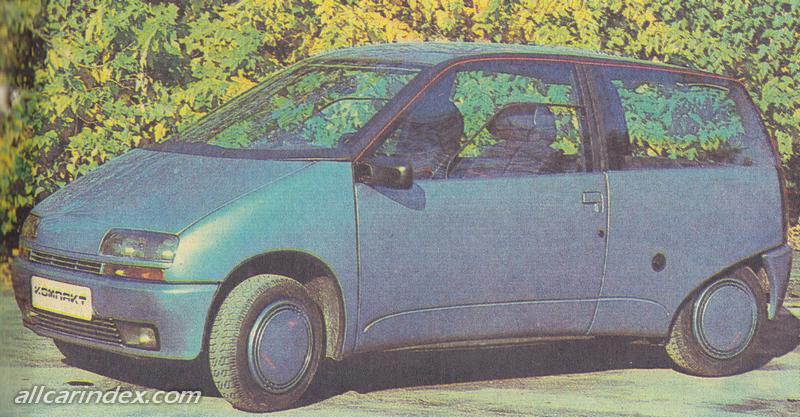
NAMI-0288 Kompakt was a single prototype built in 1990, developed to extend the compact-car ideas first explored in the Debut concept. The project team included A. Antonov, Ye. Vinogradov, S. Lebedevsky, L. Tochilin, I. Lomonosov, A. Moskvinov and I. Nazin, with the design group led by A. Mironov and A. Ponomarev, and the project itself headed by S. Radovsky and A. Namestnikov.
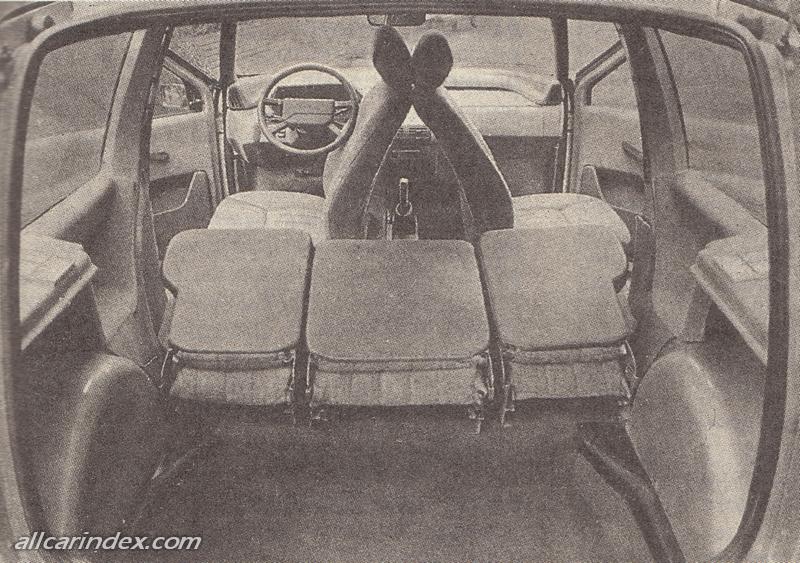
The body was built around a light steel frame with hung-on panels, with the roof, rear section, doors and part of the floor made of plastic. The load-bearing front section of the body, together with the powertrain, was attached to the bulkhead on a hinge. The front seats could be turned 90 degrees to ease entry, and the rear seat was made up of three sections that folded independently.
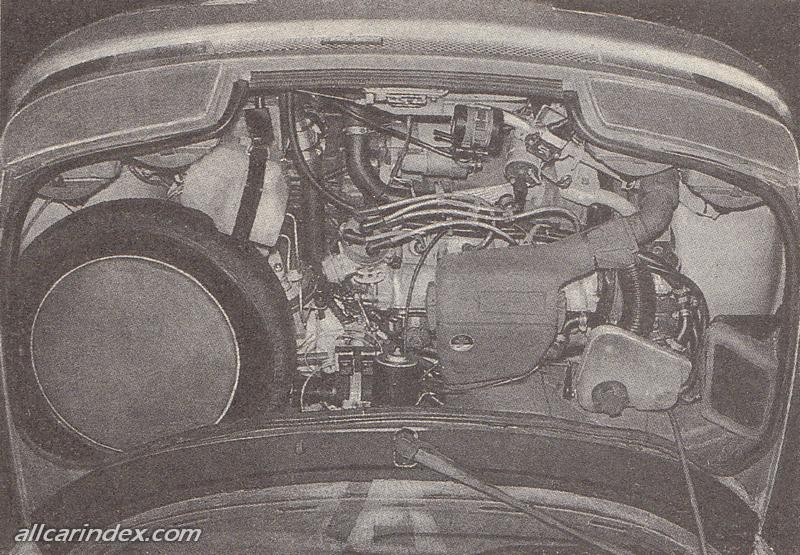
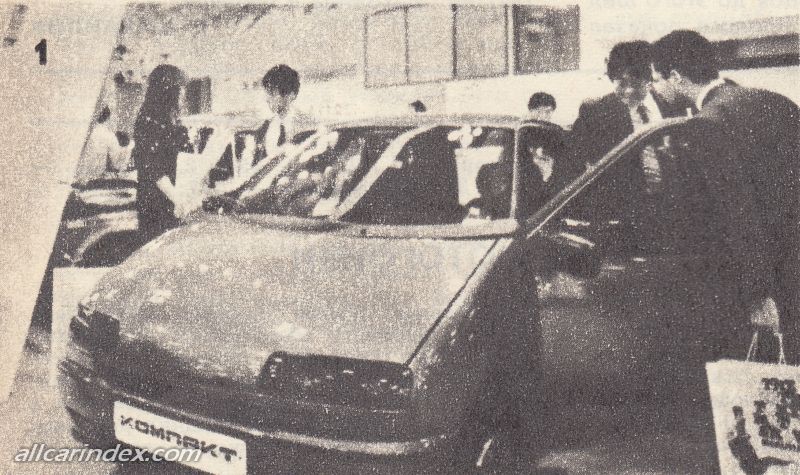
Its engine was a modernized MeMZ-245 running on a mix of gasoline and hydrogen, carrying 35 liters of gasoline and 25 liters of hydrogen stored at 250 kgf/cm². The proportion of hydrogen fed into the fuel system ranged from 100 percent during acceleration down to zero once the car reached 70 km/h. Pneumatic elements in the suspension, paired with a compressor, gave the car a ground clearance adjustable between 140 and 200 mm, against a normal setting of 170 mm. NAMI-0288 was exhibited at the 1990 Tokyo Motor Show.
The car measured 3,330 mm long, 1,550 mm wide and 1,430 mm tall on a 2,280 mm wheelbase, built as a three-door hatchback with a front-mounted engine driving the front wheels, reaching a top speed of 155 km/h. The modernized MeMZ-245 inline four-cylinder engine displaced 1,091 cc with 8 overhead valves, producing 56 hp (41 kW) at 5,600 rpm, paired with a five-speed manual gearbox. Front suspension was independent, spring-based, of MacPherson type and fitted with pneumatic elements; the rear used a dependent spring setup, also with pneumatic elements. Brakes were hydraulic with a vacuum booster, discs at the front and drums at the rear, with a 12-volt electrical system and 145/70SR13 tires.