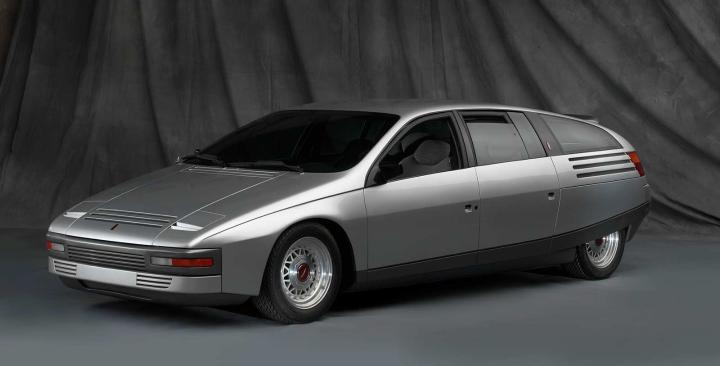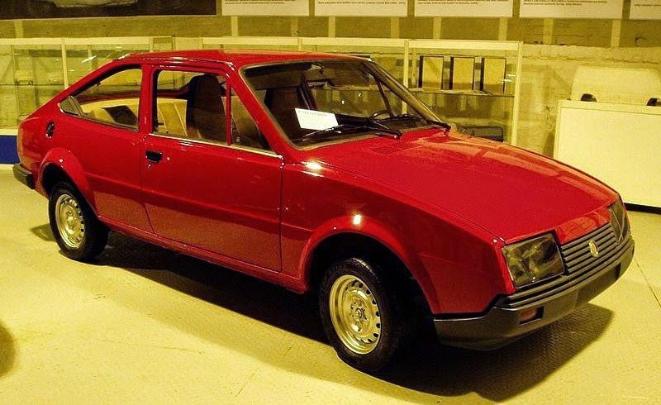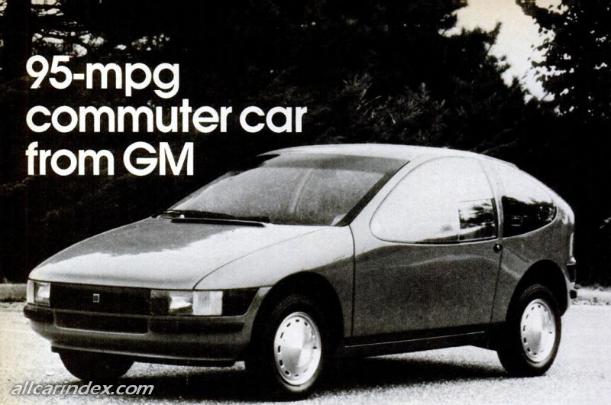
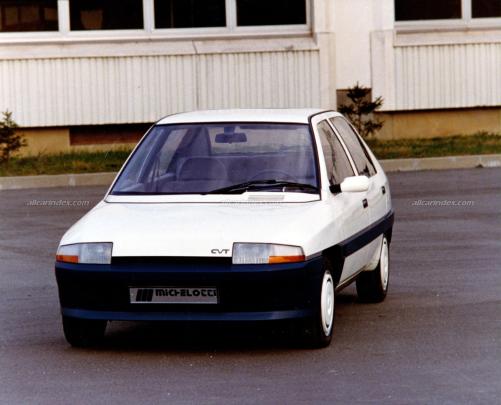

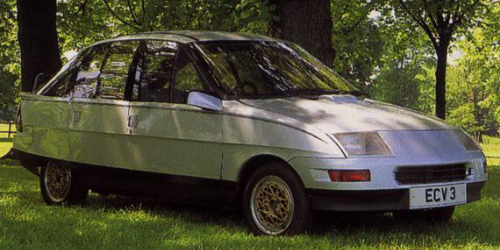
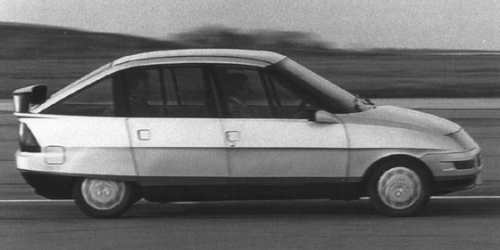
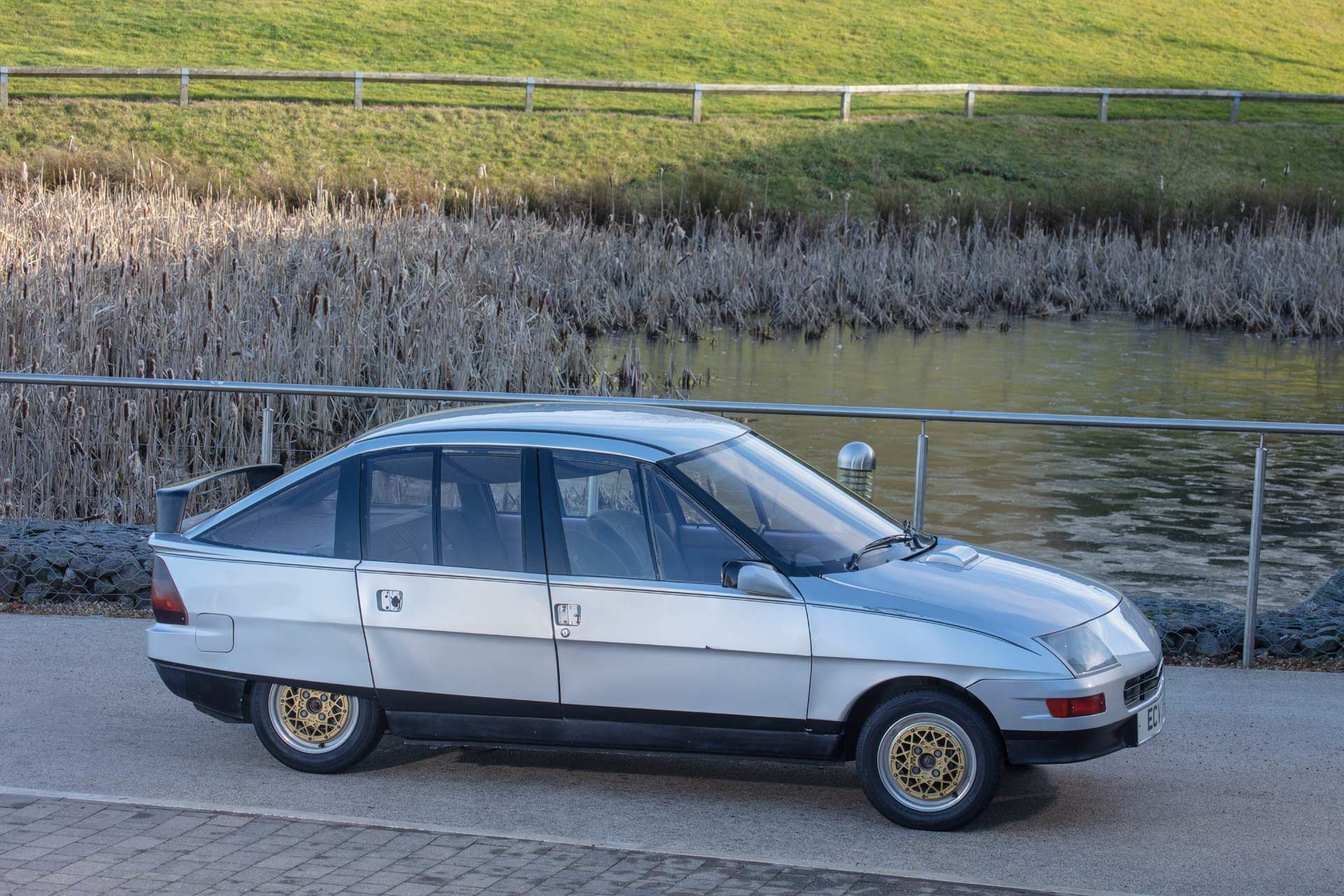
The ECV 3, or Energy Conservation Vehicle 3, was a research prototype developed by British Leyland, at a time when the BL group still comprised Austin, Morris, MG, Triumph, Rover, Jaguar and Daimler. It was unveiled at the end of 1982 as the third stage of an energy-conservation research programme that had begun in the late 1970s and had earlier produced the ECV 1 and ECV 2 prototypes, both roughly the size of the Austin/Morris 1100/1300 and the latter fitted with a one-litre three-cylinder engine developed by Sir Alec Issigonis.
The ECV 3 was a five-door fastback saloon with seating for four or five occupants. Its three-cylinder 1113cc engine was derived from a four-cylinder Austin Maxi unit with one cylinder removed, but was extensively reworked with a single overhead camshaft and four valves per cylinder, a layout comparable in principle to the Triumph Dolomite Sprint engine. The aluminium block was cast without water gaps between the cylinders and used shrunk-in dry liners, with an aluminium cylinder head whose combustion chamber shape, a pent-roof design, was developed with the Ricardo engine research institute. A fuel-economy version used an SU constant-vacuum carburettor, while an alternative version used Lucas manifold injection. Output was 72 hp at 5800 rpm and 97 Nm of torque at 3750 rpm, giving 0-60 mph in 11 seconds, 0-160 km/h in 35 seconds and a top speed of 184 km/h (175-plus km/h), while achieving fuel consumption figures of 3.48/4.63/5.76 litres per 100 km, meeting a target of at least 60 percent lower consumption than average cars in its class.
Drive went to the front wheels through a Volkswagen five-speed gearbox, also used in BL's production Austin Maestro. Front suspension used struts and the rear a compound-crank axle, as on the Maestro. The body combined a bonded and partly welded load-bearing aluminium structure with plastic panelling, using glass-fibre-reinforced injection-moulded polyurethane (RRIM PU) for side panels and impact areas and glass-fibre-reinforced polyester resin (SMC) for the bonnet and tailgate frame, resulting in a bare body weighing just under 140 kg. The exterior, styled by BL designer Harris Mann (also responsible for the Triumph TR7), used thin flush-fitted glass, plastic aerodynamic shielding around the rear suspension and exhaust in place of a sealed underbody, a thermostatically controlled engine air intake, and a rear spoiler to counter lift, achieving a drag coefficient of 0.25. Alloy wheels used Dunlop low-rolling-resistance 140/70x315 tyres with plastic covers, claimed to save 33 kg over conventional wheels. Overall dimensions included a 236 cm wheelbase, track of 138/133 cm, length/width/height of 386/162/137.5 cm, and a weight of 665 kg. Austin/Morris chief Harold Musgrove stated in late 1982 that manufacturing techniques developed for the ECV 3 would influence car production by the late 1980s. Motoring journalists test drove the ECV 3 in 1983 and were impressed by its level of development.