
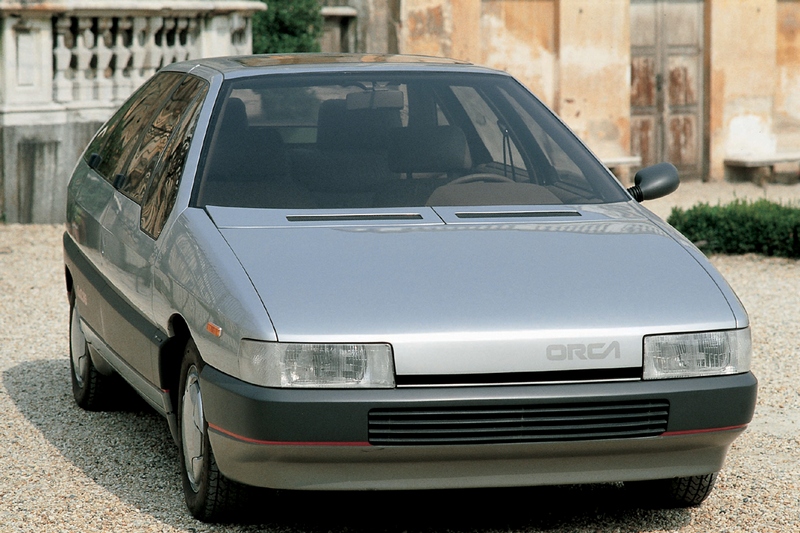
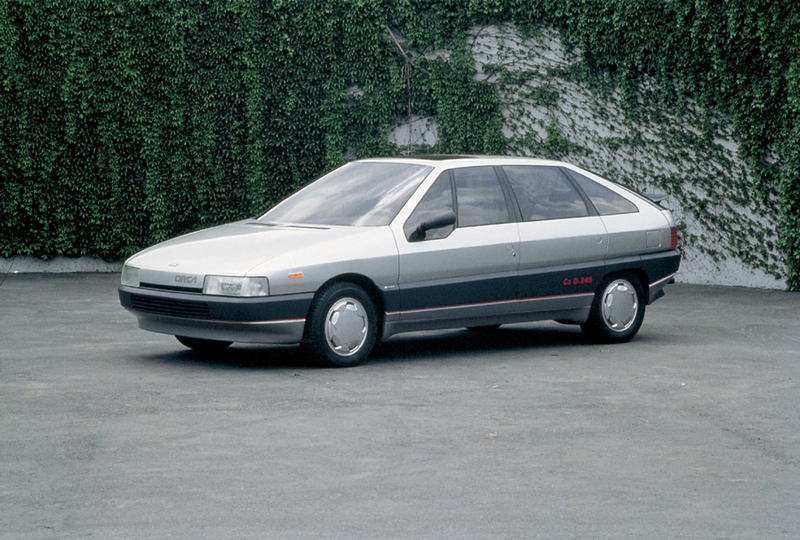
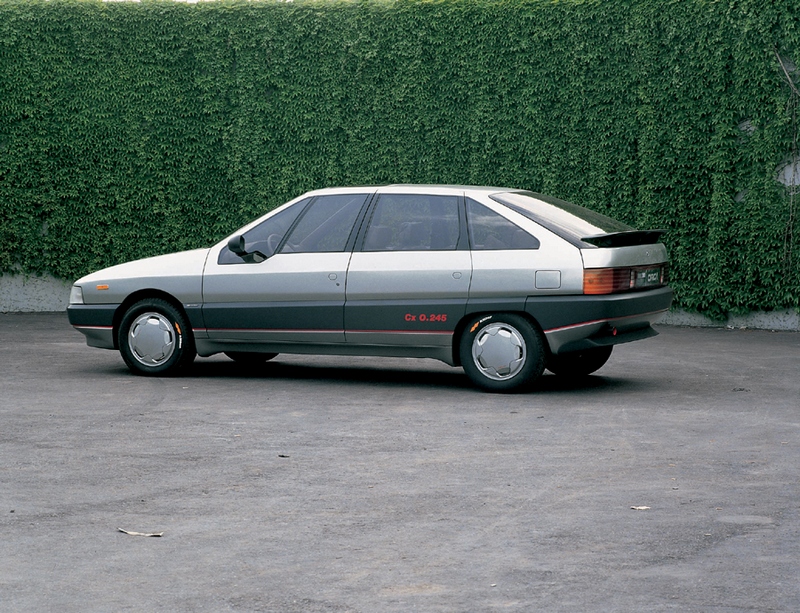
The Lancia Orca was a concept car designed by Giorgetto Giugiaro's Ital Design studio, based on the mechanicals of the Lancia Delta 4x4 Turbo. It was built as a five-door, five-seat fastback saloon with six side windows, and its design was described by Ital Design, based in Moncalieri near Turin, as a continuation of a styling direction begun with the Isuzu Piazza and the Medusa prototype.
The Orca achieved a drag coefficient of 0.245, a figure displayed on its flanks. Its overall length of 439 cm matched that of the Audi 80, a car Giugiaro had also worked on, yet interior legroom between pedals and rear seatback was 17.5 cm greater than the Audi 80's and 16 cm greater than the Mercedes-Benz S-Class. This was achieved by lengthening the Delta Turbo platform by 20 cm, placing the Orca in a larger vehicle class than the Delta itself. The car retained selectable rear-wheel drive following Ital Design's own concept. Its underbody, front and rear spoilers, side skirts and a rear-edge spoiler on the tailgate were all shaped to optimize airflow and cooling without increasing drag.
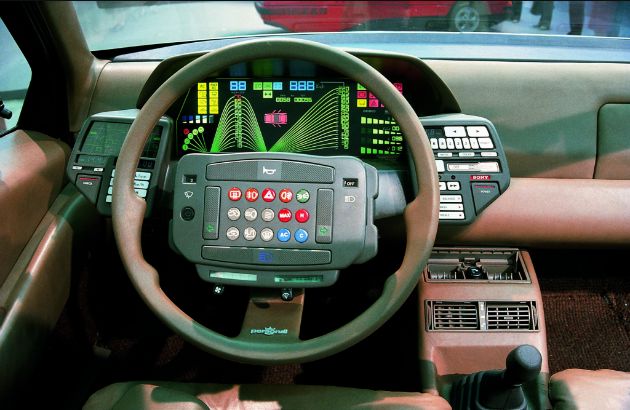
Inside, key controls were built into a steering wheel that stayed fixed during cornering, using an Ital Design patent, while a Seiko-developed instrument displayed speed, engine speed and selected gear via curved lines. Rear seats reclined into a bed-like position or folded forward to extend cargo space. The Delta Turbo 4x4 engine was a 1585 cc turbocharged four-cylinder DOHC unit producing 140 hp at 5600 rpm. Wheelbase measured 267.5 cm, with front/rear tracks of 146/143 cm and height of 137.5 cm.