

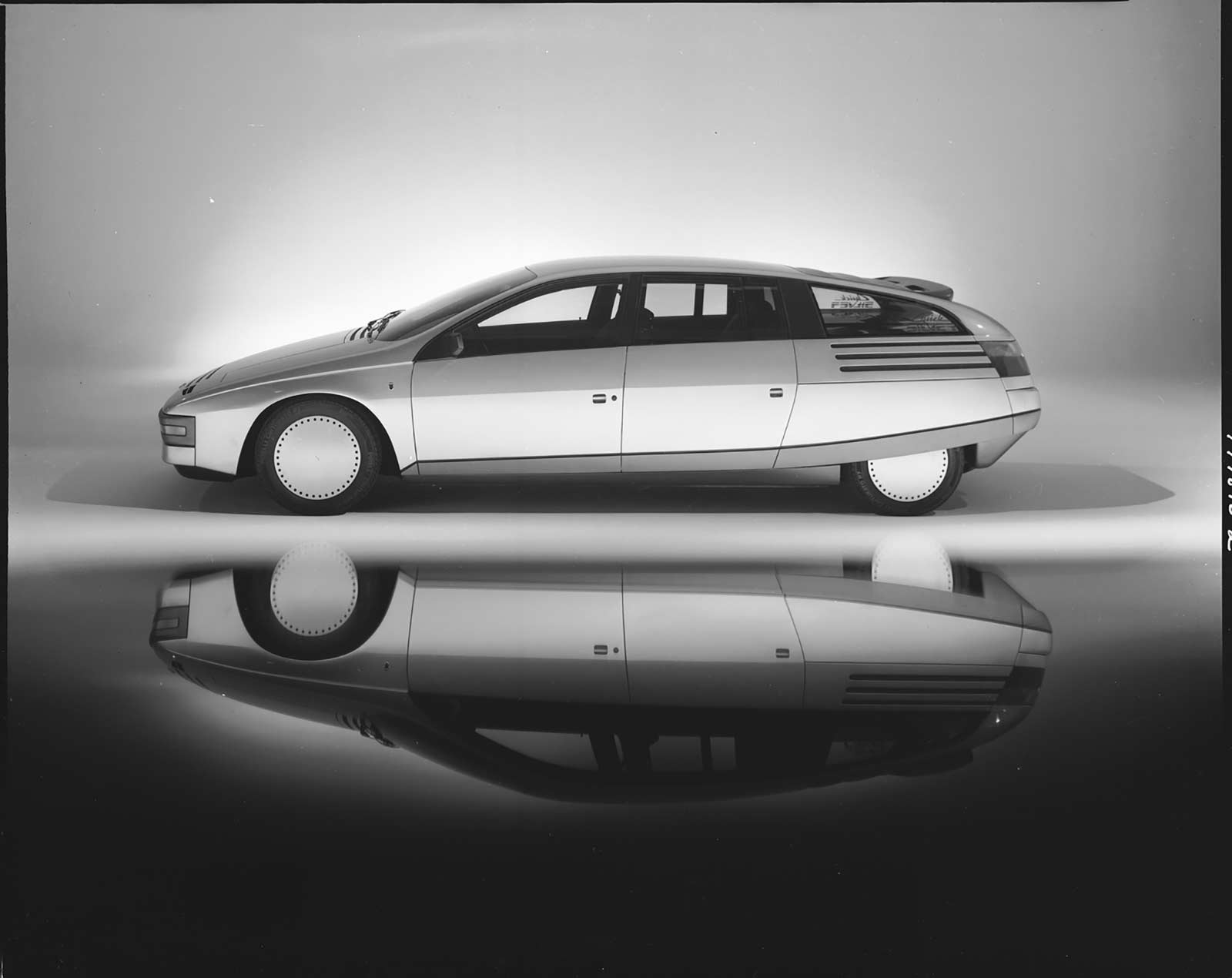
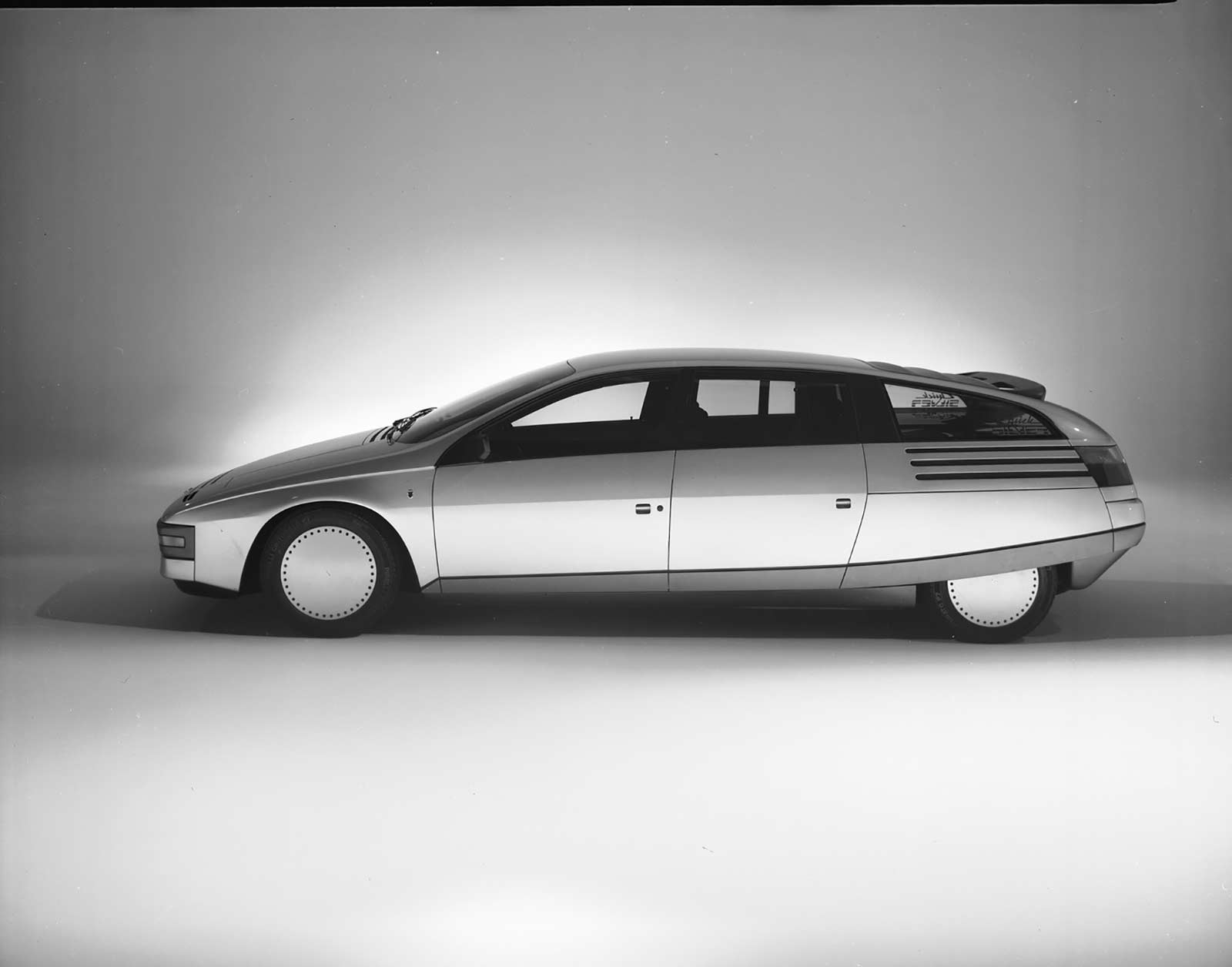
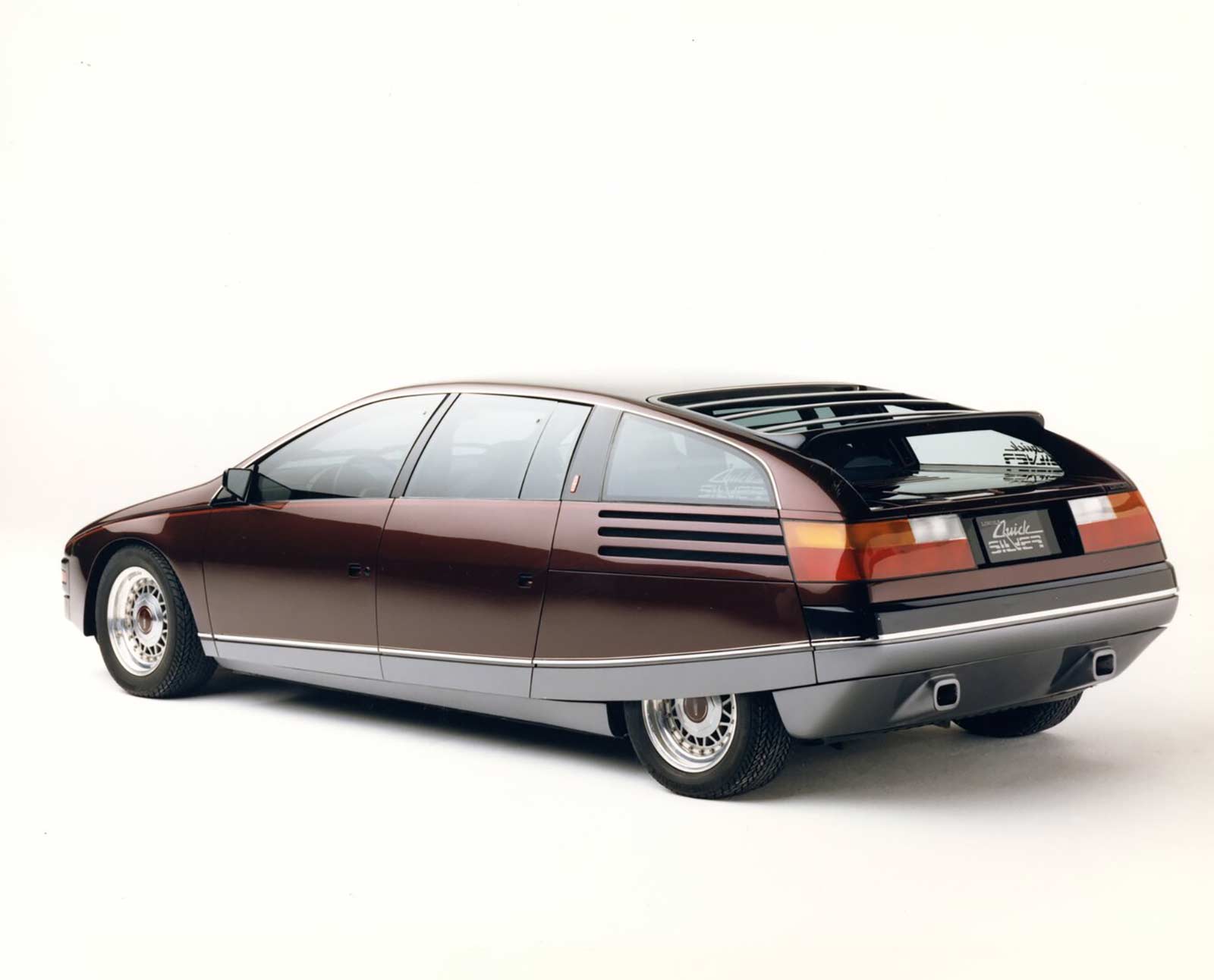
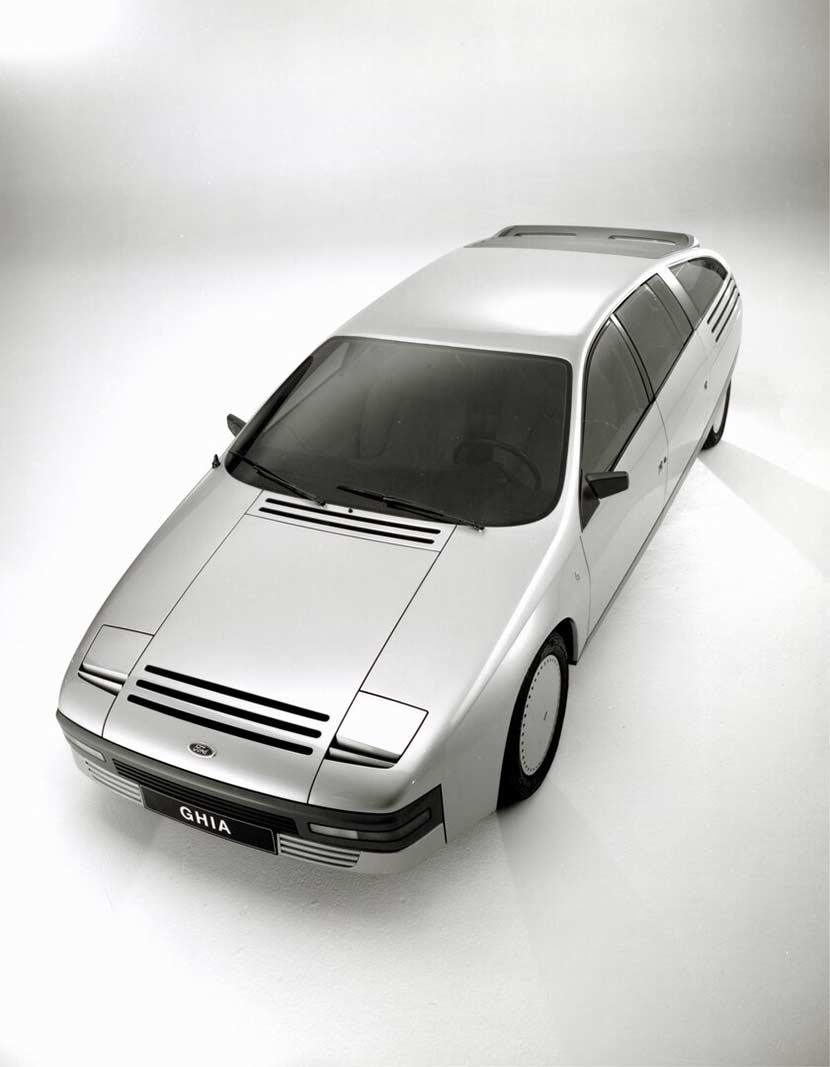
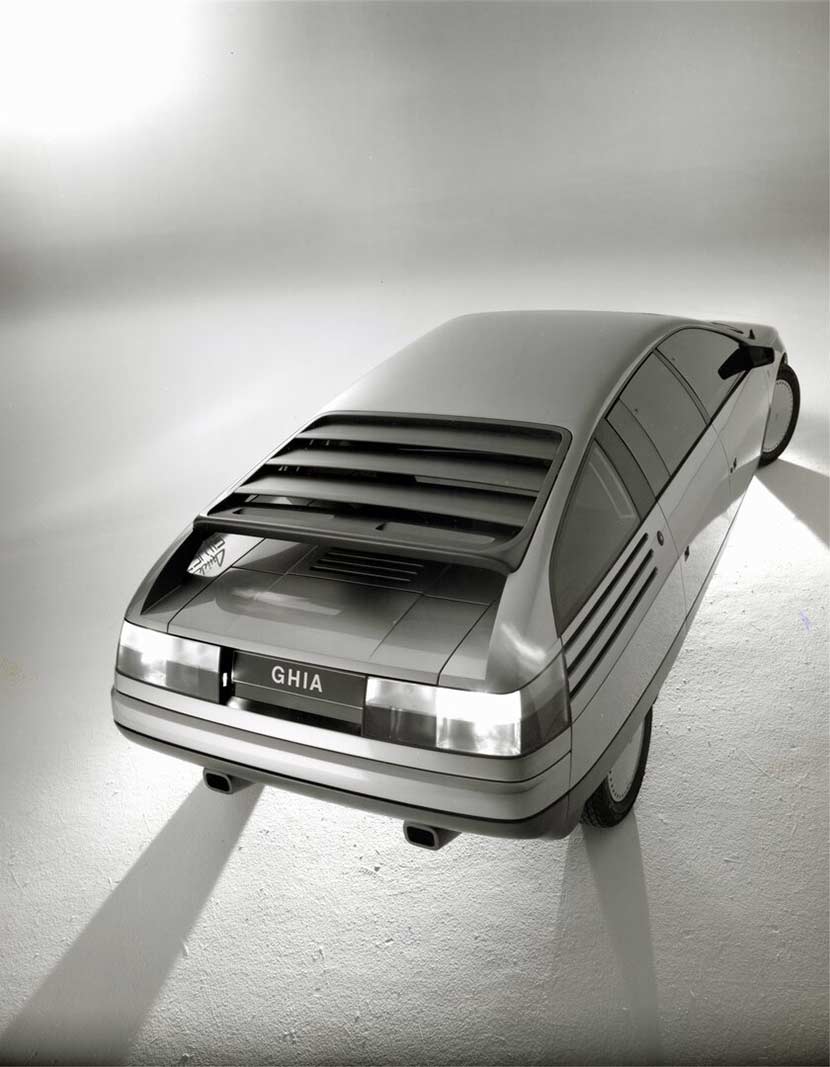
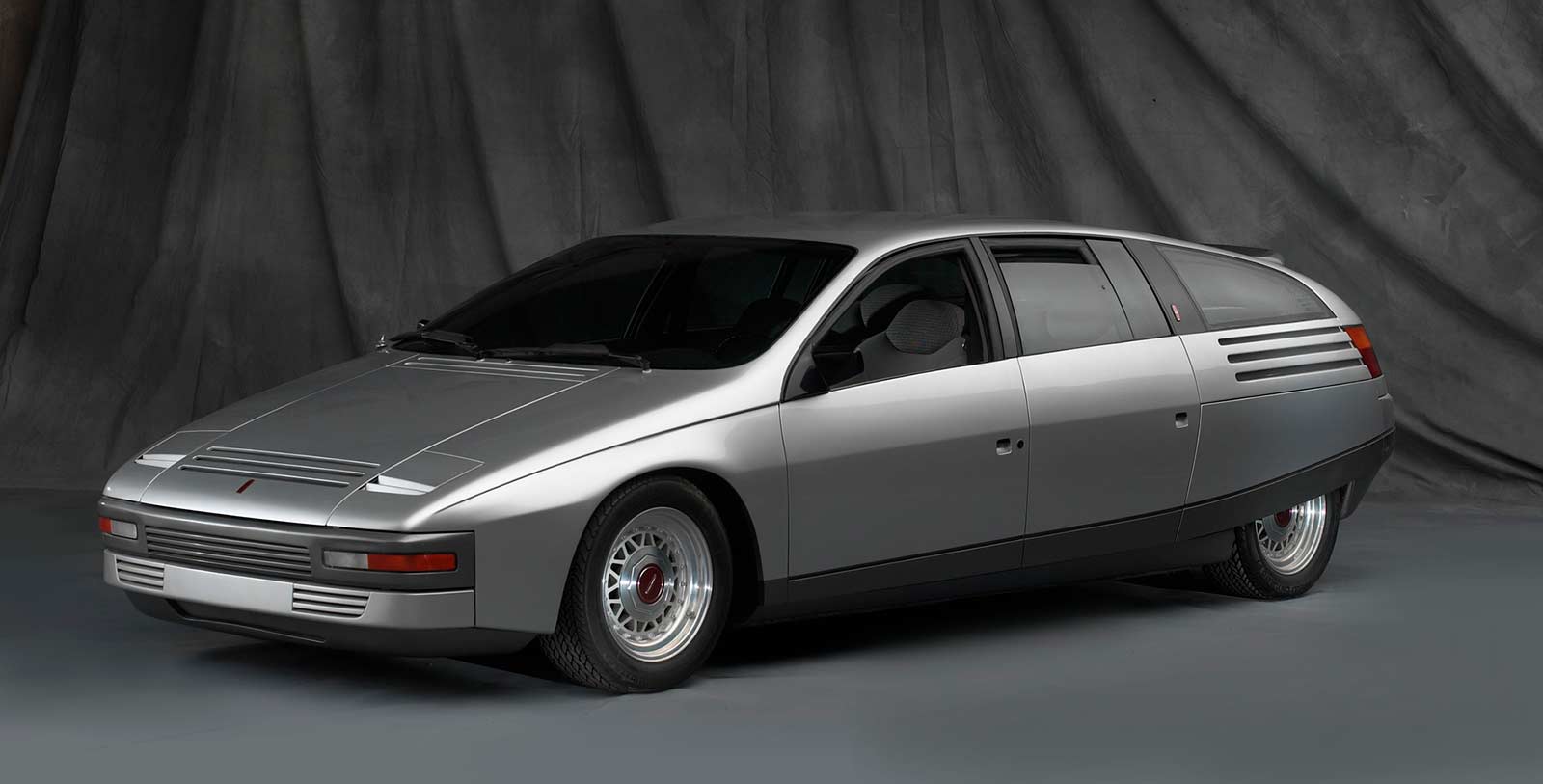
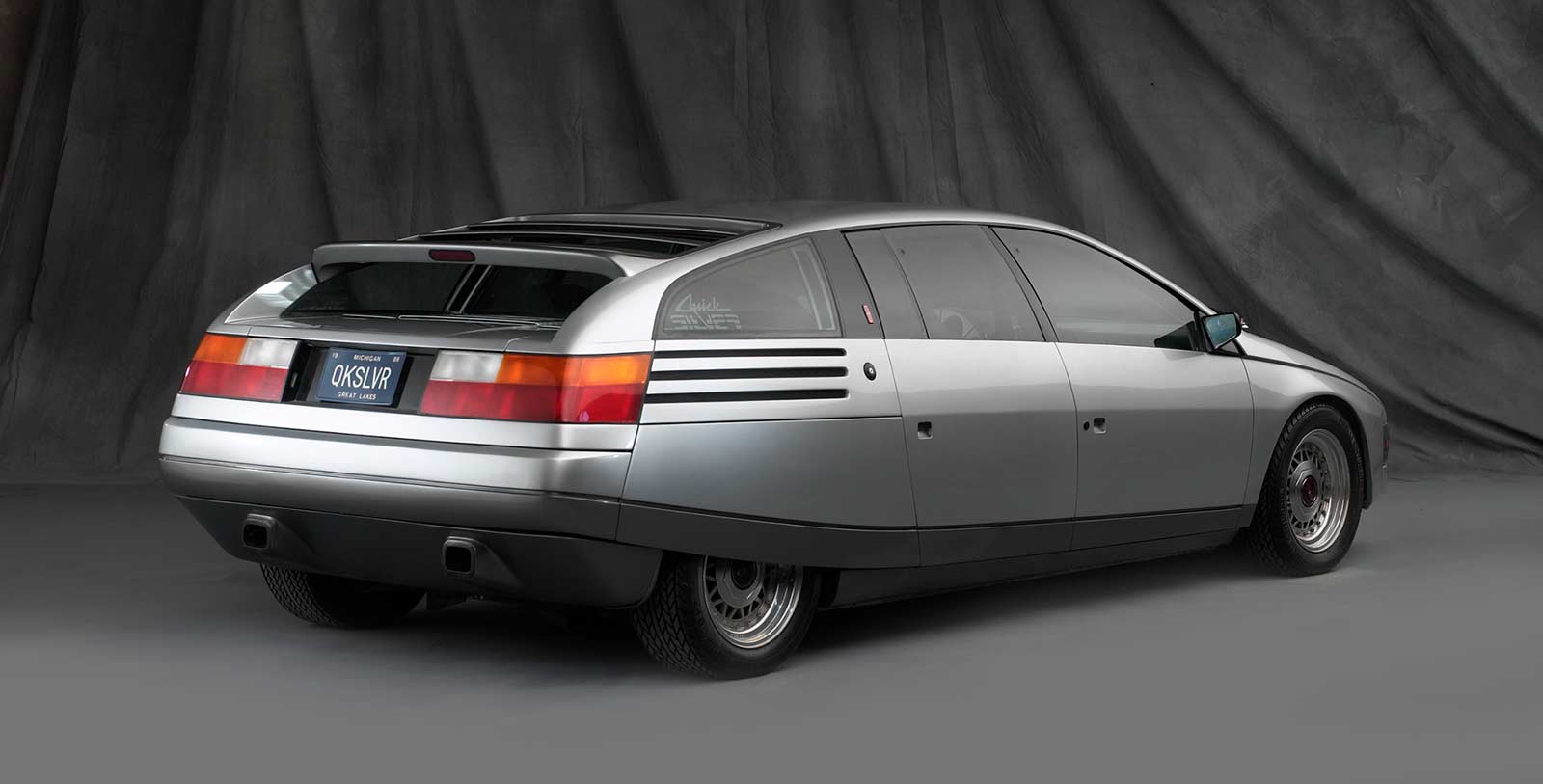
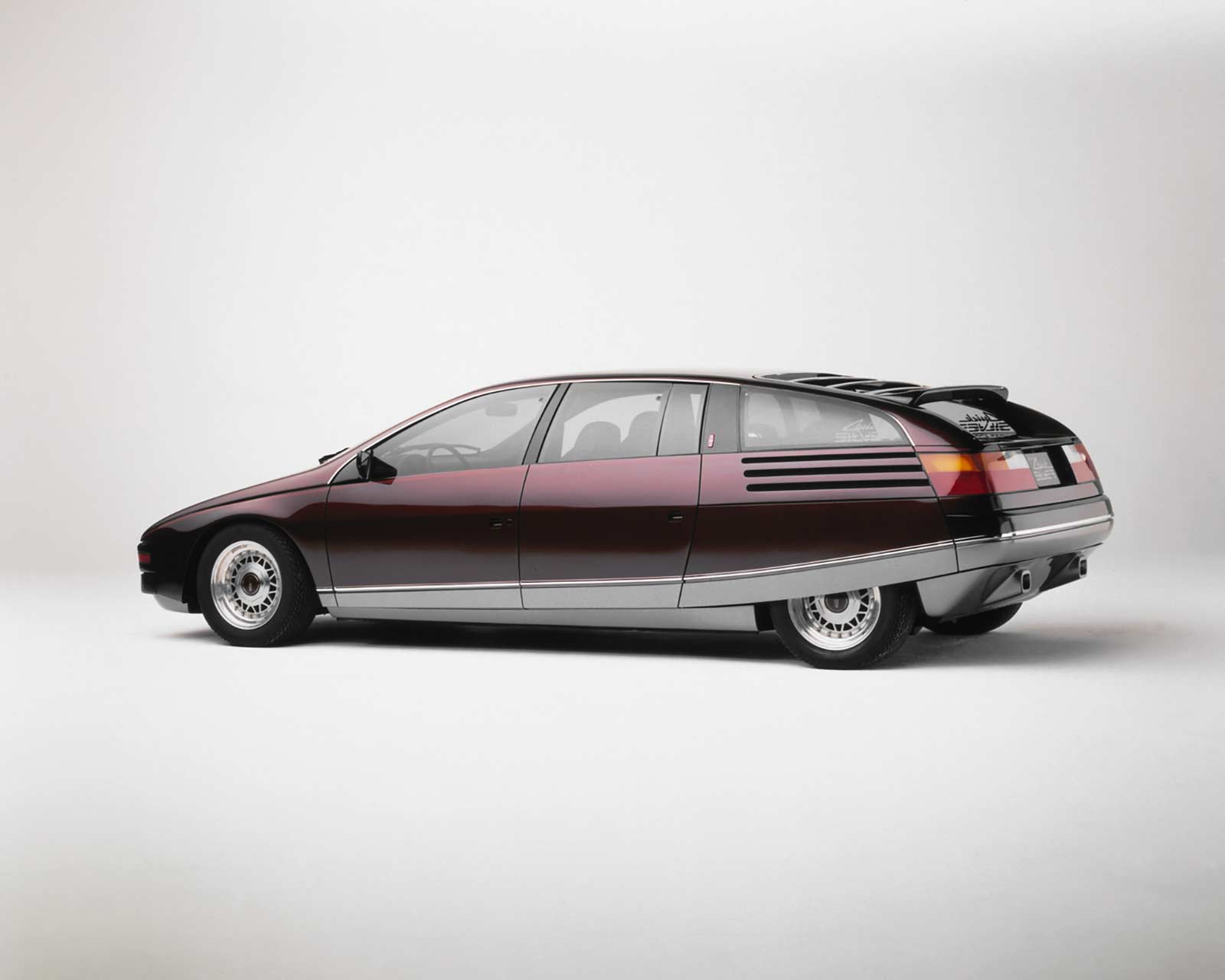
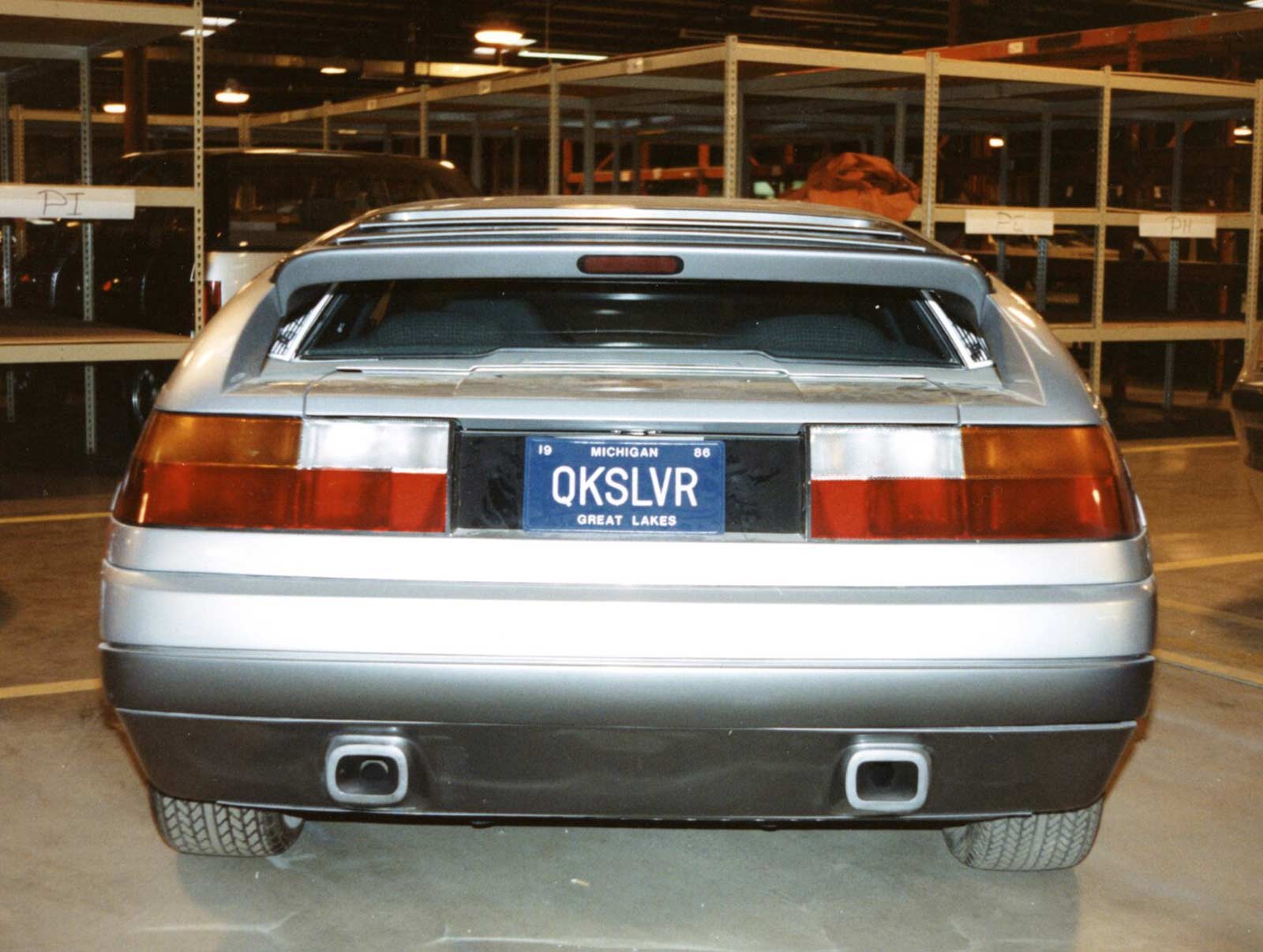
The Ford Ghia Quicksilver was a concept car developed by Ford's Ghia studio in Turin, first announced under the codename Vessel. It represented the third stage of a mid-engine design study that Ghia had pursued since the late 1970s. Rather than a sports model, the Quicksilver was conceived as an aerodynamic, elongated four-door, five-seat luxury sedan, combining mid-engine performance with practical family-car accommodation.
Ford design vice president Donald F. Kopka noted that the project moved into largely uncharted territory, since previous mid-engine cars had rarely offered more than 2-plus-2 seating with small rear benches. The Quicksilver was intended to show that a genuinely practical five-seat, four-door sports sedan could be built on a mid-engine layout. Its interior packaging shaped much of the exterior profile, resulting in a low, rounded nose, a tapered beltline, a slanted windshield and smoothly contoured glass. Although the layout would have allowed an especially short and steep front end, this was only partly exploited, apparently to preserve visual balance, giving the car a distinctive smooth-surfaced form. Ghia chief Filippo Sapino stated that the initially measured drag coefficient of 0.30 was subsequently improved further through additional aerodynamic refinement.
Aerodynamic details included a partially covered underbody, retractable headlamps and fully skirted rear wheels. Ghia also developed a new flush-mounted window system for the car, in which the curved side glass shifted outward as it reached the top of its travel, allowing it to sit flush with the bodywork. The overall silhouette recalled the Citroën CX, though three horizontal air-intake slits above the rear wheels gave the car its own visual identity.
Mechanically, the Quicksilver used the running gear of the two-seat mid-engine AC 3000 ME sports coupé, including its box-frame chassis and Ford V6 engine, mated to a five-speed transmission. For the Quicksilver, the wheelbase was stretched from 230 cm to 295 cm to accommodate the four-door, five-seat body. The transversely mounted 2994 cc Ford V6 produced 138 hp at 5000 rpm and 235 Nm of torque at 3000 rpm, giving a top speed of around 200 km/h.
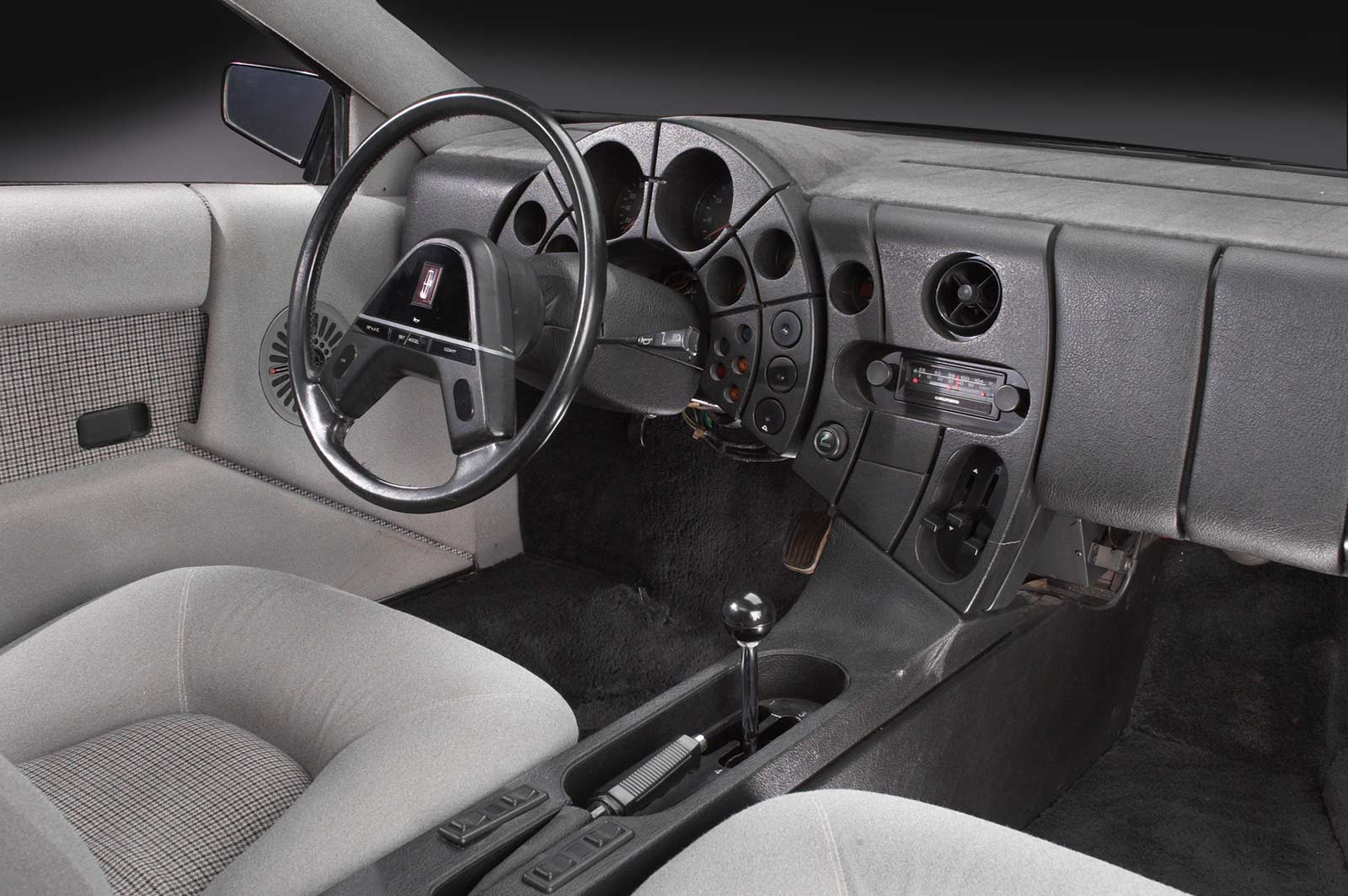
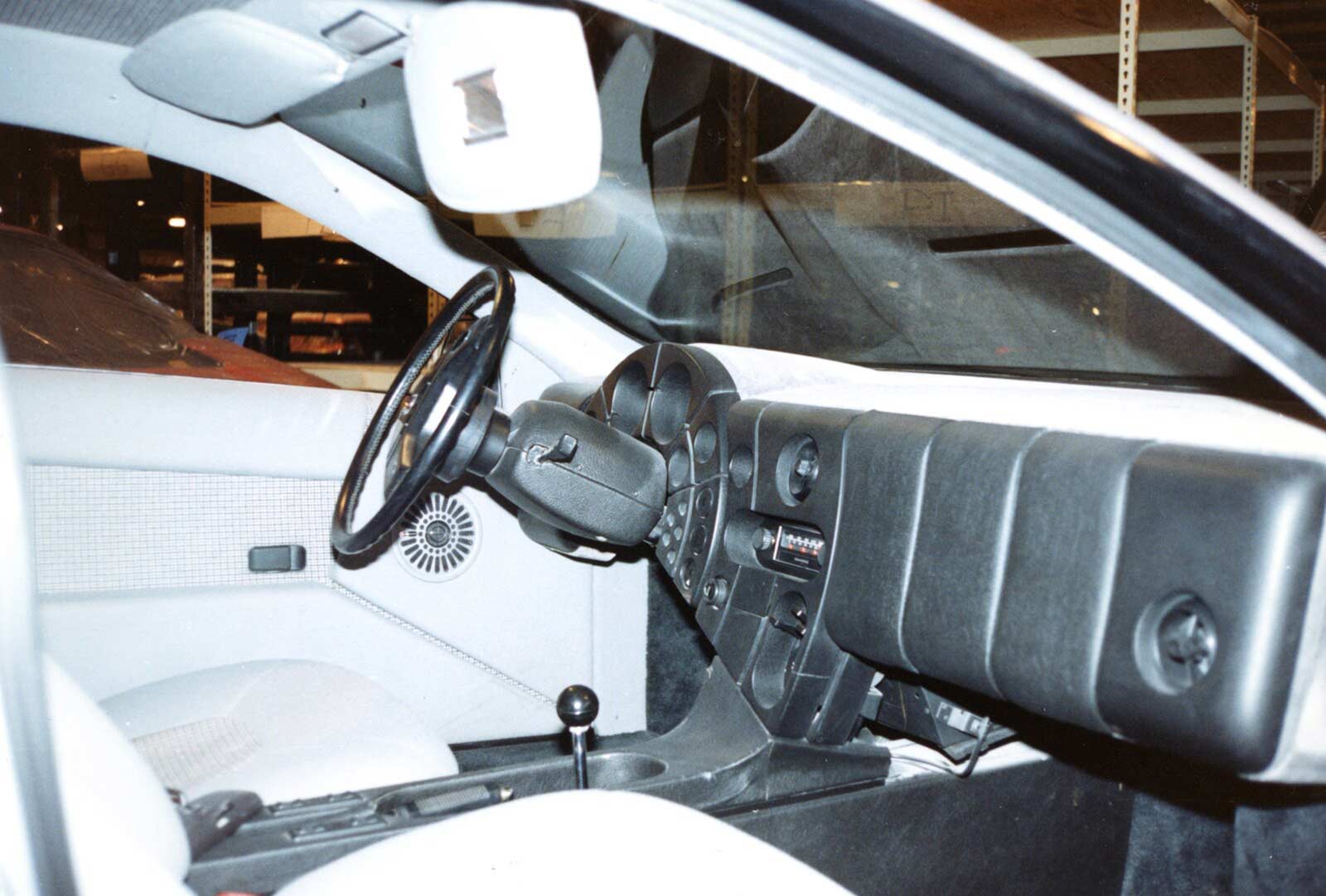
The cabin was trimmed in cloth with contrasting tweed panels in warm grey tones, with a rear bench wide enough for three occupants and specially designed front sports seats built in the Ghia studio. The dashboard featured an asymmetric, segmented layout based on sectors of a circle radiating from the steering column, fitted with circular dials and an adjustable steering wheel. Luggage space was provided both at the front, alongside the spare wheel, and at the rear, together totalling 3.5 cubic metres of storage. The car measured 456 cm in length, 175 cm in width and 126.5 cm in height. Among concept cars of its era, the Quicksilver stood out for its emphasis on practicality alongside its aerodynamic design.