
Xiaomi Vision Gran Turismo Makes Global Debut at MWC Barcelona 2026
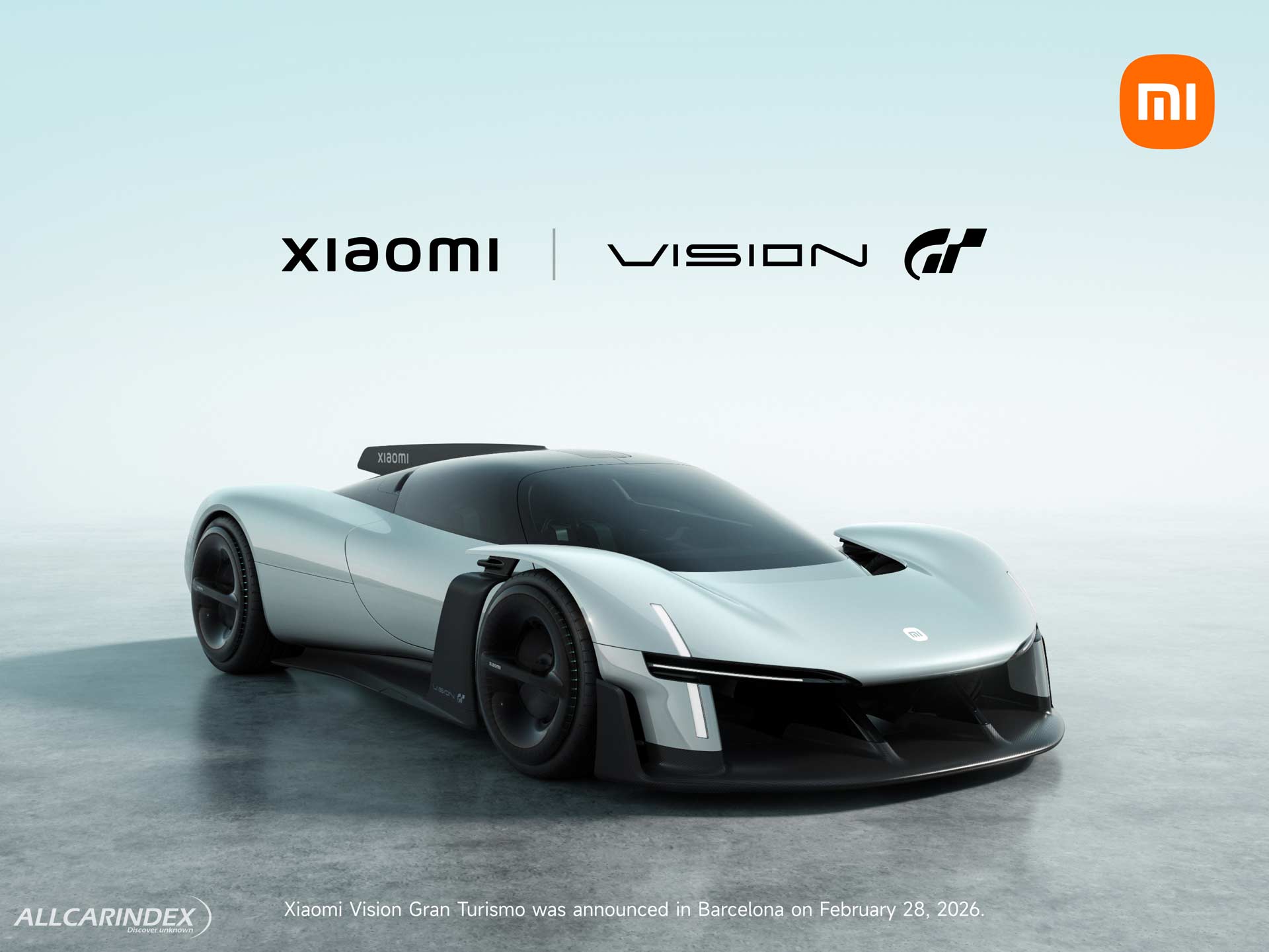
Barcelona, SPAIN, March 2, 2026 — Following its unveiling at Xiaomi's global launch event, Xiaomi today revealed the full-scale concept model of Xiaomi Vision Gran Turismo at MWC 2026, a visionary electric hypercar concept created for the legendary Gran Turismo franchise. More than just a concept vehicle, it represents the first time a technology company has been invited to join the elite Vision Gran Turismo project, marking a historic milestone in both automotive design and virtual mobility.
The journey began last year at the GT World Series in London, where Kazunori Yamauchi, Producer of the Gran Turismoseries, extended a personal invitation to Xiaomi. For any automotive designer, the opportunity to create a Vision Gran Turismo is a chance to set aside real-world constraints and imagine the ultimate driving experience from a clean sheet. For Xiaomi's global EV design team, it was an opportunity to approach hypercar design from a technology company's perspective, merging cutting-edge aerodynamics with AI-driven intelligence.
"The invitation itself was a recognition of what Xiaomi has achieved," said Tianyuan Li, Design Head of Xiaomi EV. "It allowed our teams in Munich, Beijing, and Shanghai to collaborate, to push boundaries, and to envision what a future hypercar could look like when designed without limits."
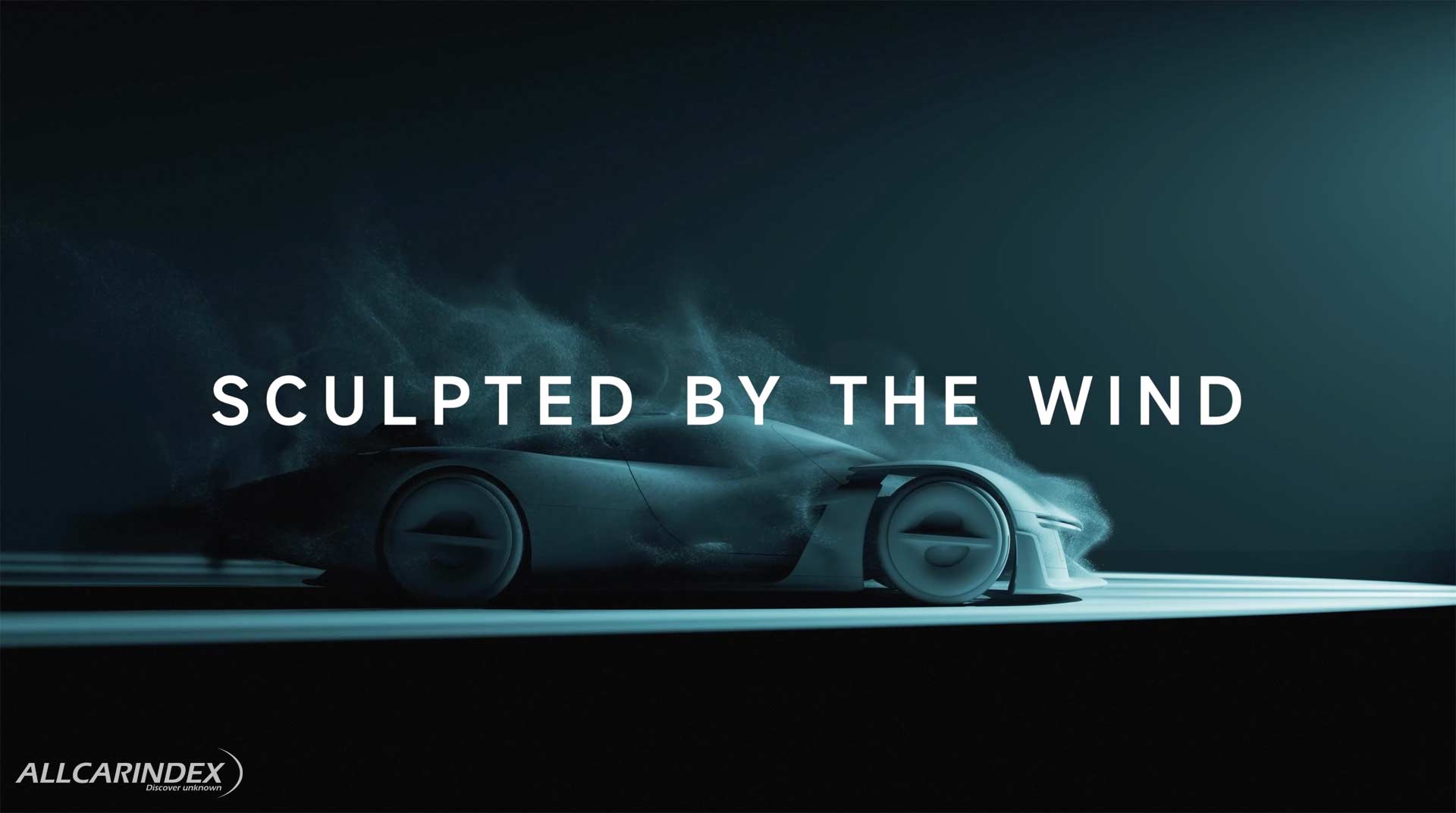
Sculpted by the Wind: The Pursuit of Aerodynamic Balance
At the heart of Xiaomi Vision Gran Turismo lies a fundamental question that every hypercar must answer: whether to prioritize extreme low drag for straight-line speed or maximum downforce to conquer corners. For an electric hypercar, Xiaomi believes neither extreme is the optimal solution. The true breakthrough lies in finding the perfect balance between the two, a pursuit of aerodynamic efficiency rather than singular metrics.
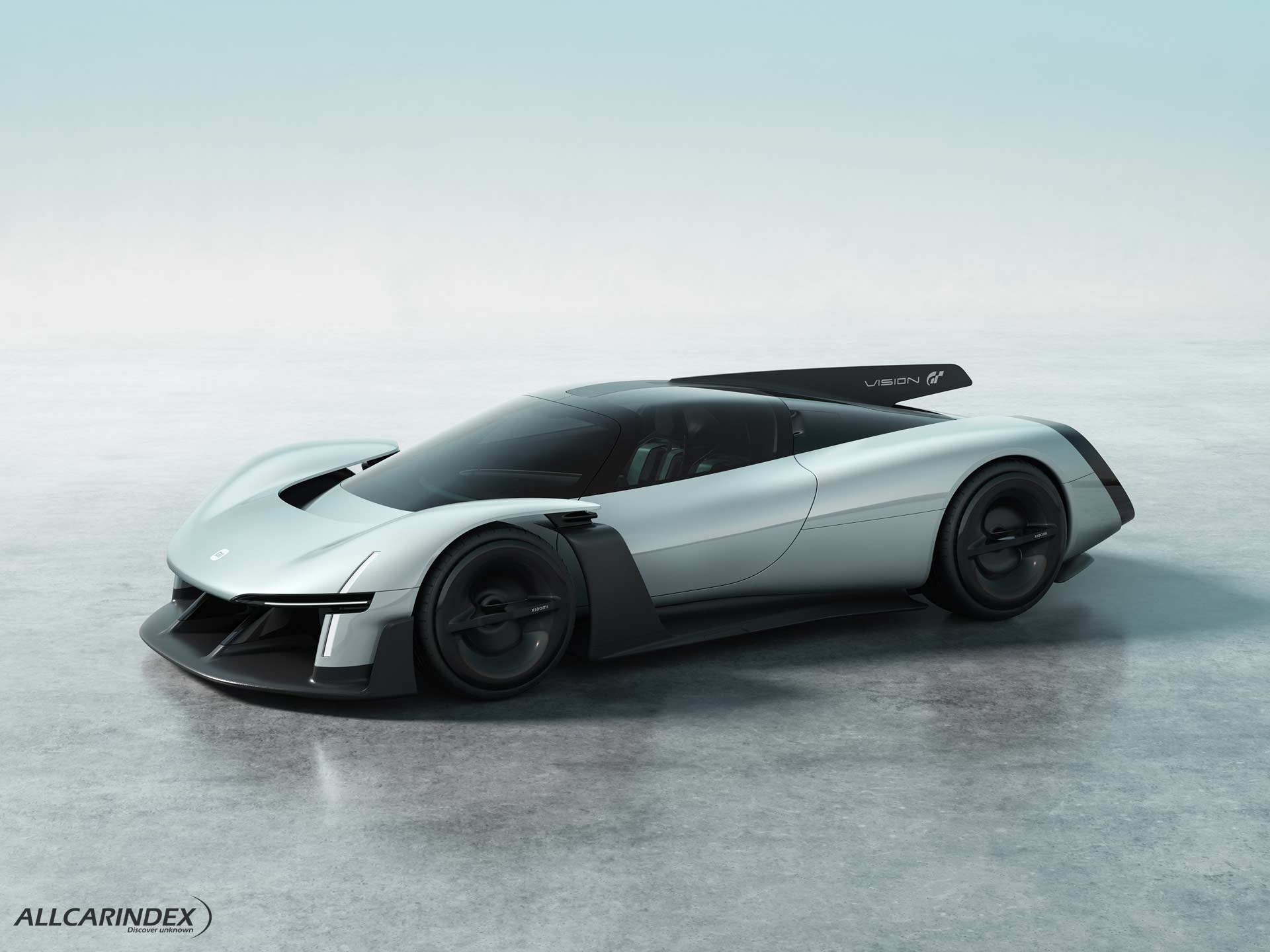
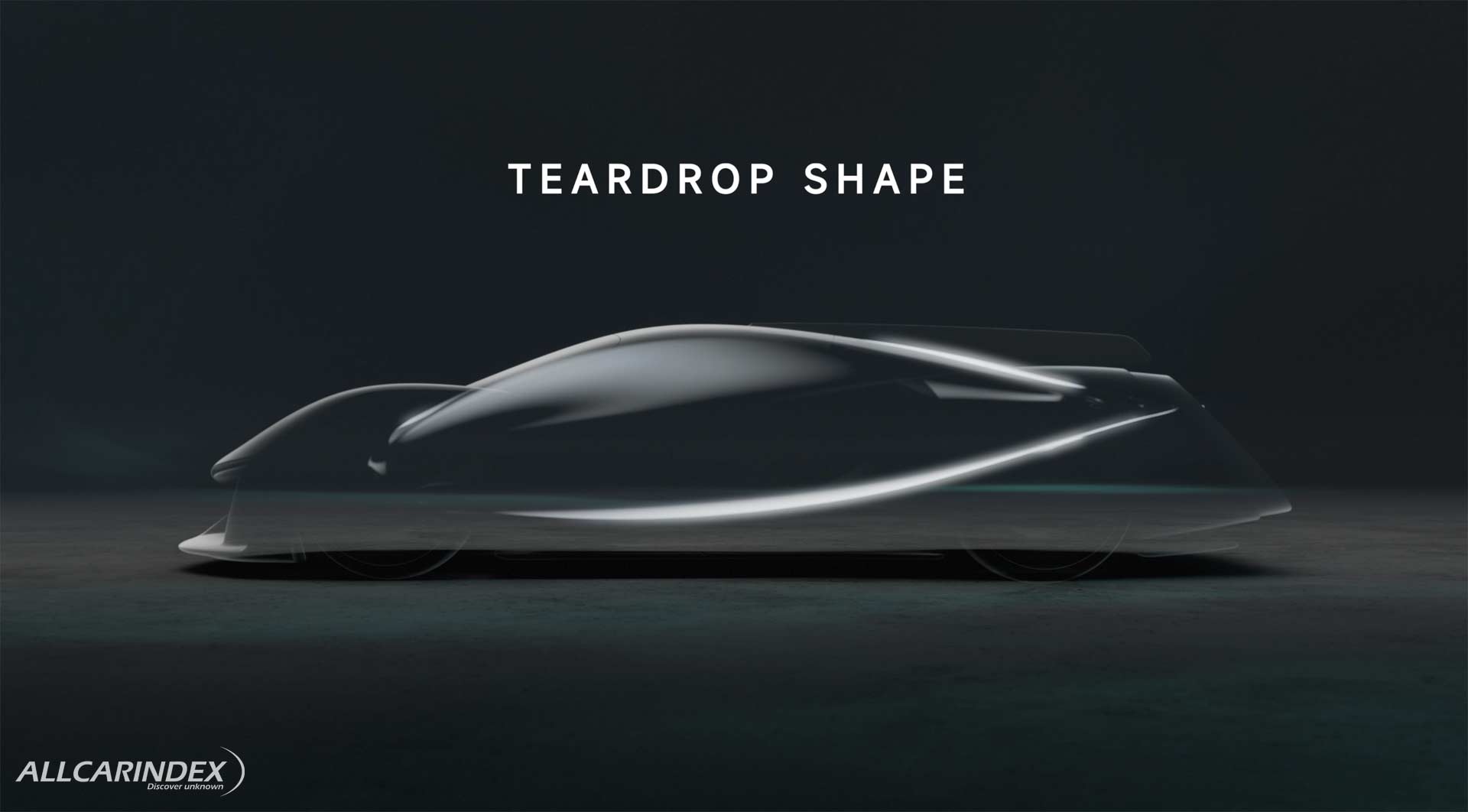
This philosophy gave birth to the concept's core design principle: "Sculpted by the Wind." Xiaomi Vision Gran Turismo is designed to meet aerodynamic needs without add-on attachments. This "less is more" mindset gives every element a second function beyond aesthetics. The result is a car that looks effortlessly clean, like a water droplet shaped by nature itself.
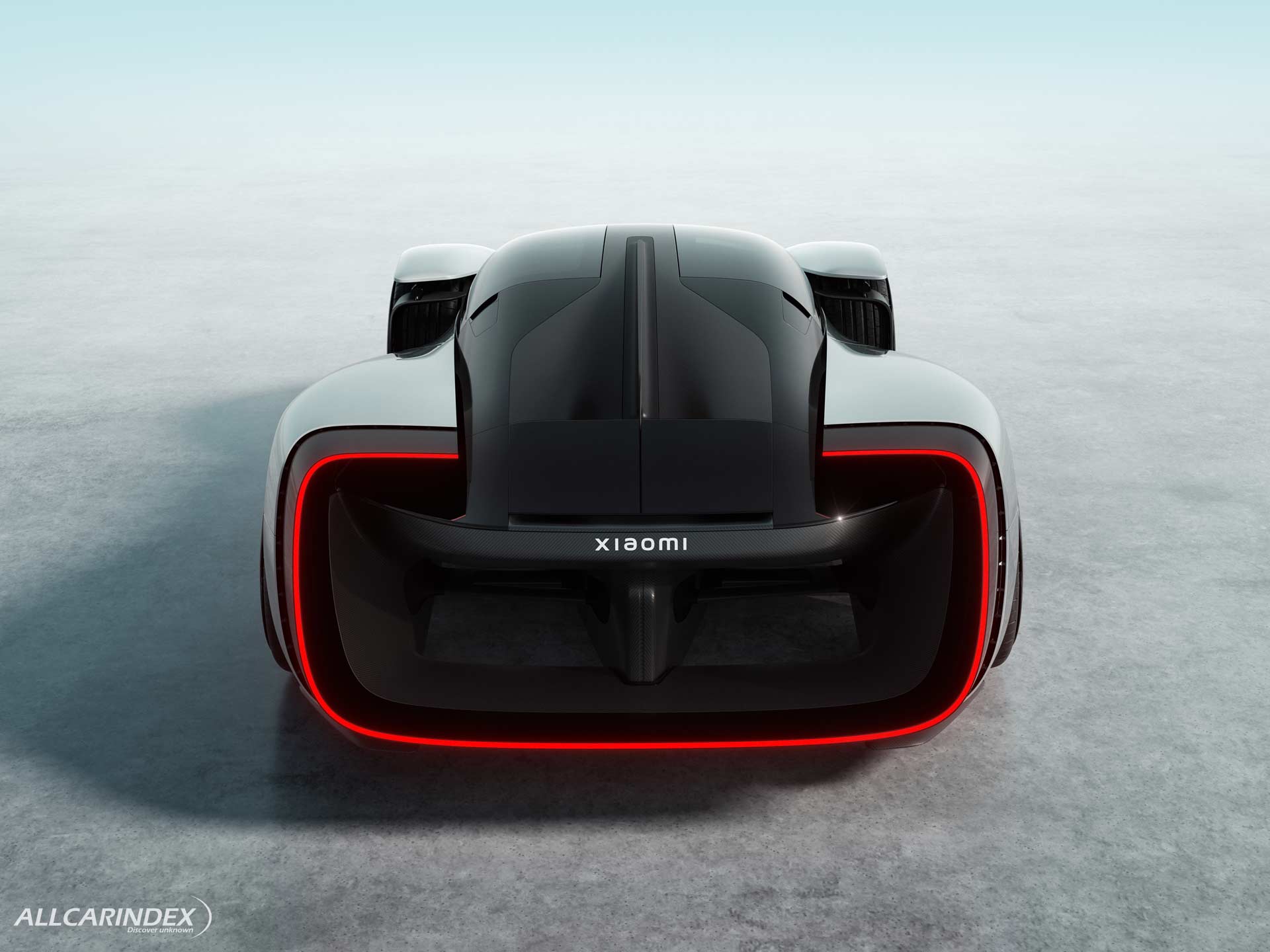
From the side, the cockpit silhouette takes the form of a teardrop. Every surface has been optimized for airflow, every structural member shaped with an airfoil cross-section. The body is sculpted with cutouts and airducts that embed the teardrop-shaped cockpit within a larger aerodynamic architecture, forming channels that guide air throughout the vehicle. Air enters from the front, flows through these sculpted passages, and is efficiently expelled from the rear, tracing the very path of the wind.
Xiaomi's signature design language is woven into every aspect of the concept. The cross-shaped headlights seamlessly integrate with the body while serving a functional aerodynamic purpose. At the rear, the halo-shaped taillight is more than a visual icon. It is integrated into the massive air outlet structure, where it serves as both a family design signature and a functional component of the car's aerodynamic system.
The rear also features the Active Wake Control System, a matrix of micro-perforations surrounding the taillight. Using real-time data on vehicle speed and angle, the system actively generates air to guide airflow, pushing turbulent air farther away from the rear of the vehicle. Unlike conventional active spoilers, this design works like an invisible hand, managing airflow while preserving the car's clean, uninterrupted surfaces.
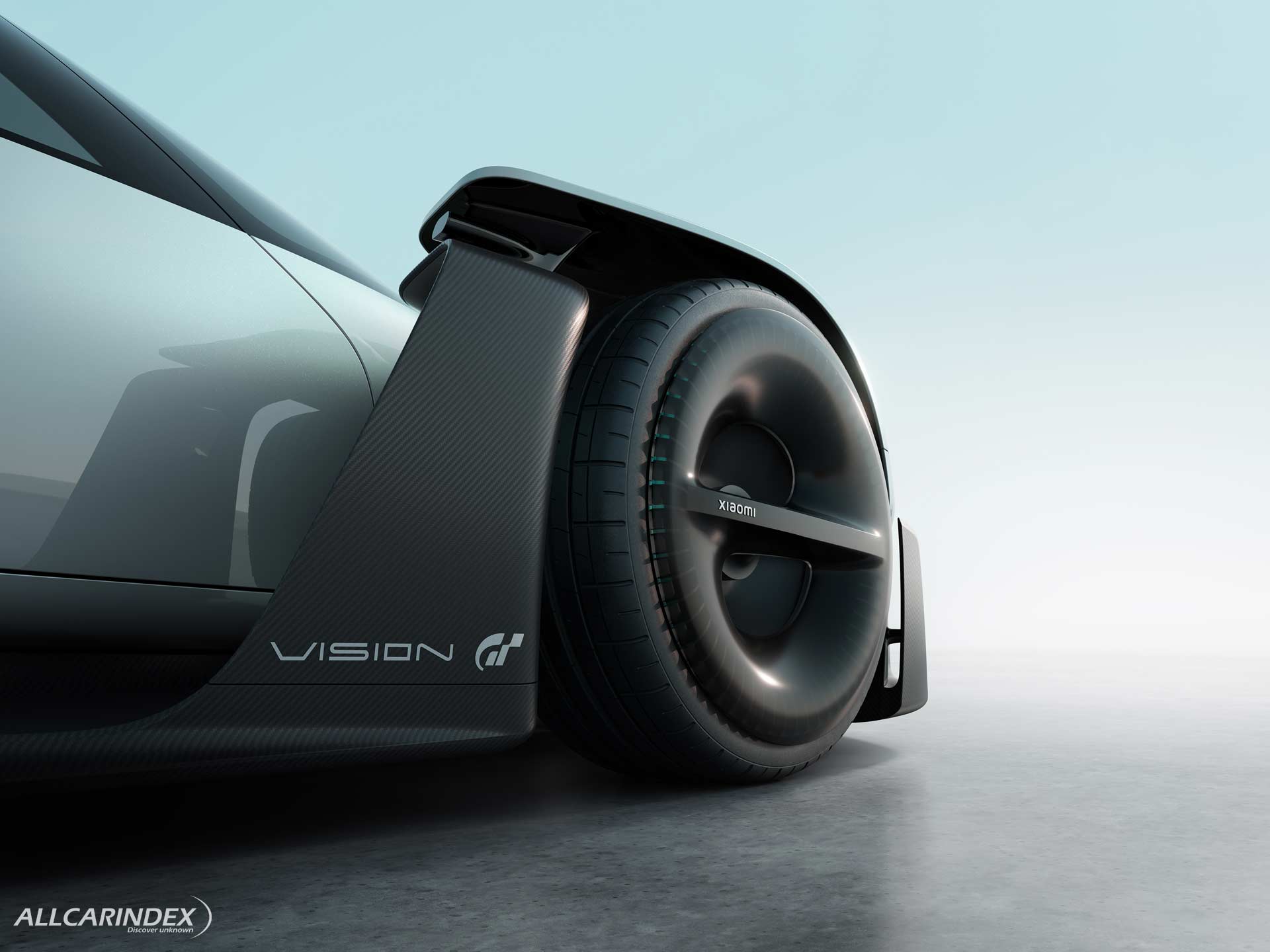
The Accretion Rims represent another breakthrough in functional design. A vortex-shaped wheel cover sits flush with the tire surface. Through its semi-transparent cover, viewers can glimpse the turbine fins inside, which actively pull air to cool the brakes during operation. The true innovation lies in the magnetic system beneath: when the car is in motion, the wheel cover remains perfectly stationary, reducing the aerodynamic drag caused by rotating wheel surfaces while creating a visually striking floating effect.
Every aerodynamic feature on Xiaomi Vision Gran Turismo serves a purpose, some focused on reducing drag, others on generating downforce. Together, they work in perfect harmony, complementing each other with precision. Through iterative simulated testing, the concept achieves a drag coefficient of just 0.29, downforce of negative 1.2, and an aerodynamic efficiency rating of 4.1. These numbers demonstrate that Xiaomi Vision Gran Turismo is not about chasing extremes on any single metric, but about delivering peak efficiency through perfectly balanced aerodynamics, reaching new heights in the balance between low drag and high downforce for electric hypercars.
Sofa Racer: Redefining the Hypercar Interior
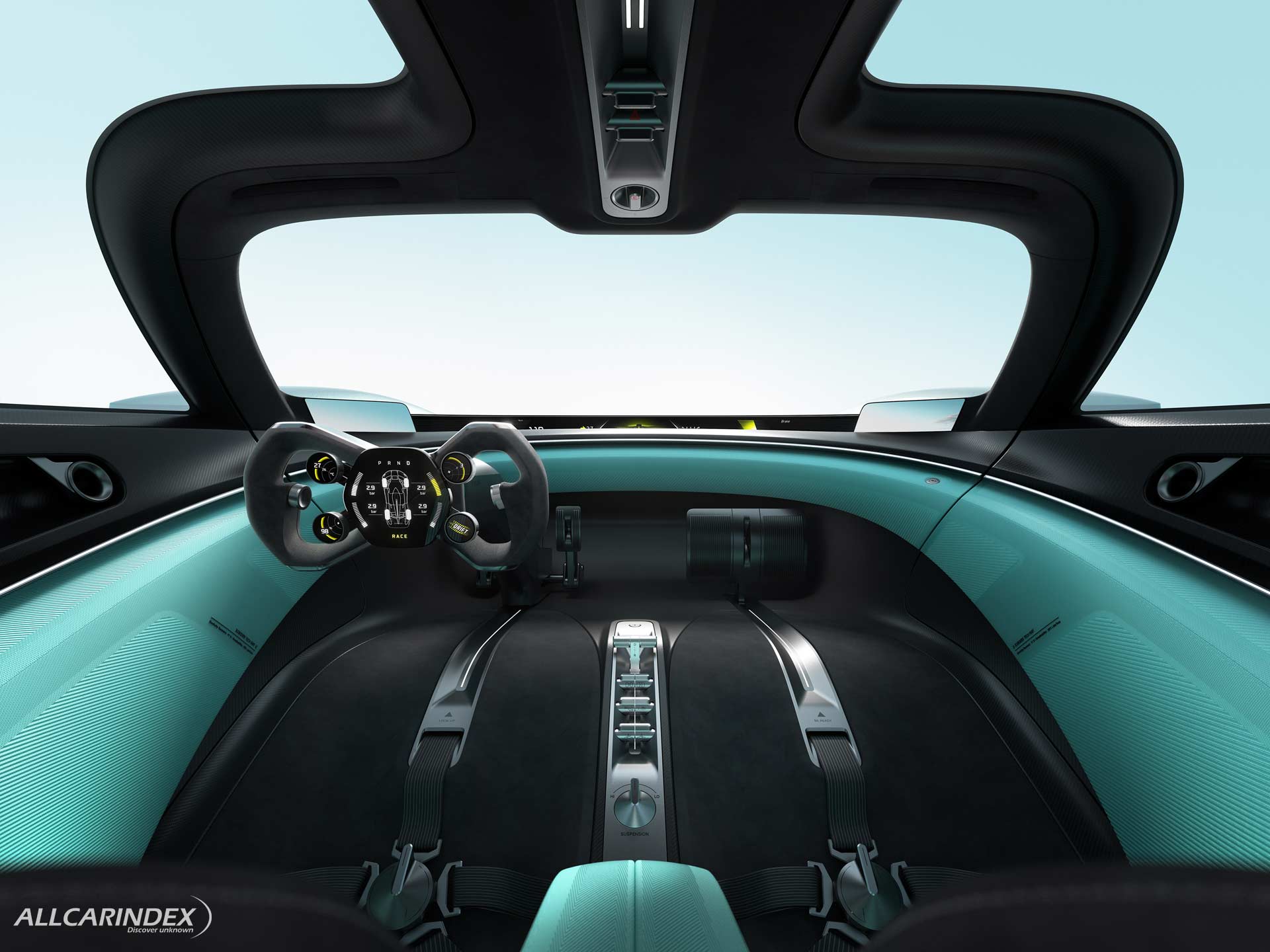
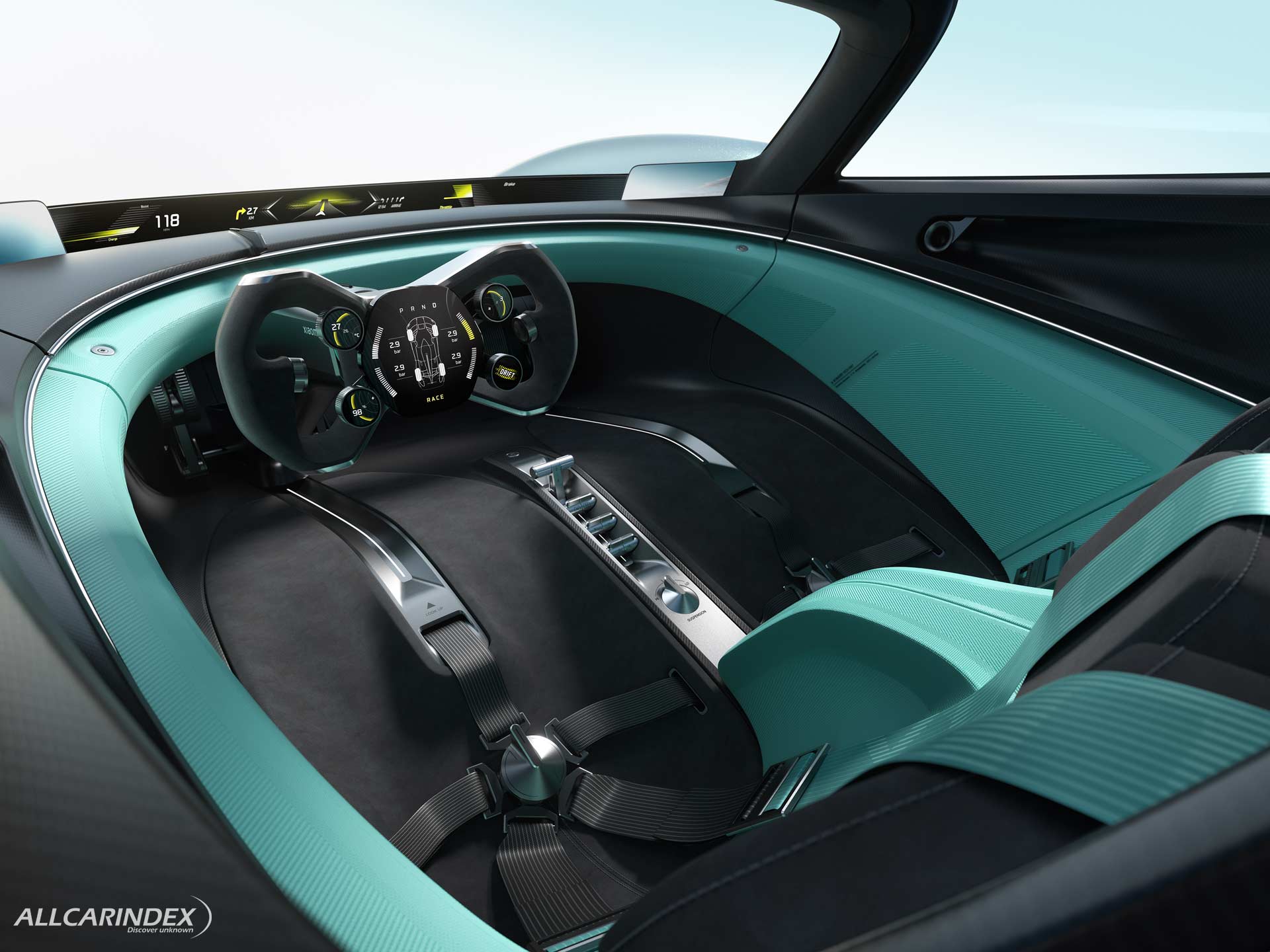
The interior of a hypercar is often associated with tension and rigid seating positions. Xiaomi envisioned a different approach: an experience that is intelligent, warm, and comfortable, like racing on a sofa. This vision became the "Sofa Racer" concept, an interior philosophy that reimagines what a performance cockpit can be.
Xiaomi moves away from the traditional bucket seat logic found in most hypercars. Instead, the dashboard, door panels, and seats flow together as one cohesive loop, a continuous ring-shaped architecture that forms a cocoon-like cockpit, gently yet firmly enveloping the driver. The choice of materials reflects this warmth. Natural fabric, processed through a 3D knitting technique borrowed from the sports fashion industry, delivers a seating experience that is both breathable and supportive. It allows the driver to either focus on performance or relax, a duality of experience that defines the "Sofa Racer" concept.
At the center of this space is Xiaomi Pulse, an intelligent assistant built into the dashboard. Wrapping 360 degrees around the driver, it connects to sensors throughout the vehicle, reading the environment and the driver's state, and communicating through light and sound in natural, intuitive interactions. Complementing this is Xiaomi HyperVision, a reimagined interface for Xiaomi Hyper OS that adapts dynamically to driving mode. Whether displaying minimal telemetry data on the track or immersive navigation on road trips, it always shows what matters most in the most intuitive way. Together, they transform the cockpit into a living space where information flows like conversation.
Focused driving remains paramount. Every physical control is crafted with the precision of a premium smartphone, buttons and stalks that deliver confidence with every press. The infinite-shaped steer-by-wire wheel puts every function within reach, blending digital information with physical controls. With hands on the wheel, the driver has total command.
Integrated Intelligence and the Ecosystem Vision
True to the Xiaomi family, Xiaomi Vision Gran Turismo is fully integrated into the broader "Human x Car x Home" smart ecosystem. Like Xiaomi SU7 and Xiaomi YU7, the concept seamlessly connects with personal devices. It senses the driver's state and adapts to their mood, not as a machine following commands, but as an intuitive companion that understands. Powered by XiaoAi AI Assistant and Xiaomi MiMo foundational model, the vehicle actively perceives and responds through light, sound, and touch, dissolving the barrier between driver and machine.
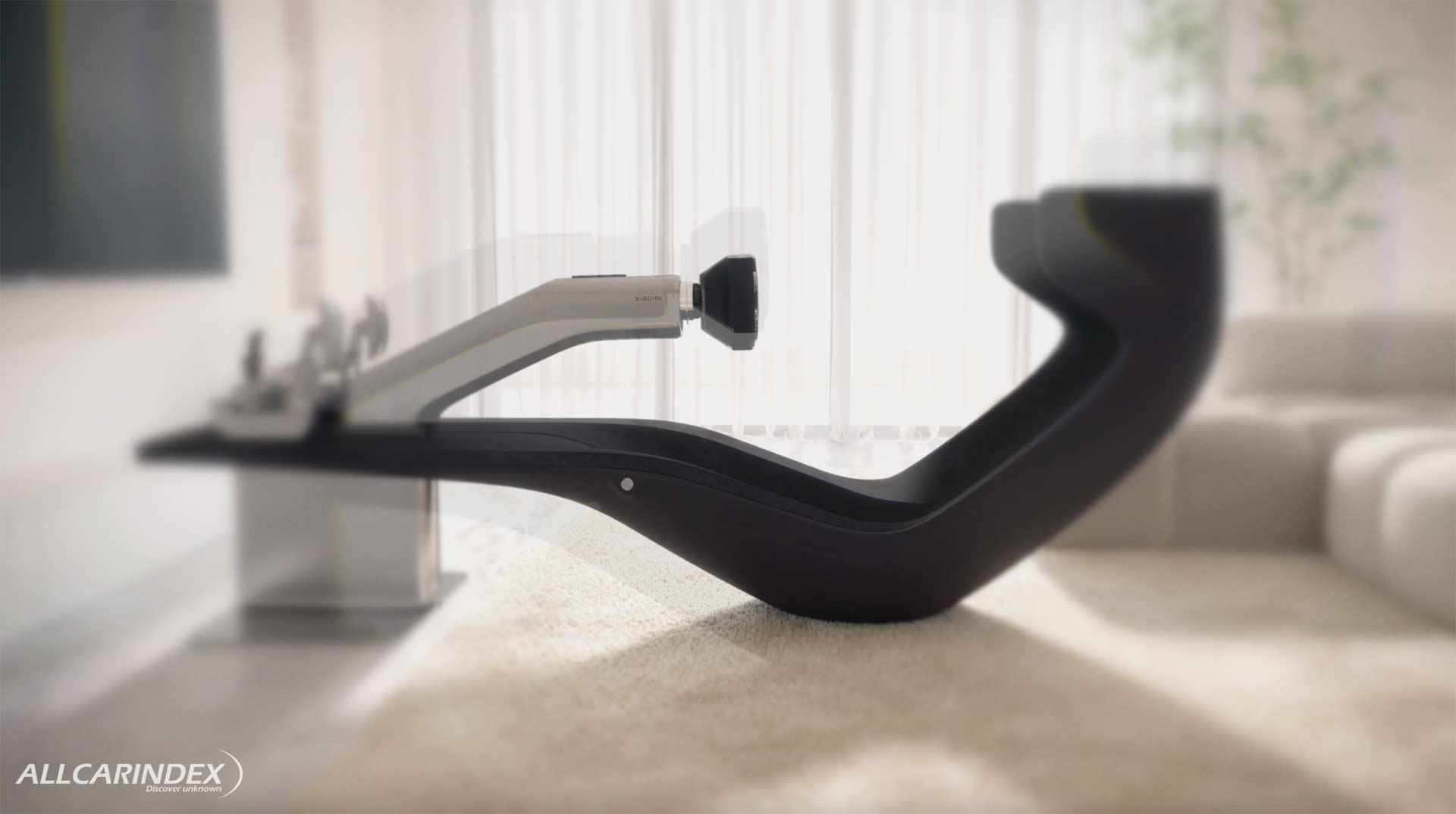
Extending this vision beyond the vehicle, Xiaomi has conceived a driving simulator as part of the design exploration. Envisioned as an elegant piece of furniture that blends naturally into a living space, it offers a glimpse into how the Vision Gran Turismo experience could transcend the boundaries of the car itself, allowing players to practice, explore, and enjoy the art of driving from anywhere.
A Historic Milestone
Xiaomi's participation in the Vision Gran Turismo project places it among an elite group of the world's most visionary automakers. Following in the footsteps of world-renowned legacy automotive brands, Xiaomi becomes the 36th brand to join the project and creator of the 51st Vision Gran Turismo concept vehicle. As the first technology company to contribute to this legendary franchise, this recognition speaks not only to Xiaomi's automotive ambitions but to its design capabilities, technical expertise, and unique perspective as a company born in the AI and smart ecosystem era.
Xiaomi's approach represents a path distinct from the traditional fuel-vehicle era — one that integrates AI, intelligent ecosystems, and cutting-edge aerodynamics into a cohesive vision for the future of mobility.
"The overall design maintains its simplicity while revealing an indescribably sleek and incredibly sexy curved aesthetic," said Kazunori Yamauchi, Producer of the Gran Turismo series. "What impressed me most was how Xiaomi resolved the contradiction between low drag and high downforce. When I saw their complete solutions, I was truly amazed. I believe this car will become a role model for this era."
Xiaomi believes technology reaches its highest purpose when it serves people and enriches experience. The Xiaomi Vision Gran Turismo expresses a new archetype for the electric hypercar — one that links human, machine, and home with continuity and care. Beyond extraordinary performance lies intelligence. Beyond speed lies comfort. Beyond the singular expression of power lies a more complete personality.
Further details regarding Xiaomi Vision Gran Turismo's official arrival in Gran Turismo 7 will be shared in future announcements, allowing racing enthusiasts around the world to experience it virtually and witness what happens when a technology company reimagines the hypercar.