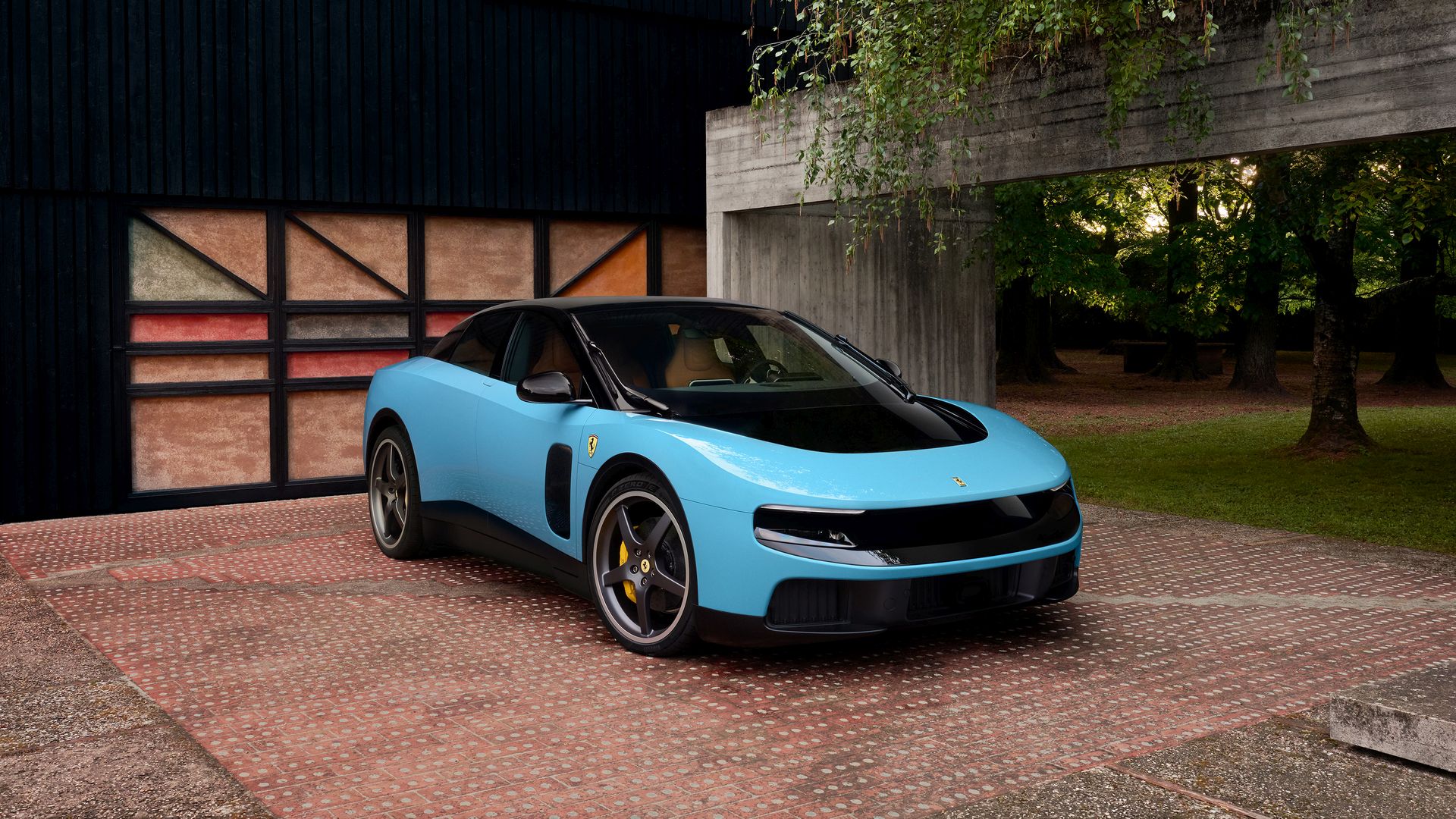
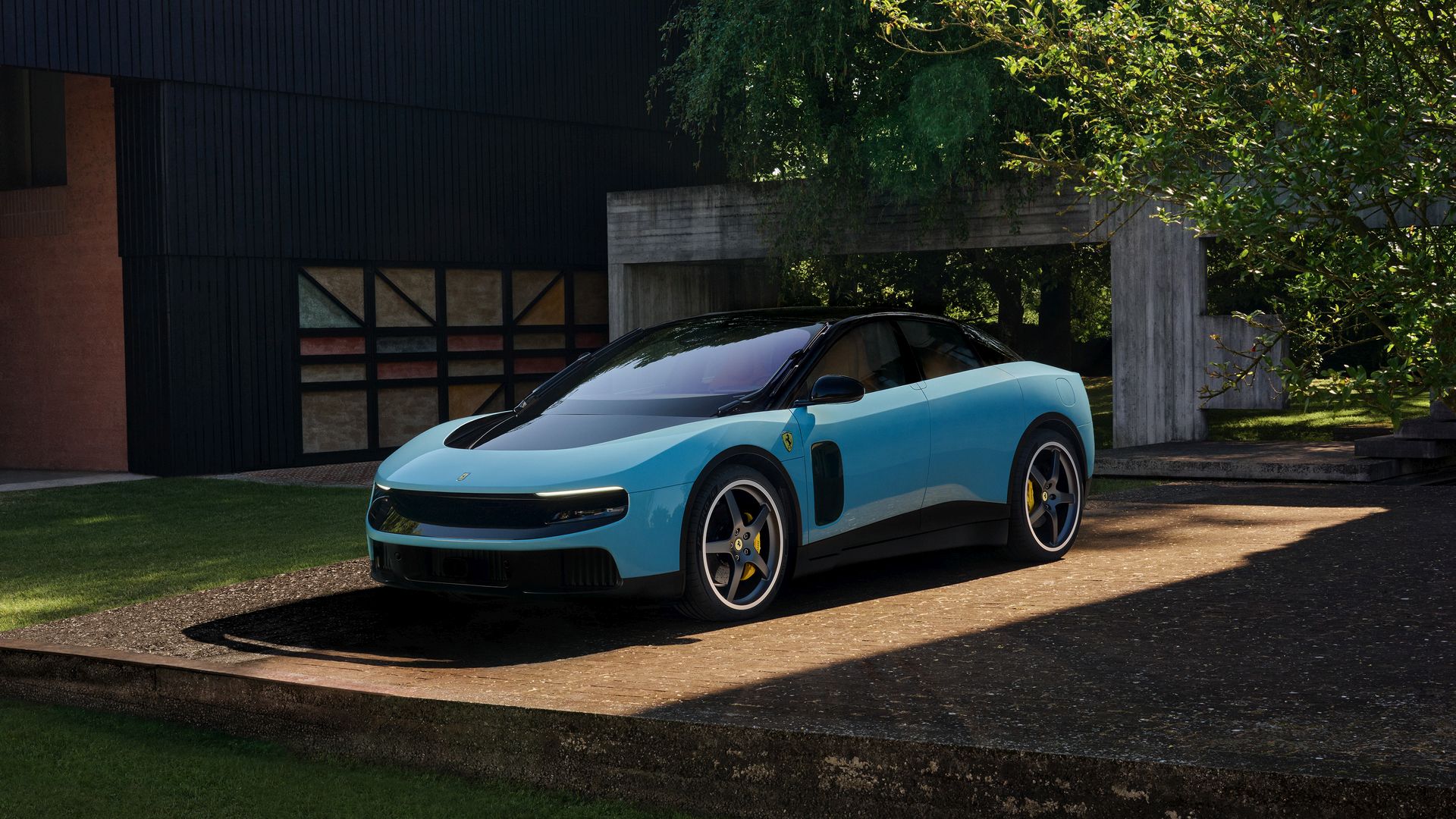
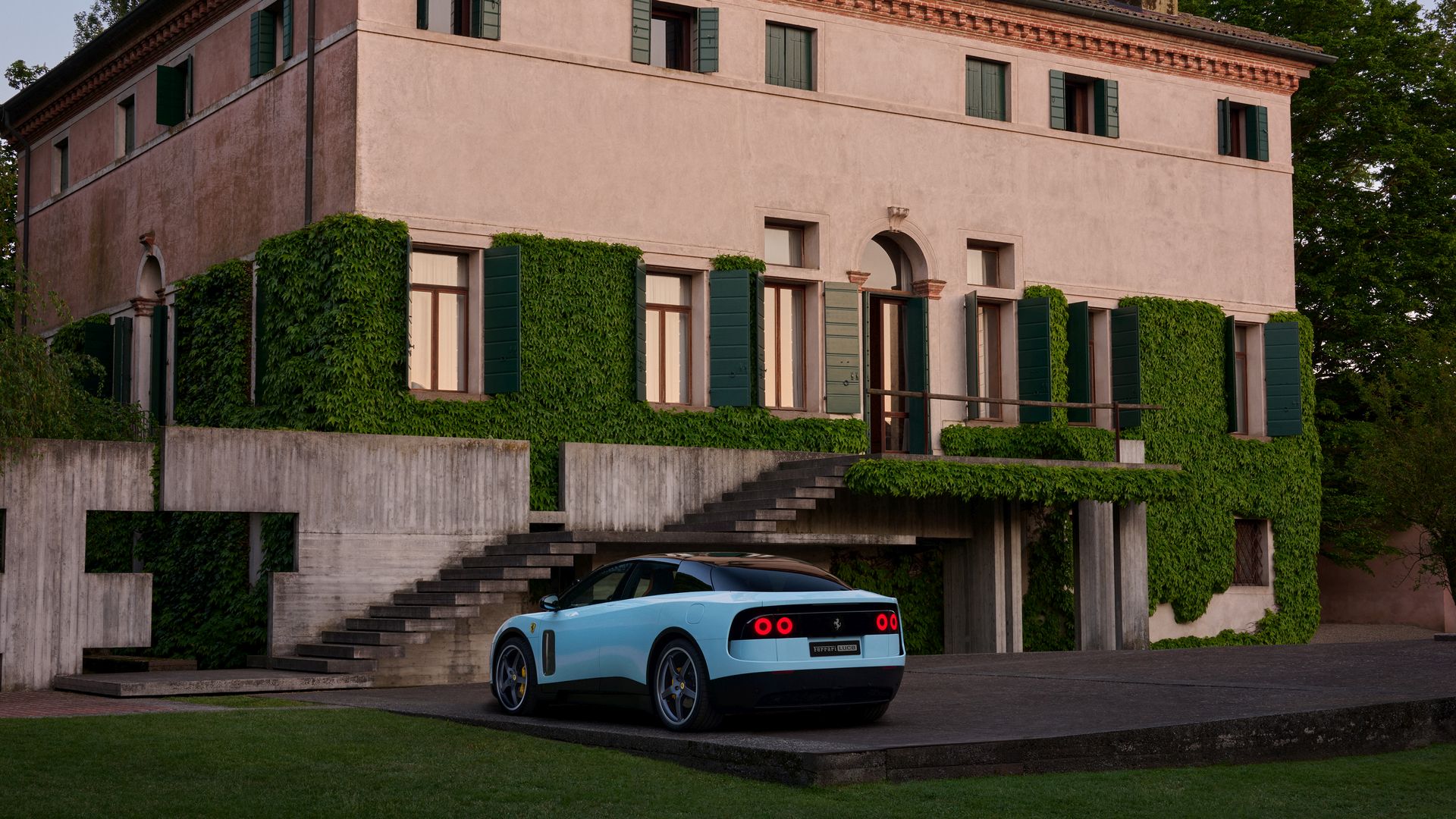
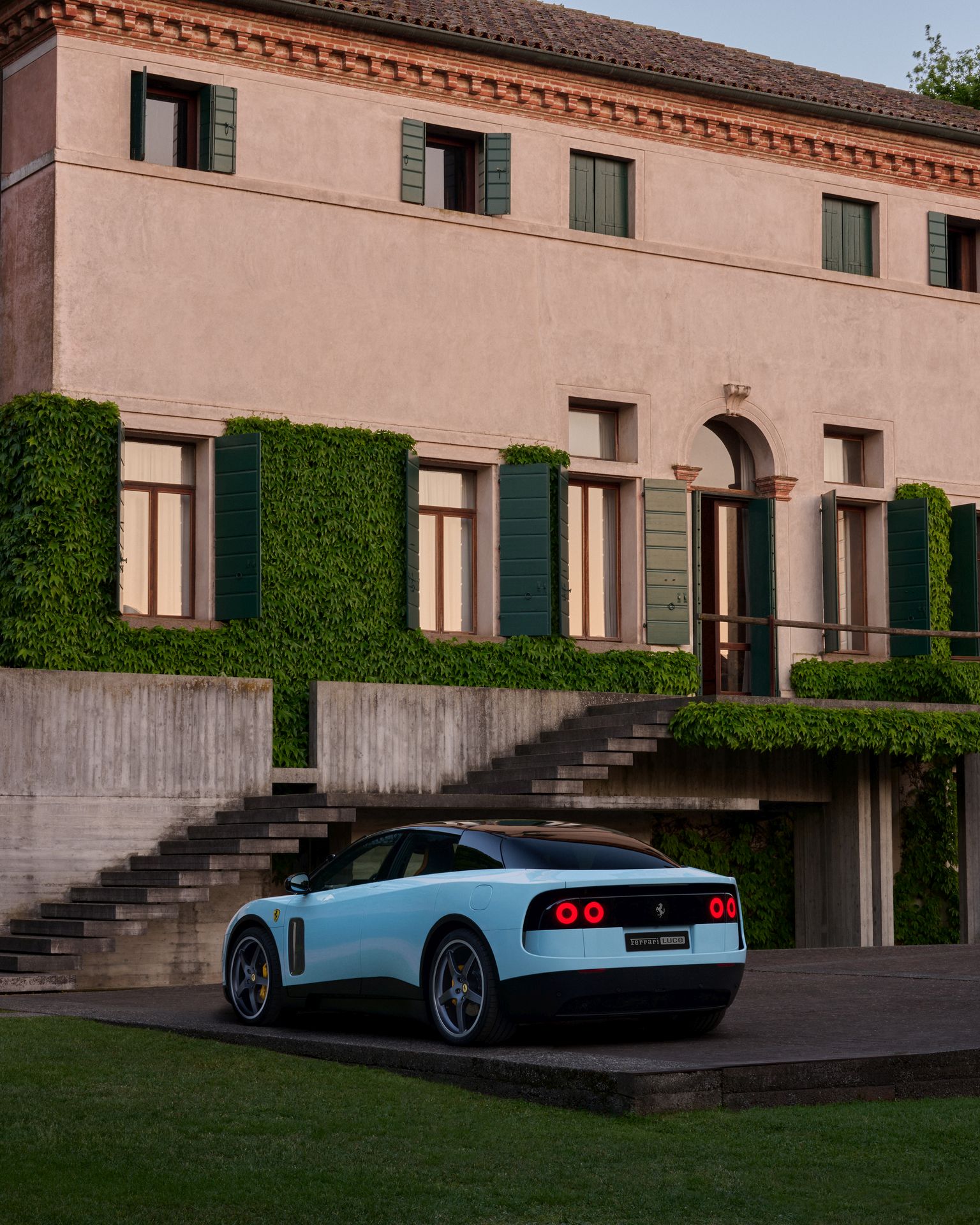
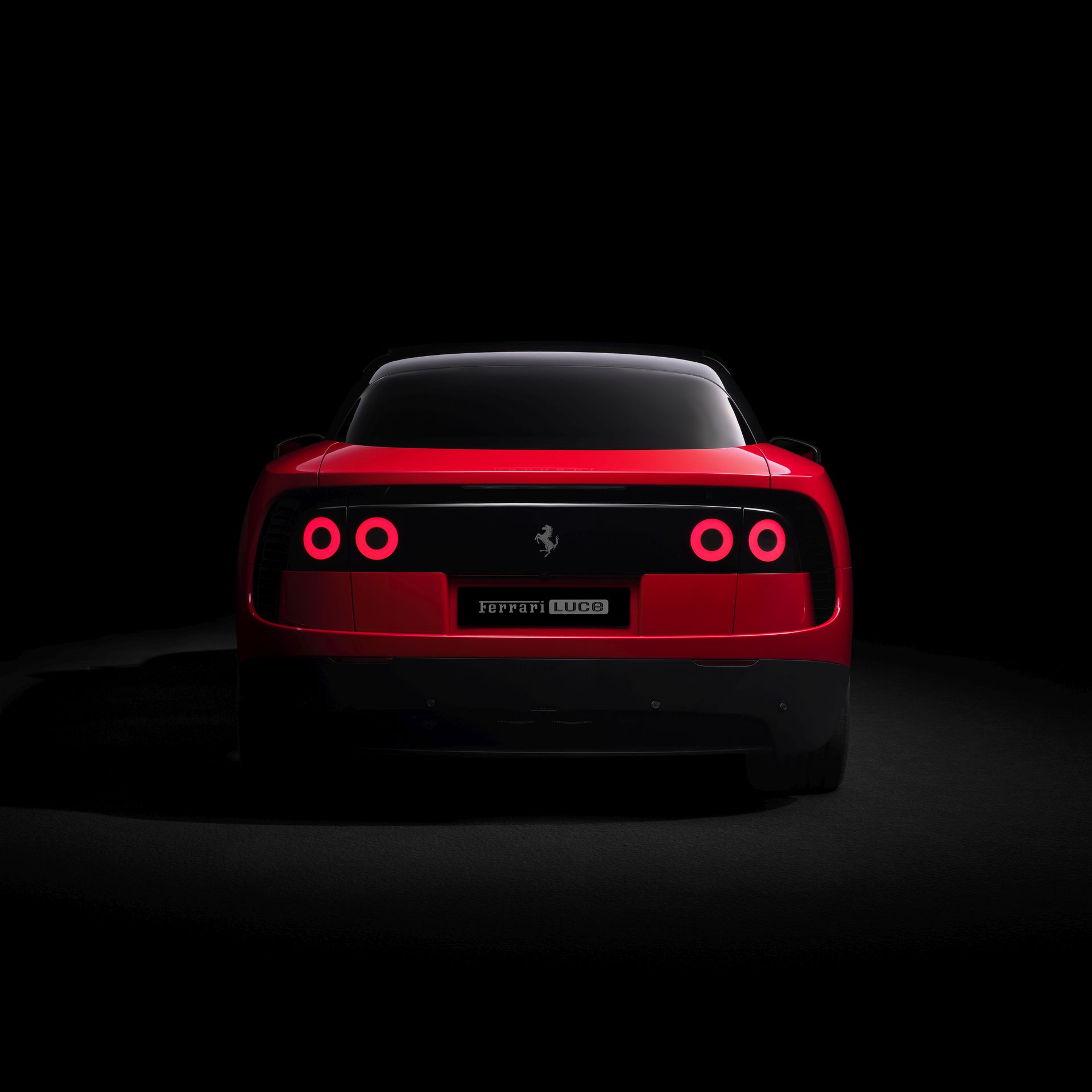
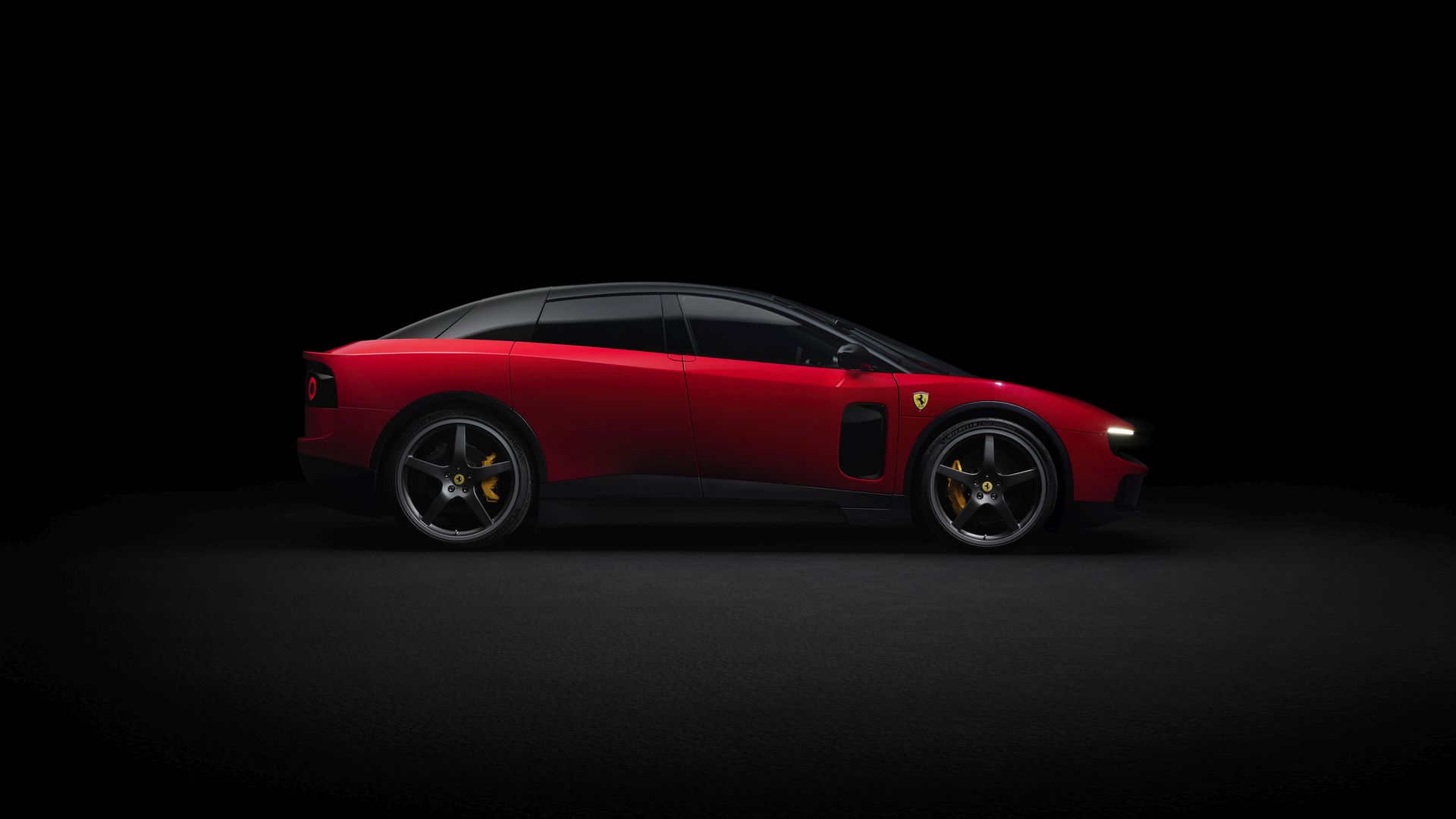
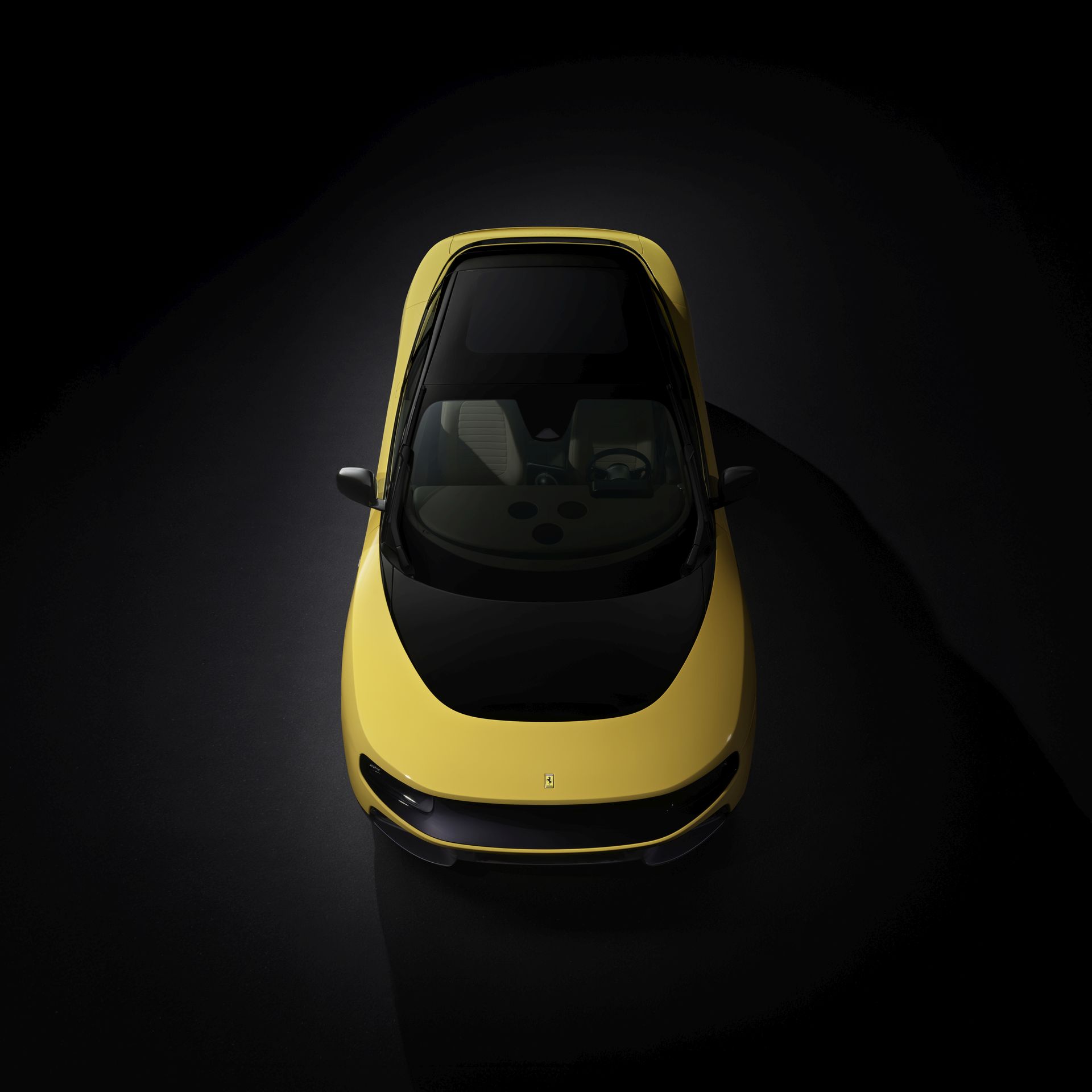
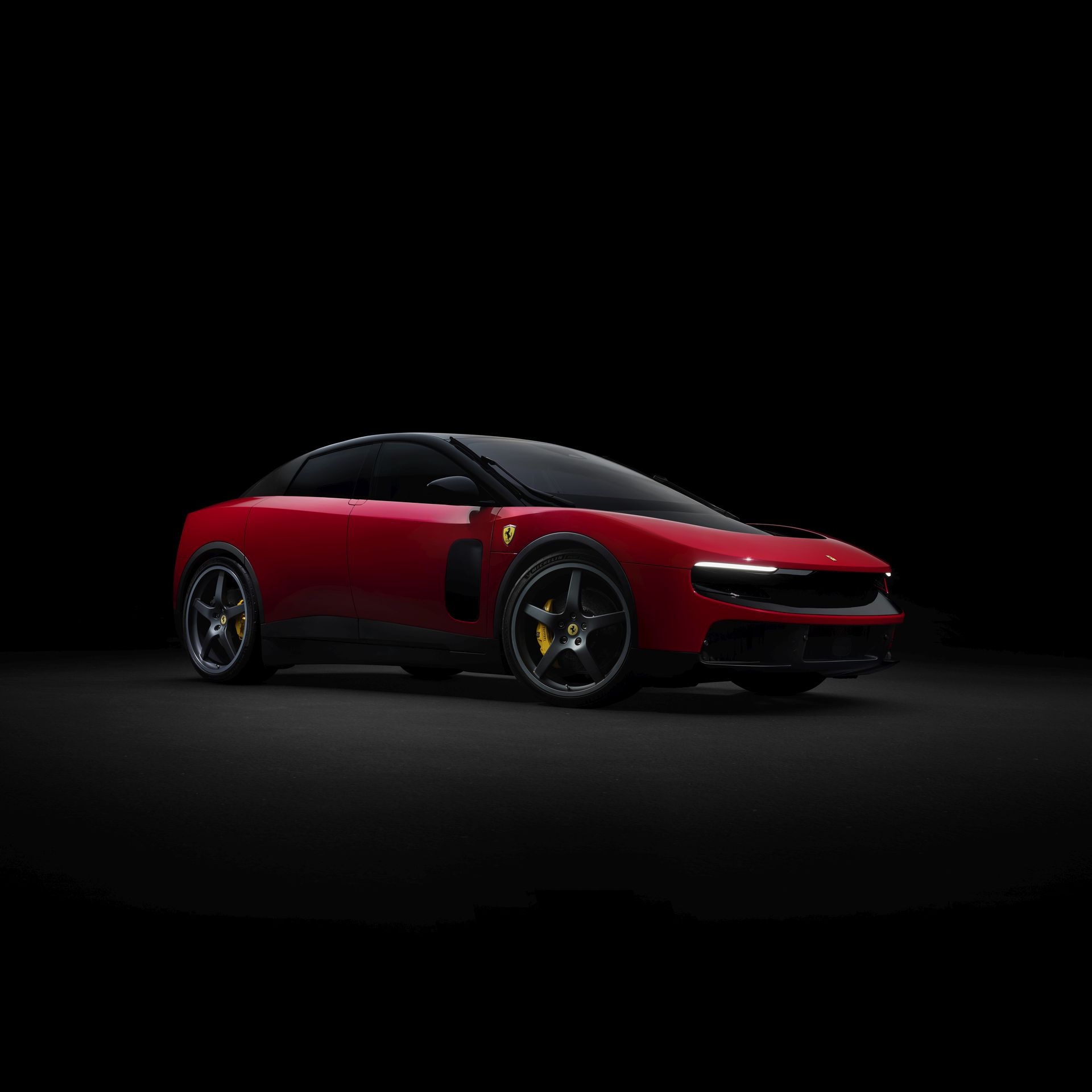
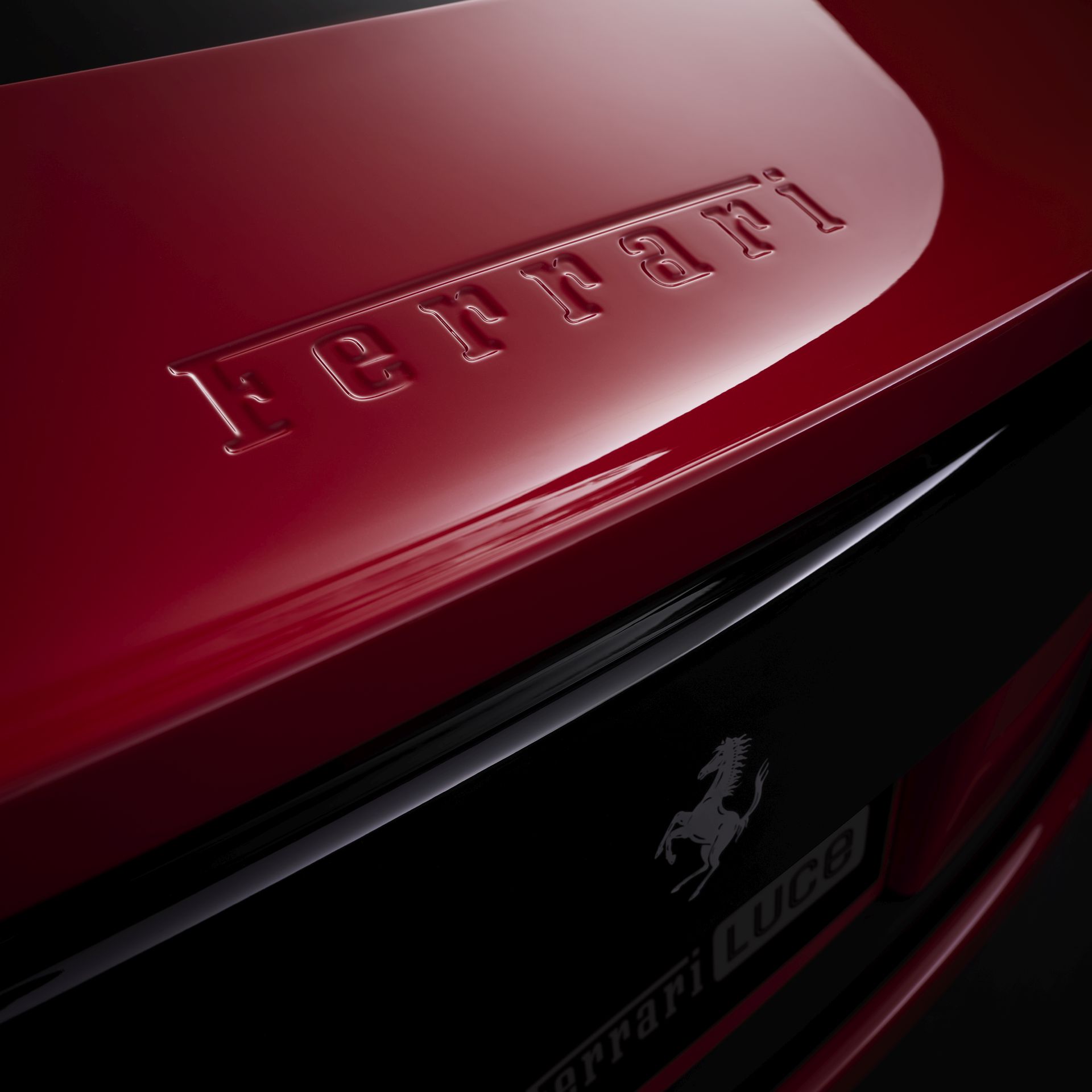
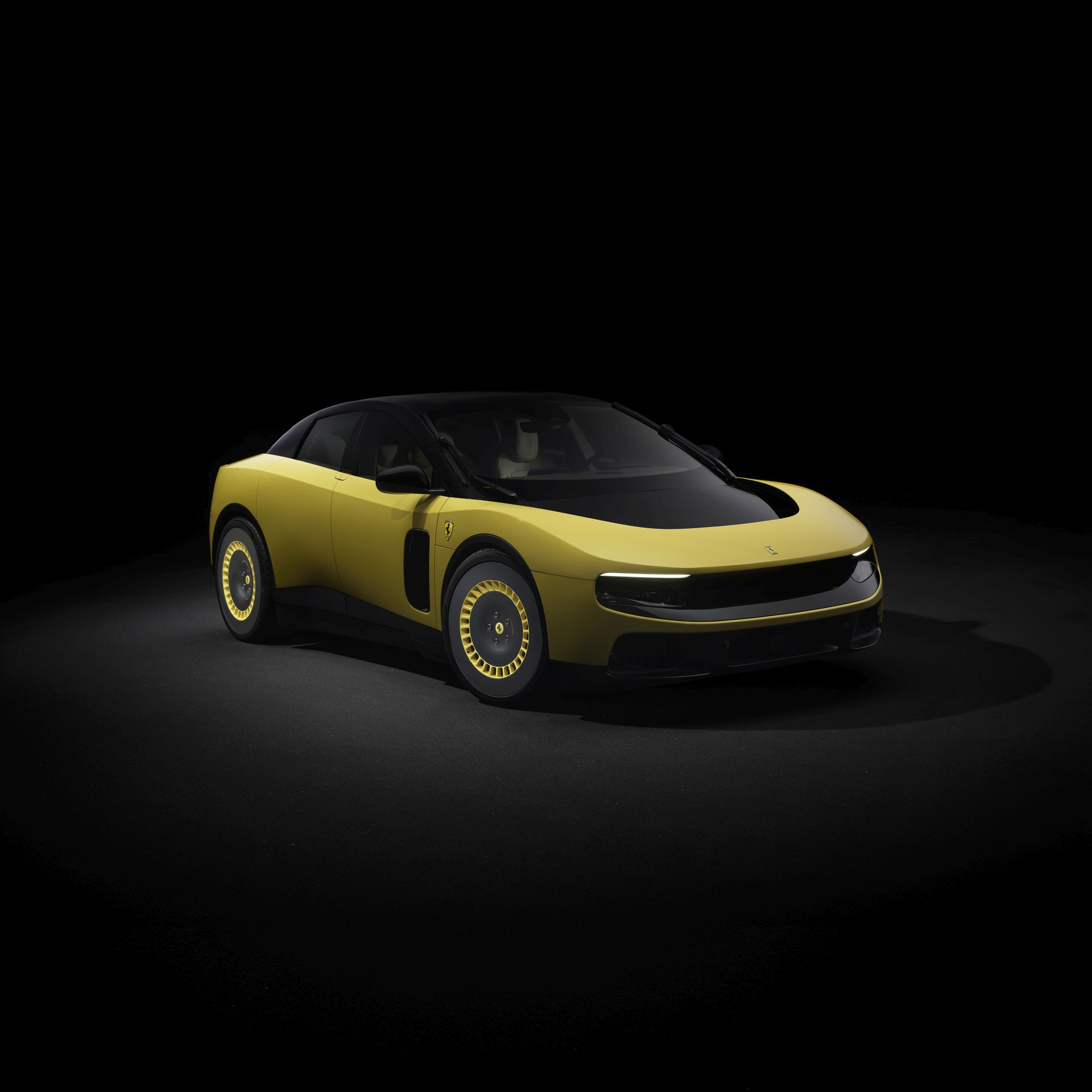
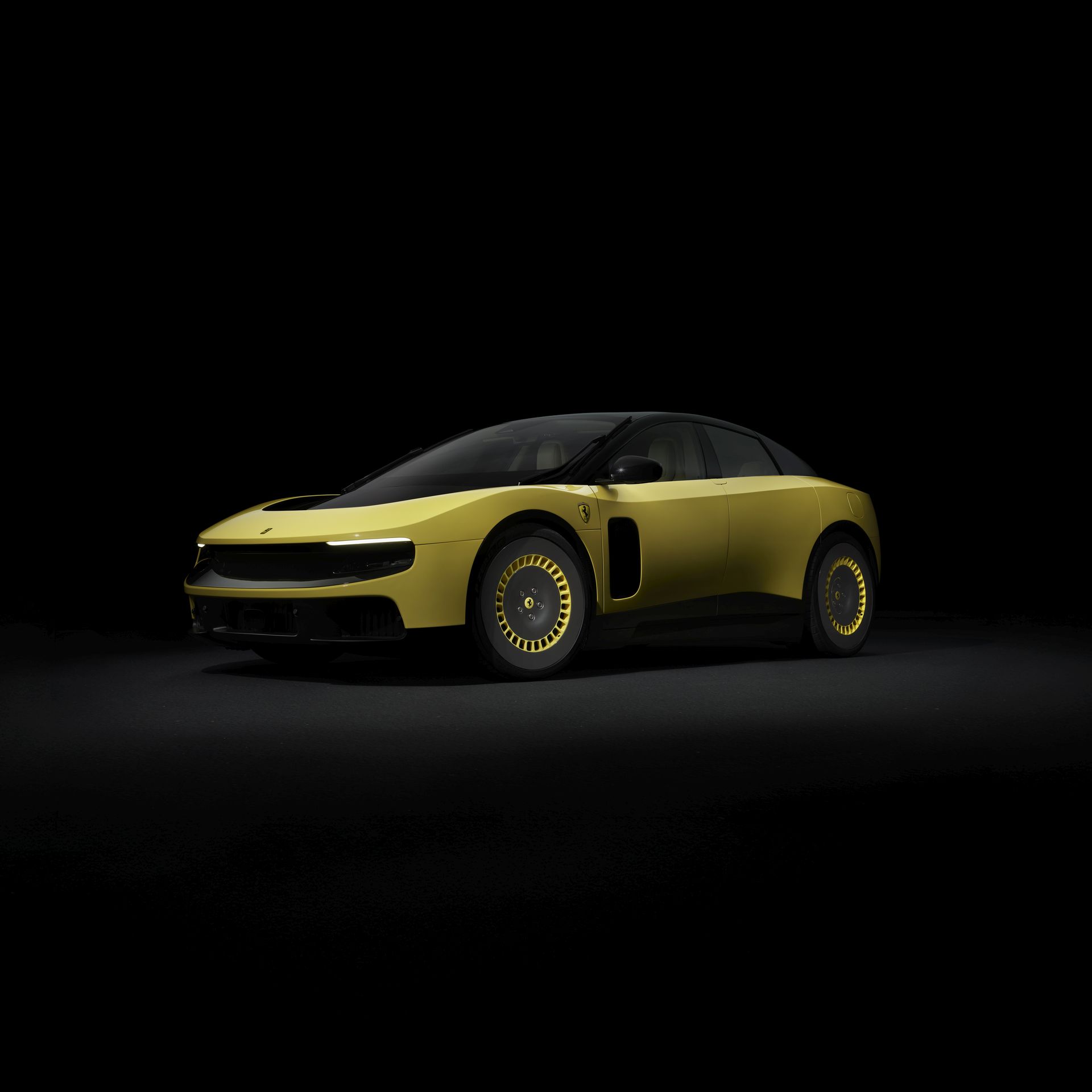

Ferrari has unveiled the Luce, its first fully electric production car and one of the most technically consequential projects in the company’s recent history. Presented in Rome on 25 May 2026, the car is positioned not as a replacement for Ferrari’s combustion and hybrid models, but as an additional architecture within the brand’s multi-energy strategy. It brings a dedicated electric platform, four independently driven wheels, active suspension, rear-wheel steering, and an entirely new design approach developed with LoveFrom, the creative collective led by Sir Jony Ive and Marc Newson.
The setting carried historical weight. Ferrari chose Rome’s Vela di Calatrava – Città dello Sport for the reveal, returning to the city where the Ferrari 125 S claimed the marque’s first victory in 1947 at the Gran Premio di Roma. The Luce arrives 79 years later as a different kind of milestone: a five-seat, four-door Ferrari built around an all-electric system designed and developed in Maranello.
At the centre of the Luce is a bespoke 800-volt architecture with four electric engines, one for each wheel. Maximum output is listed at 772 kW, or 1050 cv, in Launch Control mode. Ferrari quotes 0–100 km/h in 2.5 seconds, 0–200 km/h in 6.8 seconds, and a top speed of 310 km/h. The gross battery capacity is 122 kWh, with an estimated range of 530 km, still under homologation. Fast charging is supported at up to 350 kW.
The numbers are significant, but the more interesting story is the level of control Ferrari has engineered into the car. The Luce uses four independent electric engines not simply to create power, but to manage torque with unusual precision. Each wheel has its own traction and regeneration actuator, steering-angle control, and vertical-motion control through the active suspension system. Ferrari’s new Vehicle Control Unit integrates powertrain and dynamics, updating targets 200 times per second and coordinating systems including Side Slip Control X, torque vectoring, regenerative braking, and efficiency strategies.
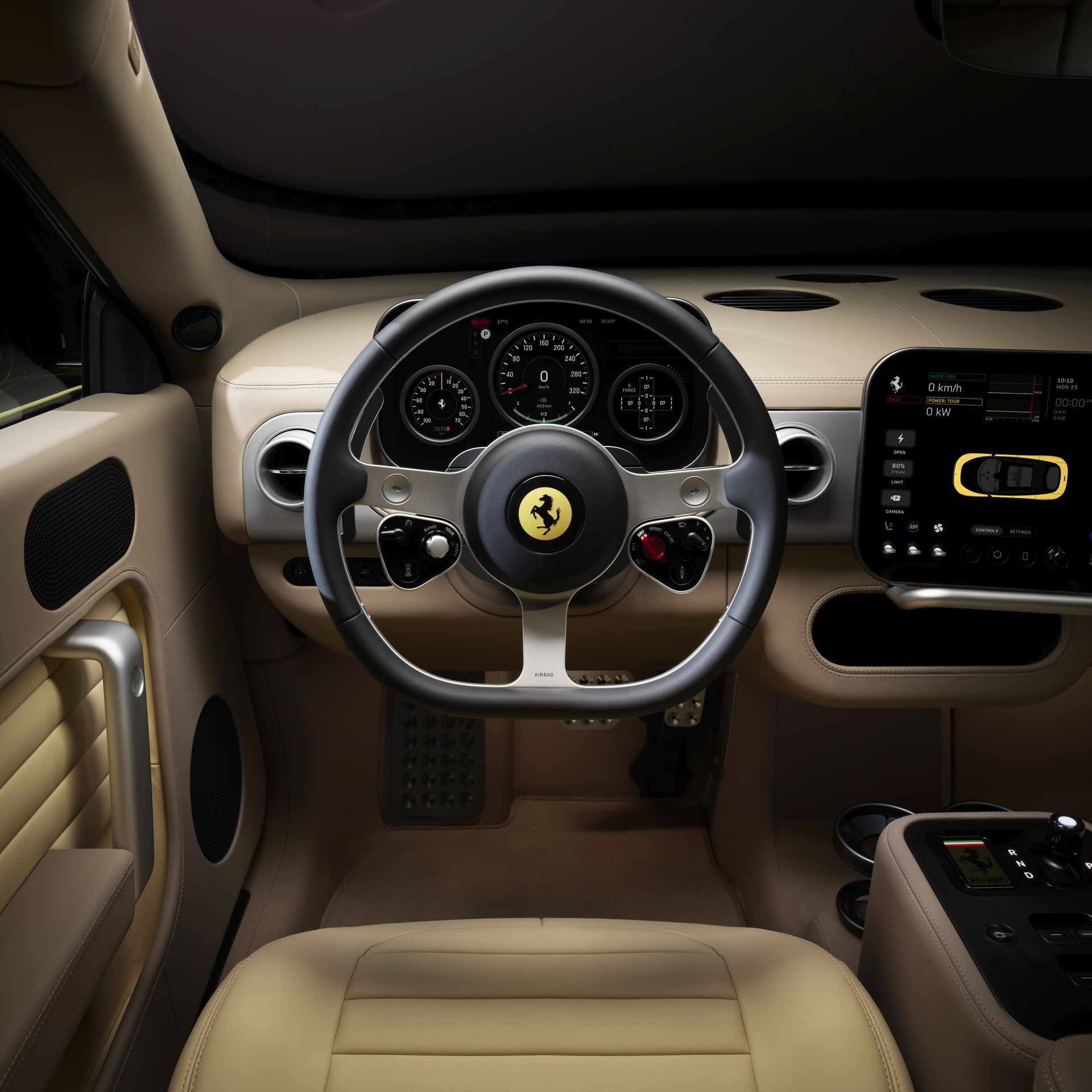
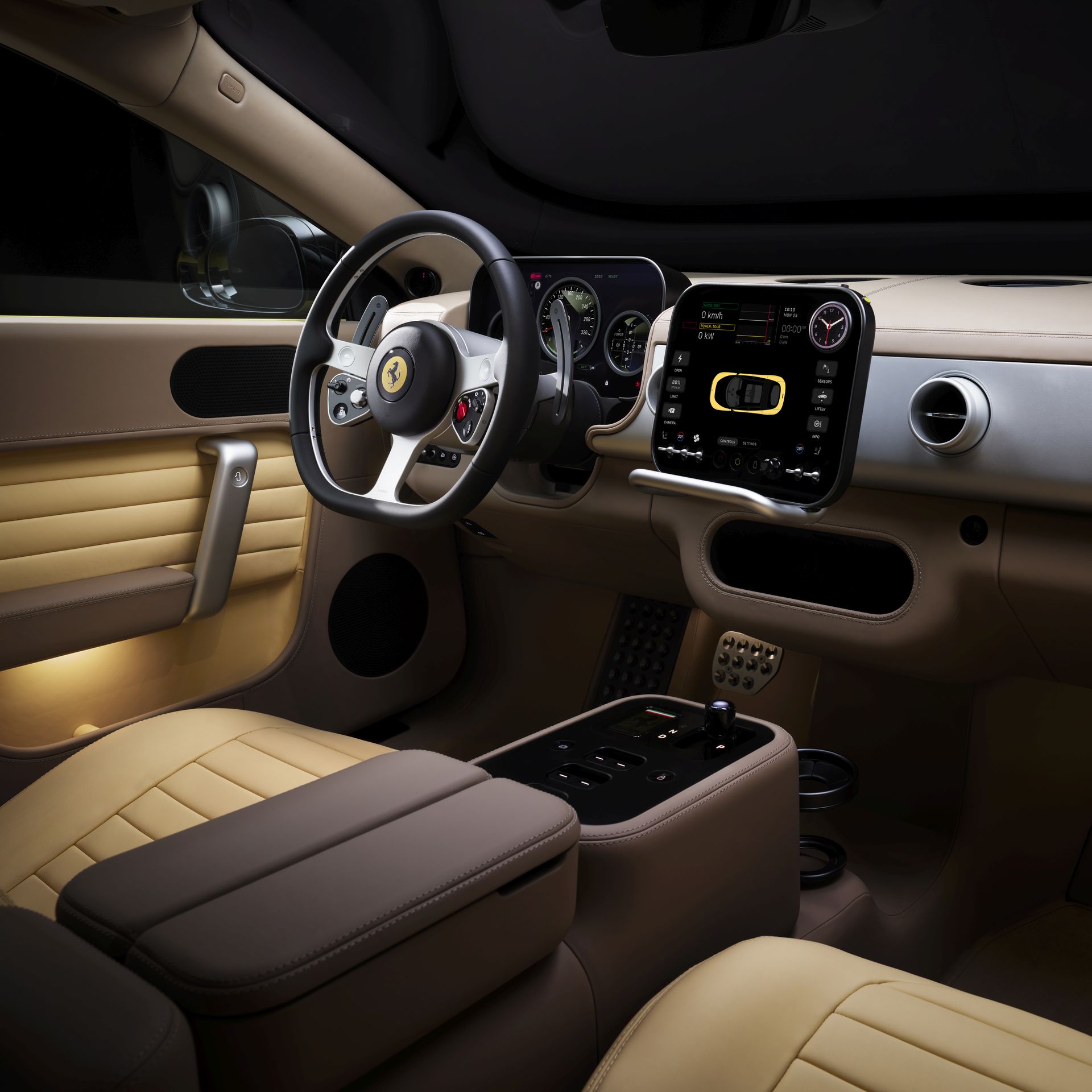
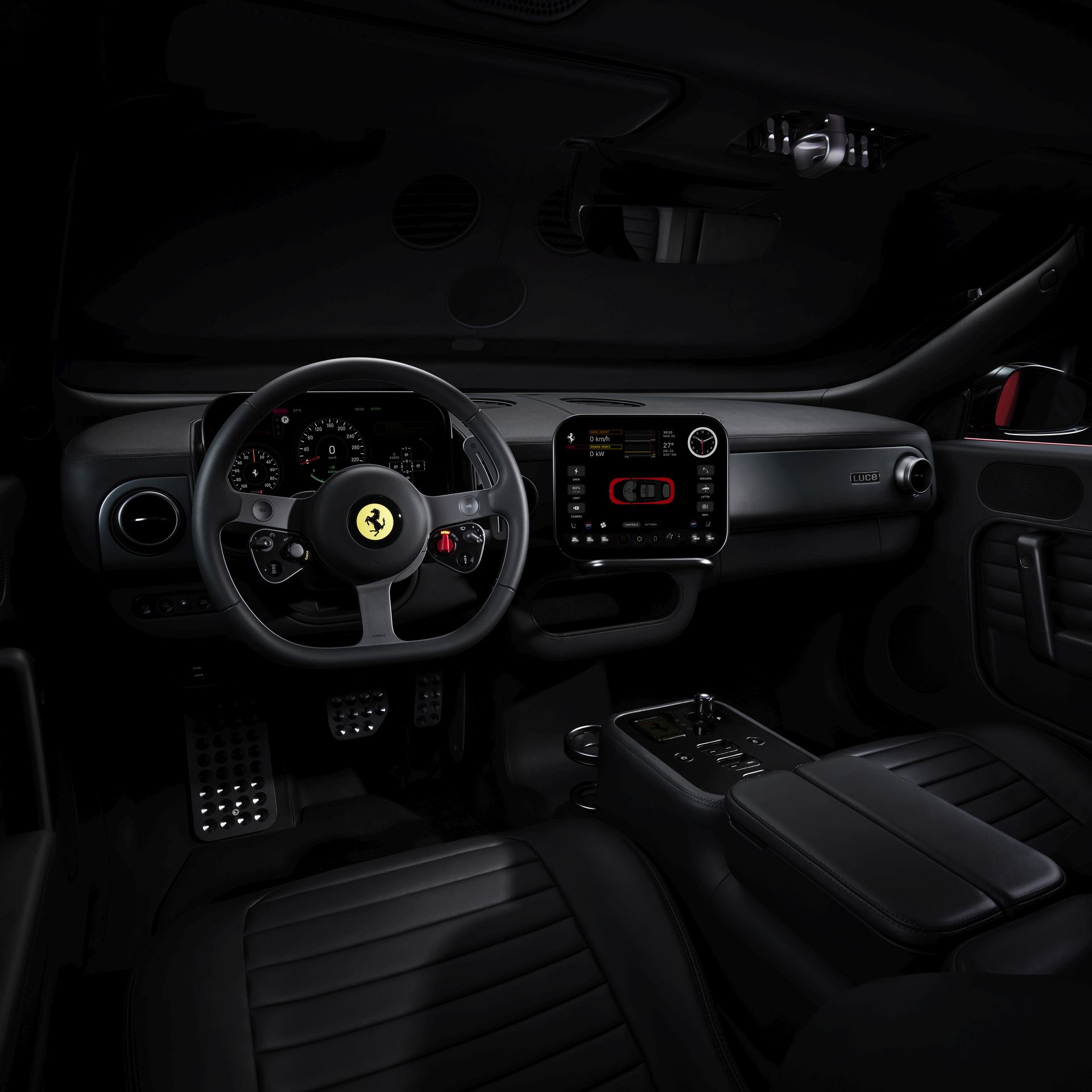
Ferrari has also introduced a new torque-management concept through the steering wheel paddles. The right-hand paddle allows the driver to increase available torque through five levels, while the left-hand paddle adjusts engine braking and regeneration. Ferrari states that this system does not imitate gear changes. Instead, it creates a driver-controlled progression of torque delivery and deceleration, giving the driver a more active role in managing the car’s response through corner entry, mid-corner balance, and corner exit.
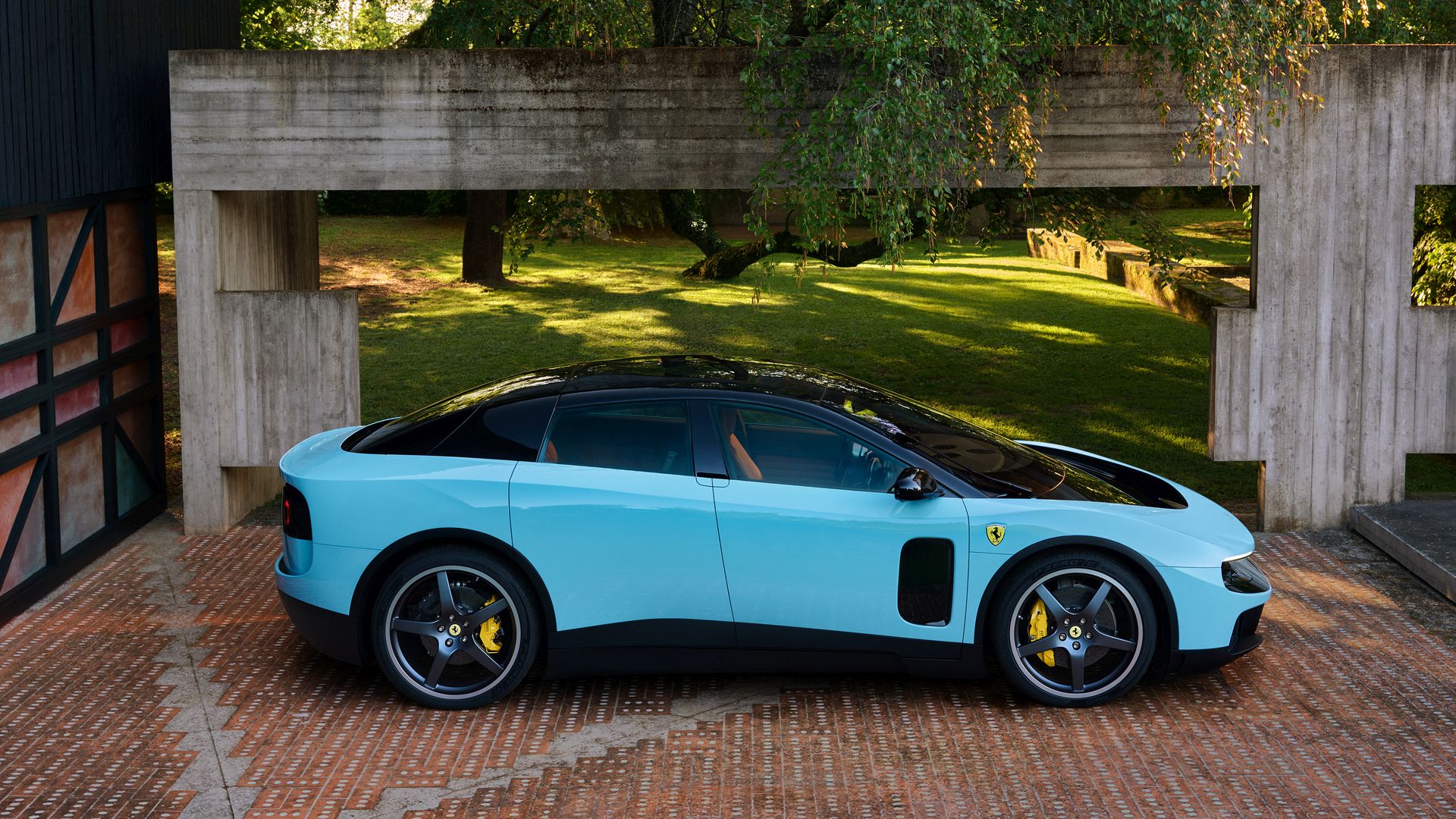
The battery pack is structural and fully integrated into the floorpan, contributing to rigidity as well as packaging. Ferrari gives the Luce a kerb weight of 2260 kg, a 47:53 front-to-rear weight distribution, and a centre of gravity 95 mm lower than that of the Purosangue. The company also claims a yaw moment of inertia 15% lower than the Purosangue, a figure intended to support agility despite the car’s size and mass. The Luce measures 5026 mm long, 1999 mm wide without mirrors, and 1544 mm high, with a wheelbase of 2961 mm.
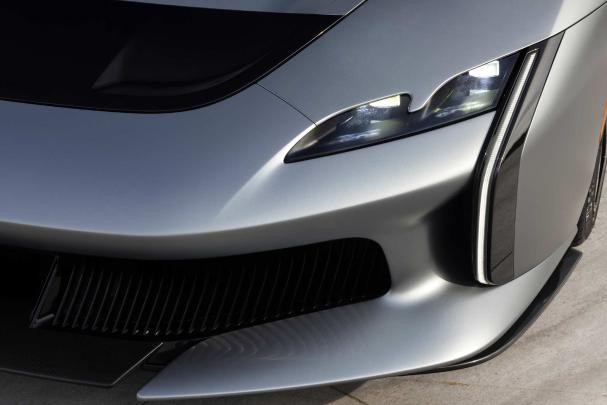
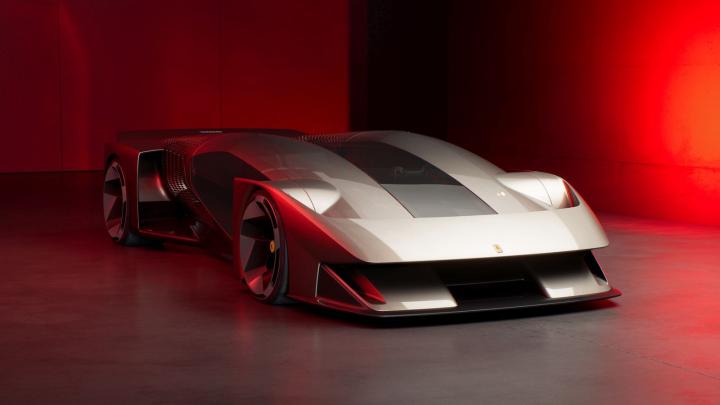
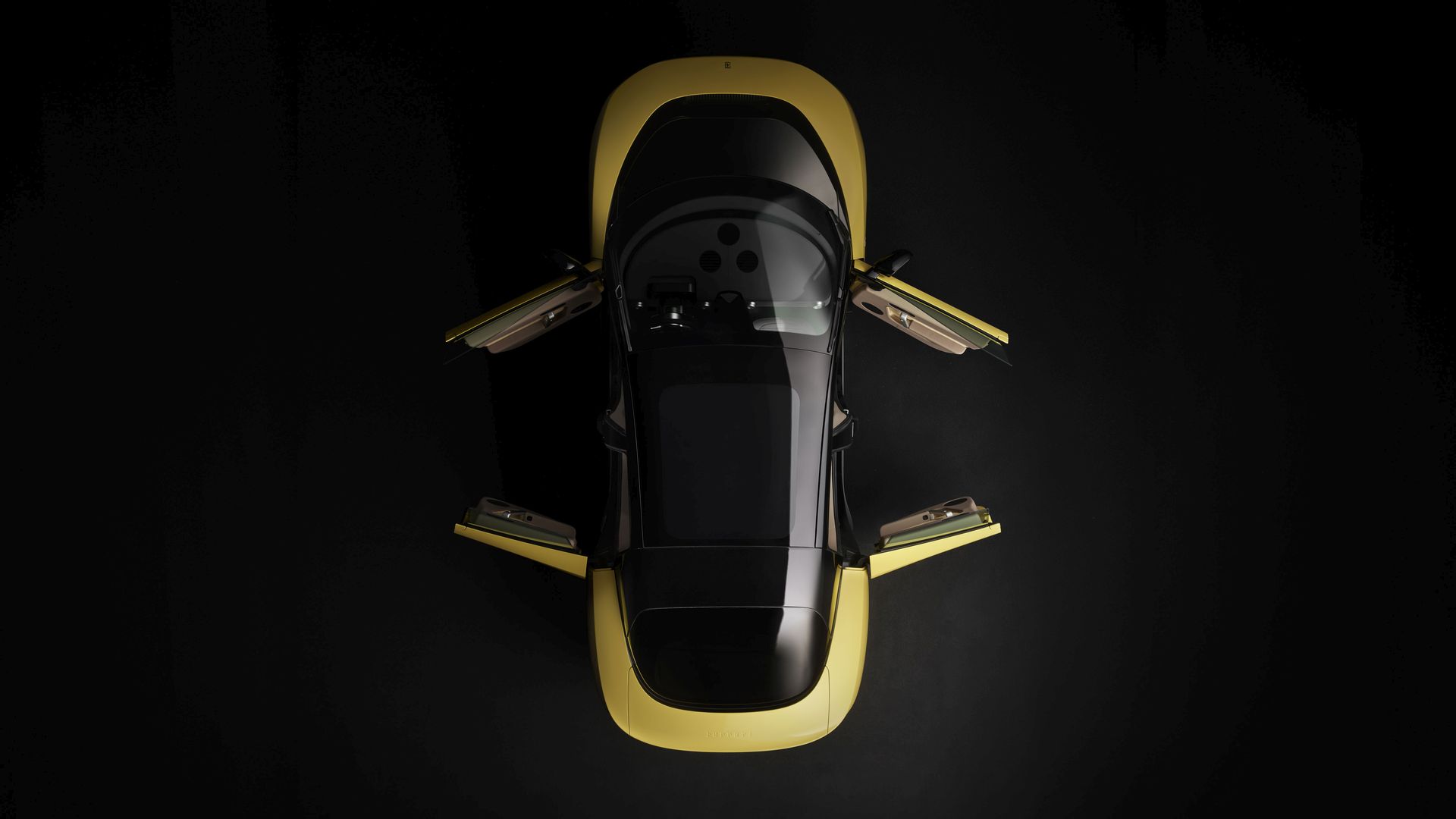
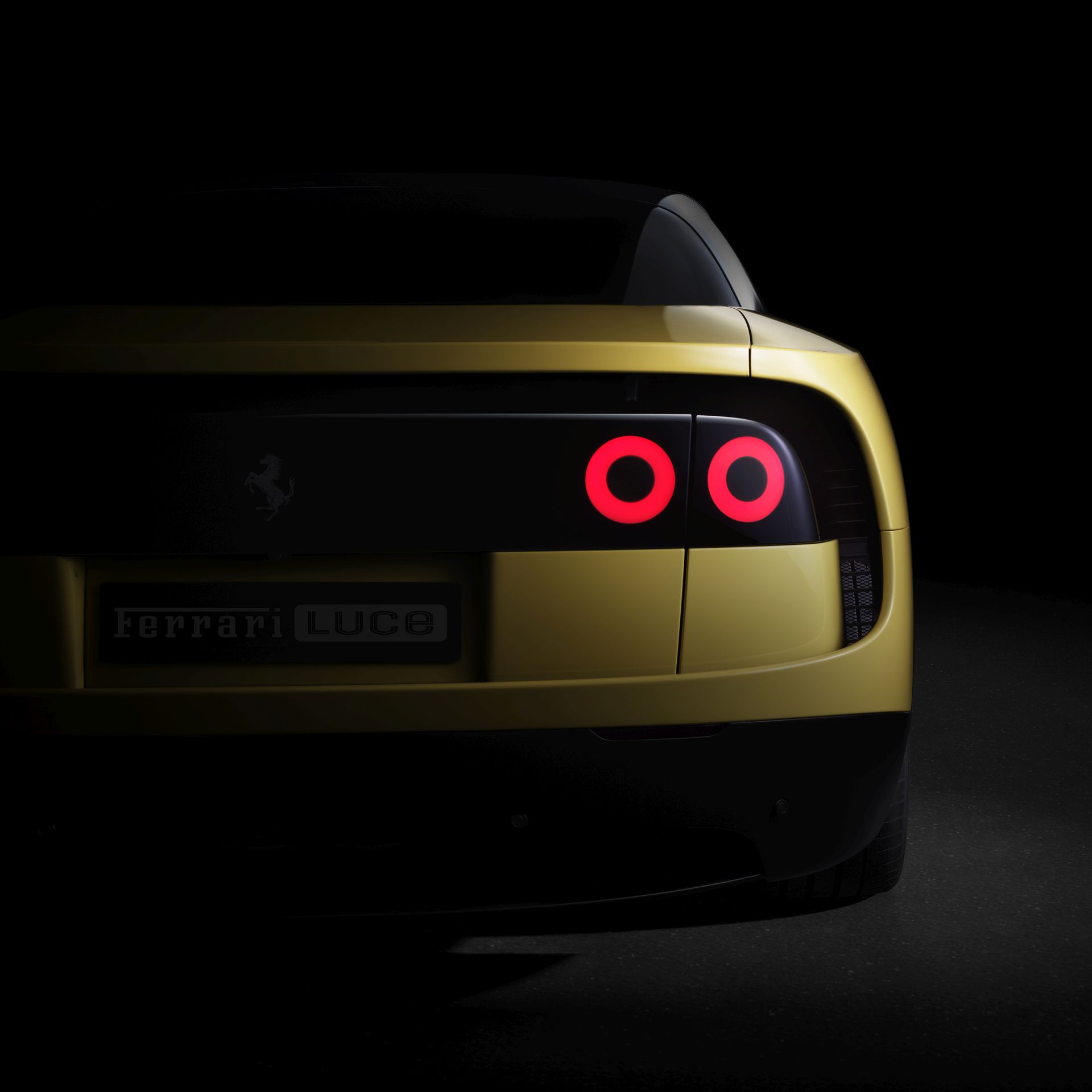
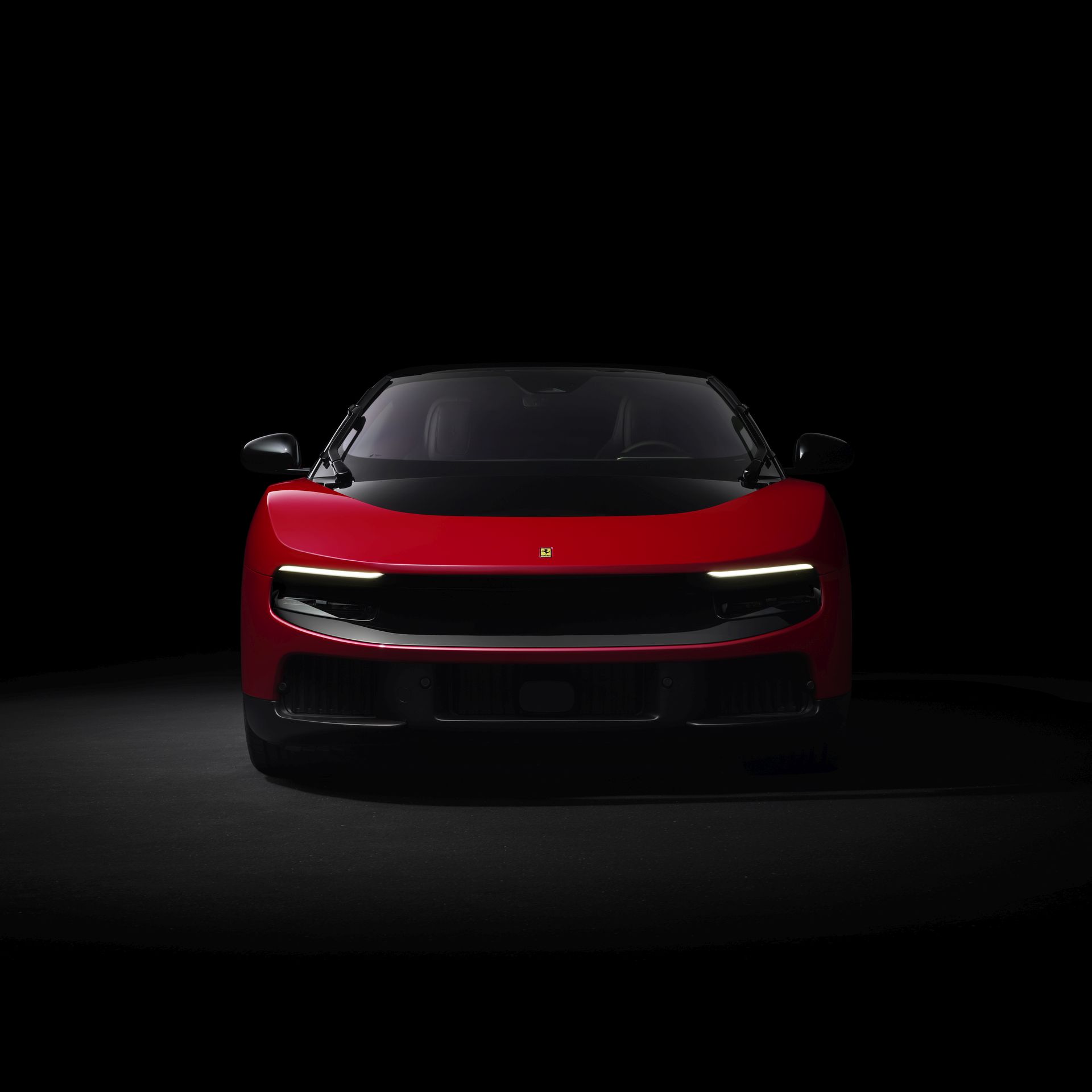
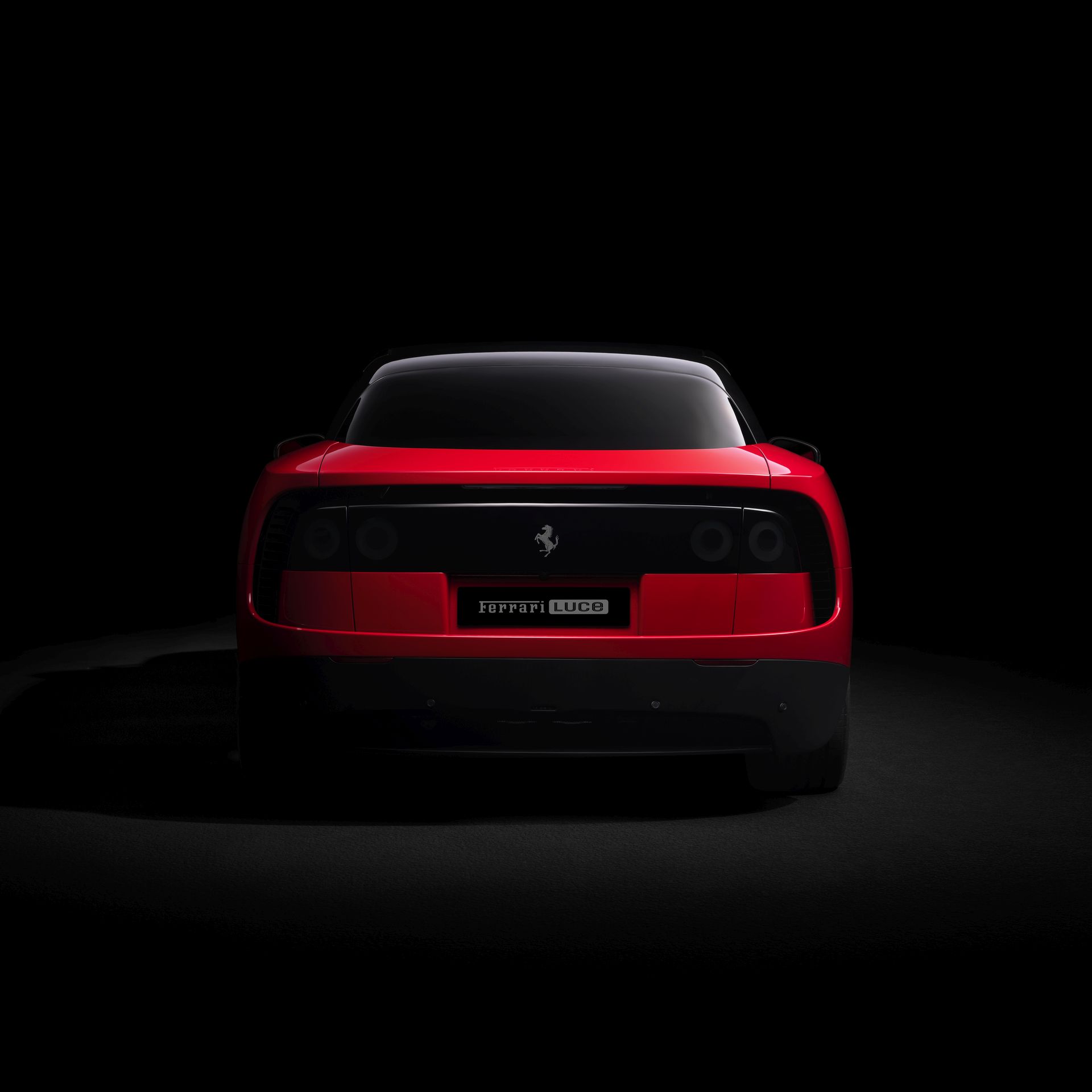
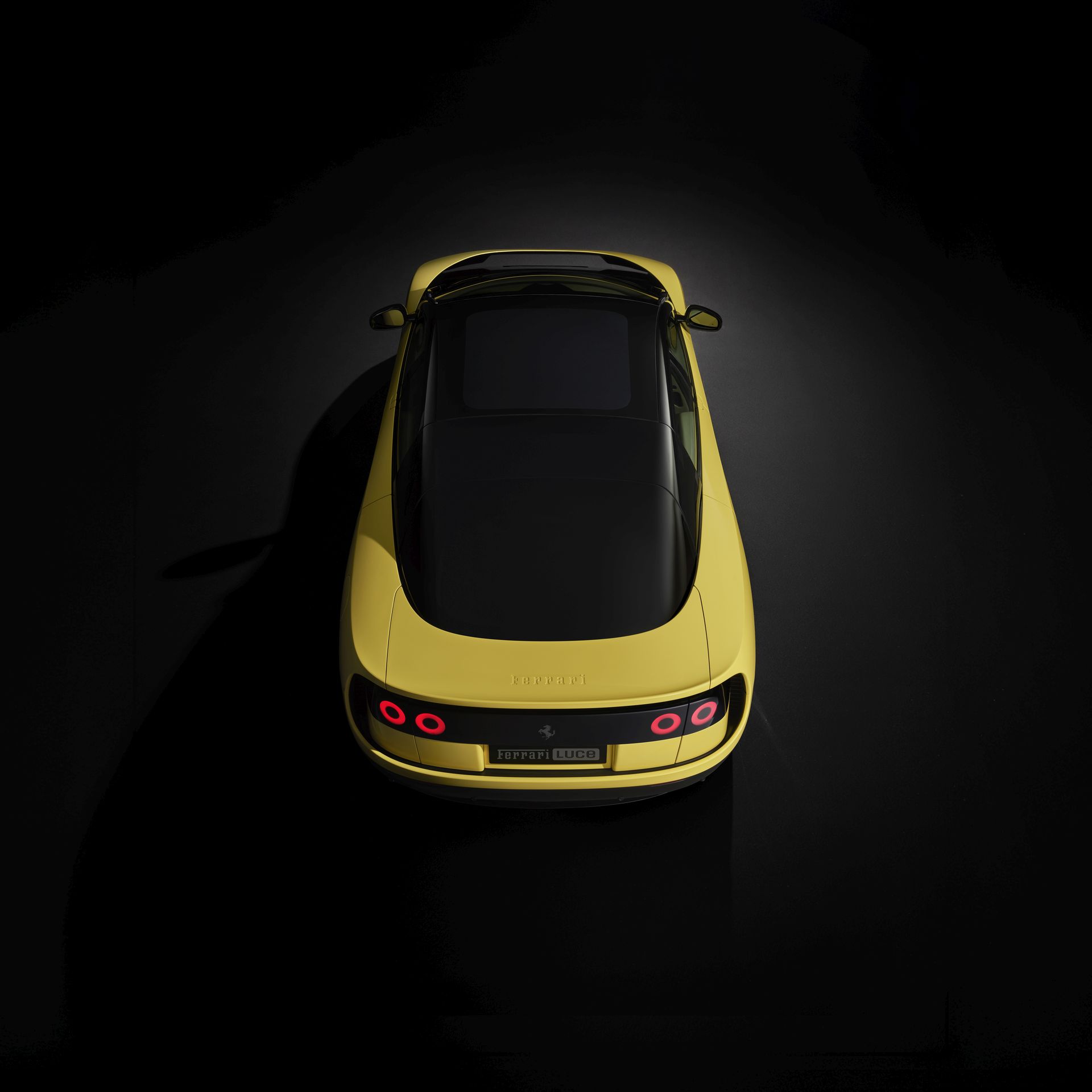
Design is one of the car’s defining departures from Ferrari convention. LoveFrom was given unusual creative freedom at the beginning of the project, working with the Ferrari Design Studio led by Flavio Manzoni during development. The result is described around simplification, smooth surfaces, and a continuous glass house. The car’s profile is shaped by a shell-like cabin volume and floating aerodynamic elements at the front and rear. The transparent light panels are integrated into the main surfaces, while the rear lighting references the 360 Modena and 458 Italia.
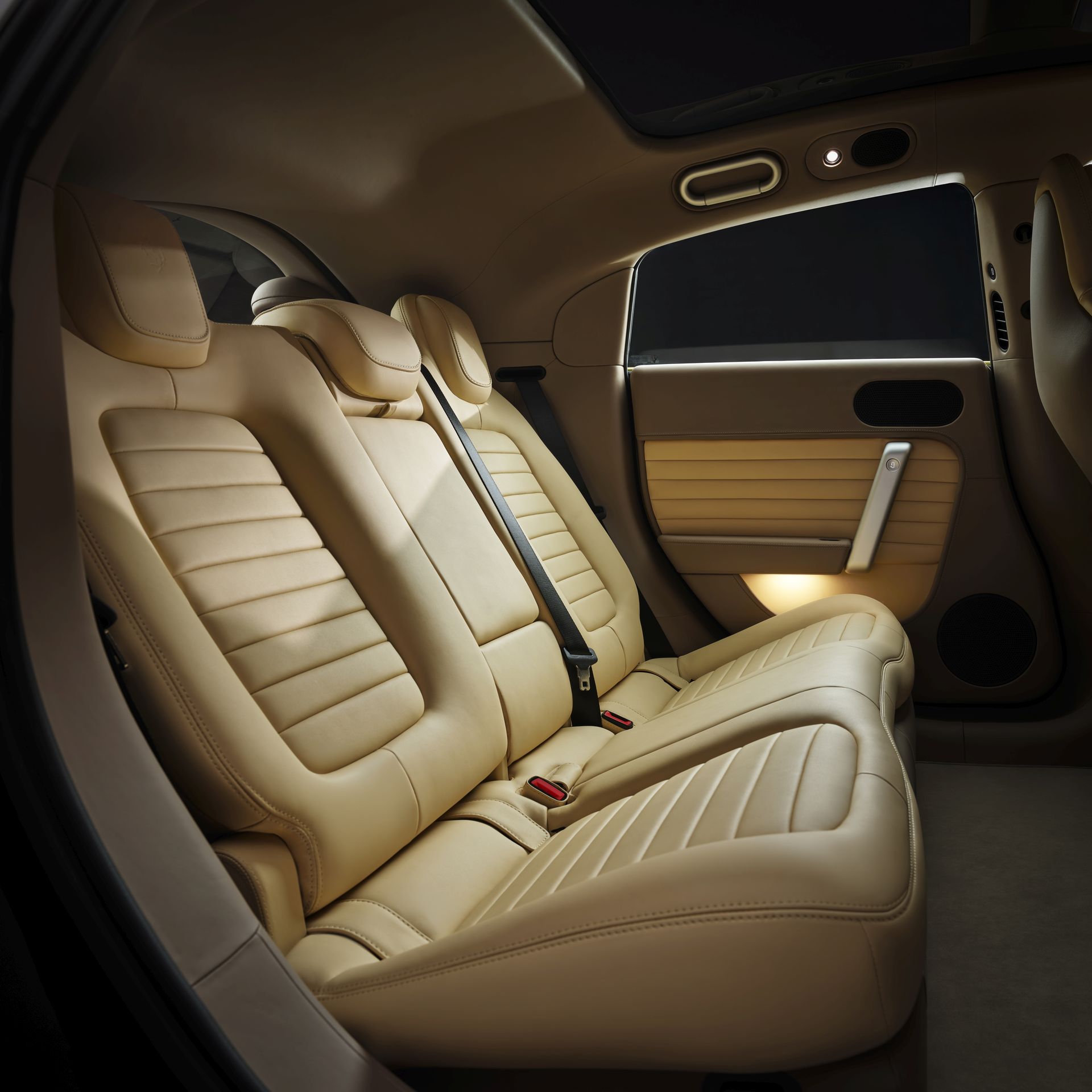
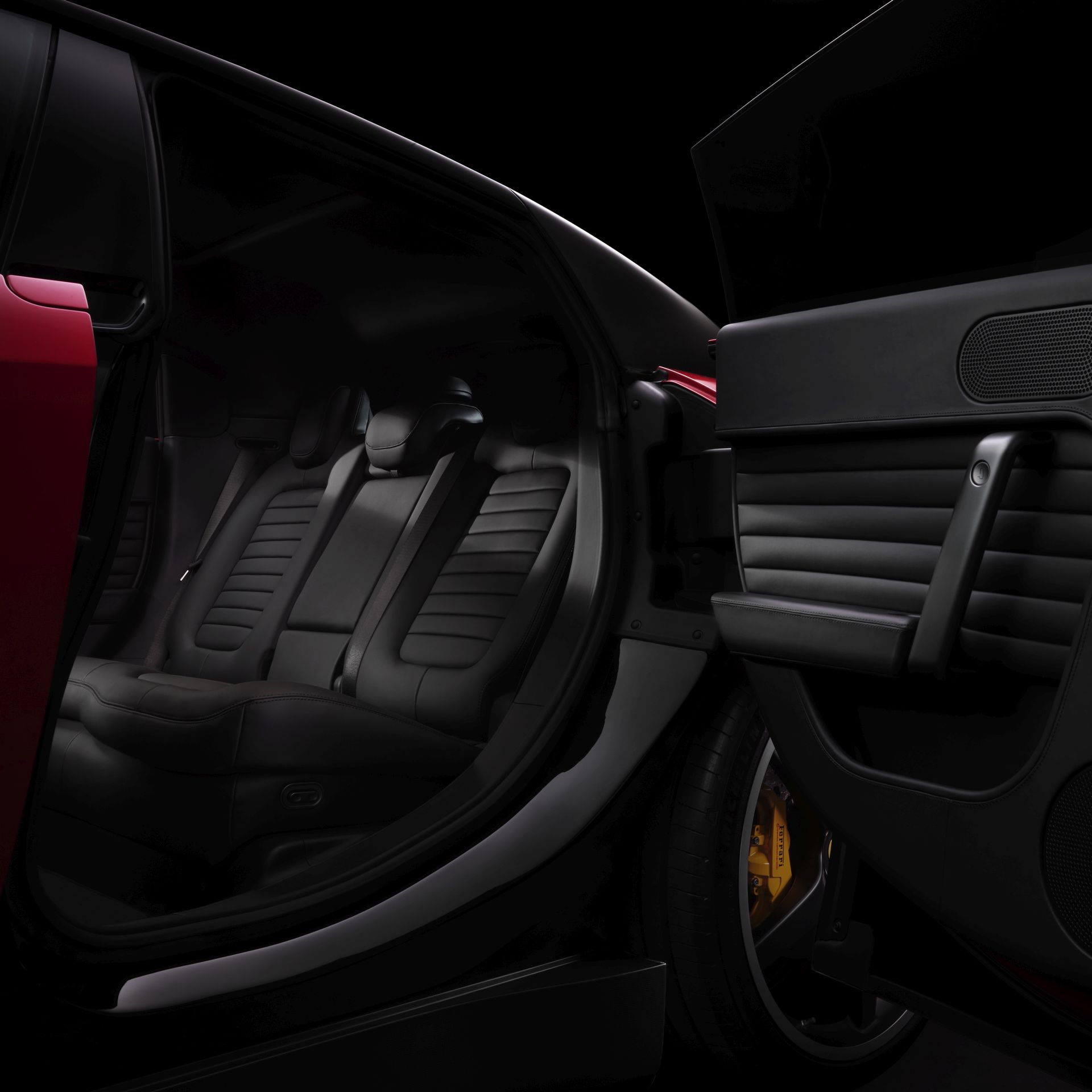
The Luce is also the second four-door Ferrari and the first Ferrari with five seats. Its electric architecture removes the constraints of a front-mid engine and rear transaxle layout, allowing a flat interior floor and a more open cabin. Ferrari describes the interior as a single clean volume, with the exterior, cabin, and interface sharing one design language. The wheels are another visible marker of the car’s technical character: 23 inches at the front and 24 inches at the rear, the largest staggered wheel diameters yet used on a series-production Ferrari road car.
Inside, Ferrari has placed unusual emphasis on tactile controls. The Luce combines mechanical buttons, dials, toggles, switches, and paddles with OLED displays developed with Samsung Display. The binnacle moves with the steering wheel, and the instrumentation combines digital elements with physical dials and glass lenses. The central control panel can pivot for the driver and front passenger, while climate controls remain physical. Ferrari has also introduced a glass key using Corning Gorilla Glass and an E Ink display, which the company identifies as a world first in an automotive application.
Sound has been treated as a technical system rather than a synthetic layer. Ferrari uses a precision accelerometer in the rear axle housing to capture vibrations from the electric axles, then filters, equalises, and amplifies them. The company compares the principle to an electric guitar amplifier, with sound taken from the mechanics rather than generated artificially. The system varies according to the e-Manettino position and paddle use, with external and internal amplification. Ferrari says this allows the car to move from near silence in Range mode to its most expressive sound setting in Performance.
Aerodynamics received a five-year development programme, including around 6000 CFD simulations, 250 hours of scale-model wind-tunnel work, and 80 hours with a full-scale car. Ferrari says the Luce achieves the lowest drag coefficient in the history of its road cars, although the precise figure is not listed in the supplied material. The car uses active aerodynamic grilles, a suspended front wing, rear airflow management, active ride-height adjustment, aerodynamic wheels, and a flat underbody formed partly by the structural battery.
The Luce also introduces a new connectivity layer built around MyFerrari Luce, a dedicated app that works alongside the existing MyFerrari App. Navigation is supported by Google Maps and Apple Maps with EV route planning, using live vehicle data such as battery state and charging algorithms. Remote functions include charge management, lock status, location, pre-conditioning, and vehicle monitoring, with some features varying by market.
Ferrari’s after-sales programme for the Luce includes the seven-year Genuine Maintenance plan already offered across the range, covering routine maintenance for the first seven years. The Luce also receives an eight-year warranty for key electric powertrain components, including the front and rear axles, battery, and charging system.
For knowledgeable Ferrari and supercar enthusiasts, the Luce is notable because it is not simply a familiar Ferrari formula translated to battery power. Its architecture changes the possible relationship between packaging, torque control, cabin space, sound, and driver interaction. The technical package is extensive: four independent electric engines, structural battery integration, active suspension, independent rear-wheel steering, advanced regeneration, a new VCU, and a deliberately tactile interface. Ferrari has placed the Luce alongside its existing powertrains, making it a new branch of the range rather than a substitute for the others.