
More than four decades separated the original Apollo GT from the appearance of the Apollo Monza Spyder. During that period, Milt Brown remained involved with sports cars, racing machinery and low-volume automotive design. The Monza was not created as a continuation model or a reproduction of one of his earlier cars. It was an entirely new roadster, developed to demonstrate what his Berkeley-based company, Apollo Design, could offer manufacturers and private clients searching for a bespoke automobile.
Brown’s work in this field had started long before the Monza project. In the late 1950s, he designed and produced the Apache Formula Junior, a Fiat-powered single-seater intended for competition against cars such as the Stanguellini. His next major programme produced the Apollo 3500GT and 5000GT. Introduced during the 1960s, these grand tourers combined Buick engines with steel bodies manufactured in Italy by Intermeccanica. A total of 88 Apollo cars was completed before production ended.
Brown returned to road-car design with the Apollo Verona in 1981. The Verona used a conventional ladder chassis and could accept several engines, including Chevrolet V8s, Buick V6s, BMW straight-sixes and Jaguar V12s. Forty-four examples were produced in the United States in component form, while a licensed German version continued the concept with BMW mechanical components. The Monza Spyder followed this sequence as Brown’s next Apollo-branded roadster.
Apollo Design had been established in 2002 to undertake concept-car construction, limited-production vehicle engineering and individual commissions. The Monza was its first complete automobile. Brown introduced the finished prototype at the 2005 San Francisco Custom Car Show, where it received first-place honours in the sports-car category. The car was subsequently displayed at Concorso Italiano, where it received an Editor’s Choice award from Motor Trend Classic.
Although the Monza appeared during an era of increasingly technical supercars, its shape referred to a much earlier period. Brown studied pre-war Alfa Romeo and Maserati sports cars, with particular attention paid to the Alfa Romeo 8C 2900 series. These references were not applied to an existing chassis or replica body. The Monza was drawn as an original design with the proportions of a compact two-seat roadster.
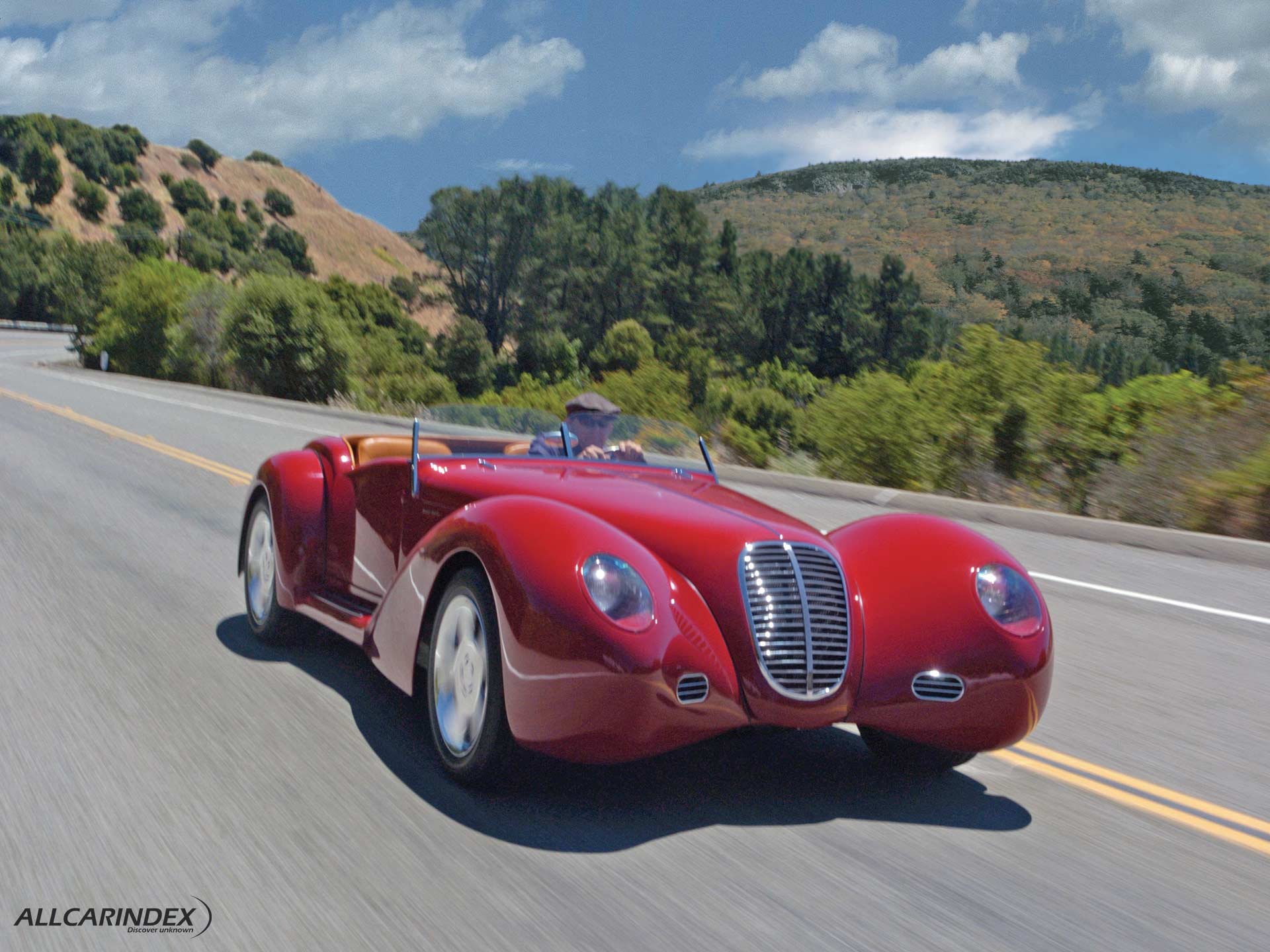
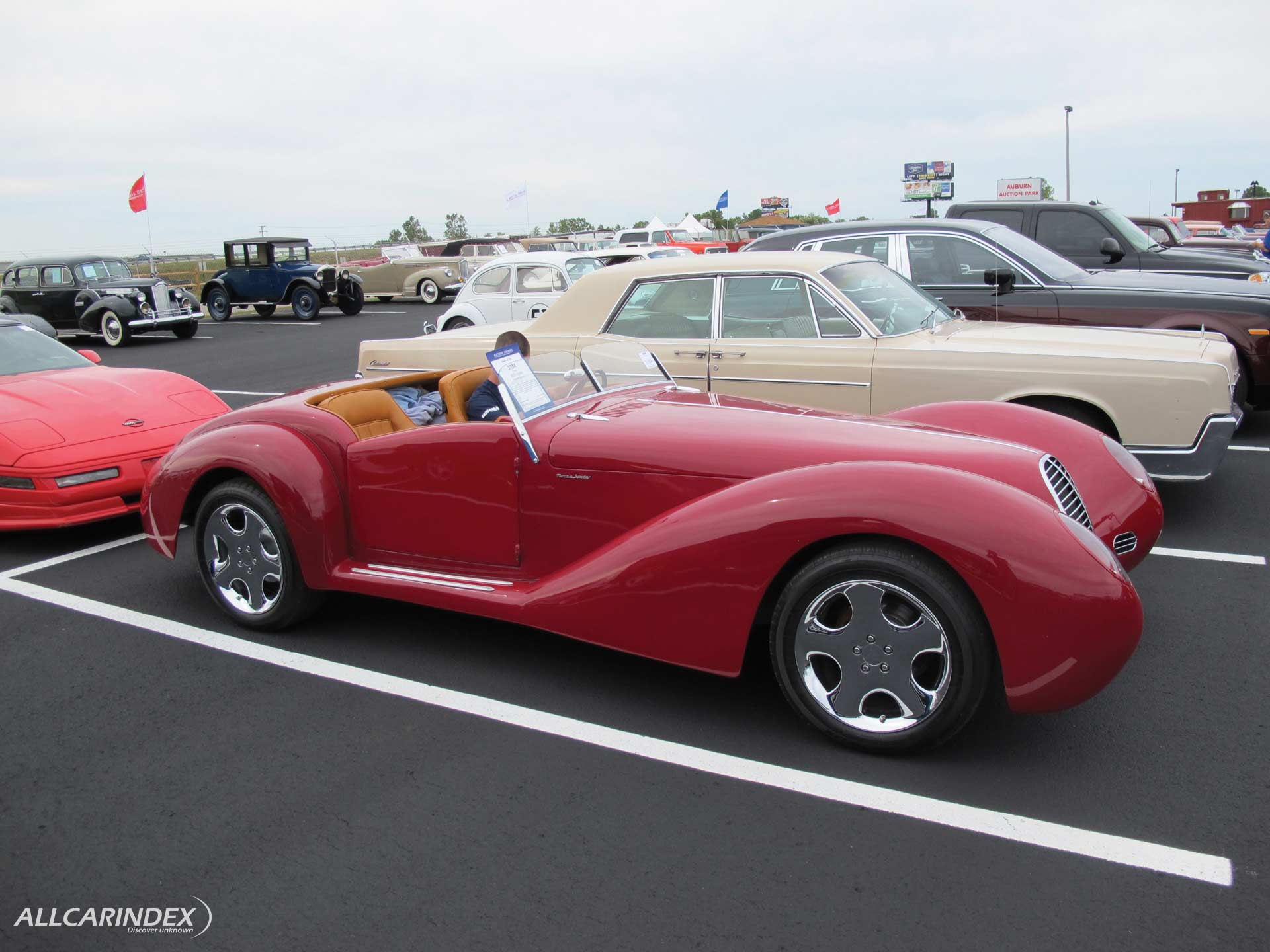
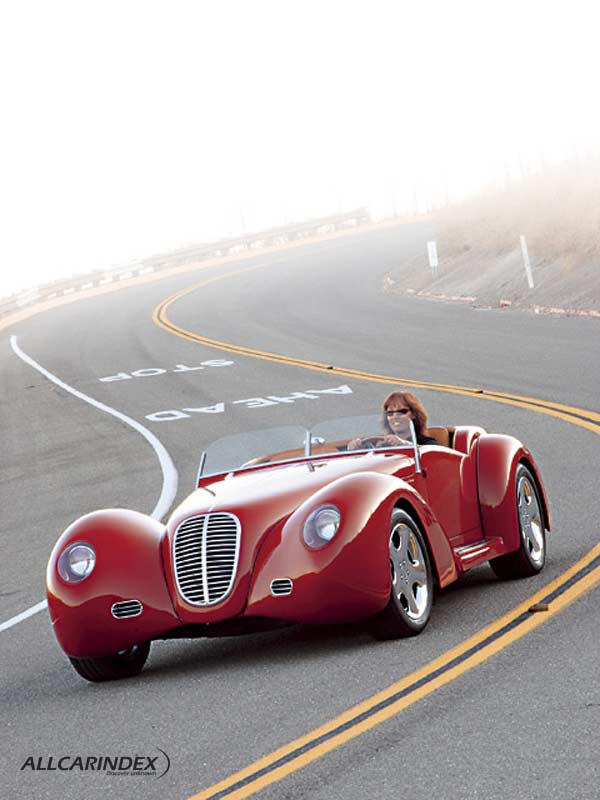
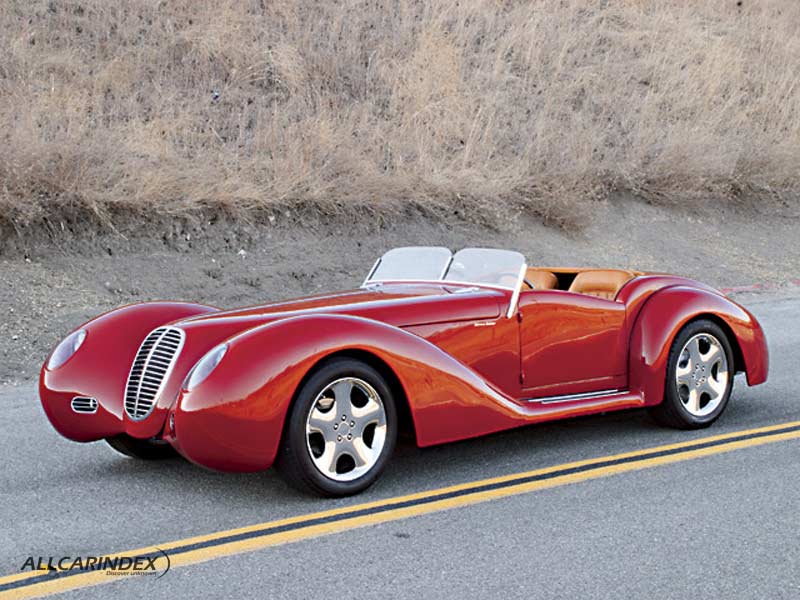
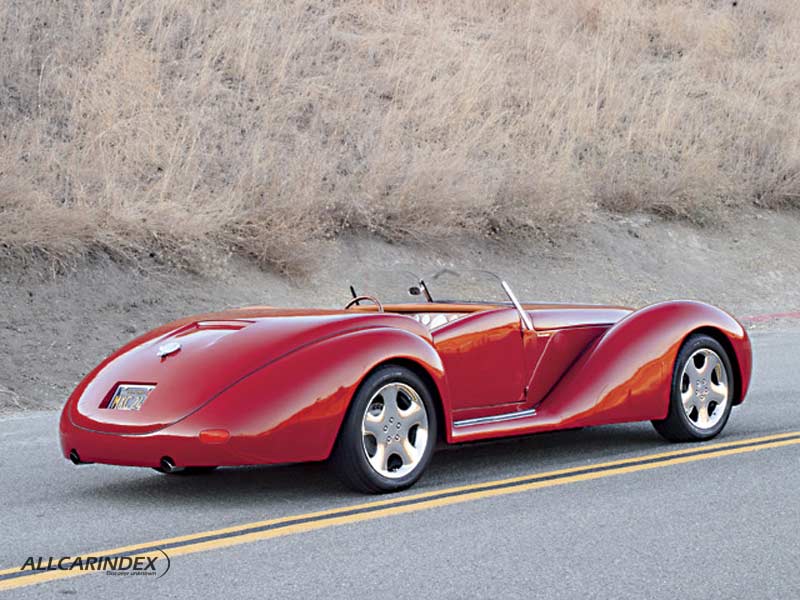
Its front section was organised around a narrow vertical grille positioned between covered headlamps. Separate front wings rose above the wheels before descending towards the doors, while the rear wings continued into a rounded tail. The steeply inclined split windscreen followed the form associated with Brooklands-type racing screens. At the rear, flush lighting and a recessed registration-plate area introduced contemporary details without changing the basic roadster layout.
There was no conventional luggage compartment accessed through the tail. Instead, storage space was provided behind the seats. The exposed fuel filler, polished windscreen frame and plated exterior trim remained visible parts of the design rather than being concealed within the bodywork. Modern 17-inch wheels completed the prototype, contrasting with the proportions and surface treatment taken from pre-war competition cars.
The red development car was built with a reinforced fiberglass body. Steel and balsa-core elements were incorporated into the structure so that the shape could be modified during construction. Brown’s plans for customer cars specified aluminium bodywork, together with changes to details such as the wings, wheels and headlamp arrangement. The production proposal was therefore not based on making exact copies of the prototype. Each completed car was intended to receive its own combination of body details, paint, trim and interior materials.
Beneath the body was a traditional ladder frame constructed from four-inch rectangular cold-rolled steel sections and four crossmembers. The engine was positioned well behind the front axle line, producing a stated 50:50 weight distribution. The wheelbase measured 104 inches.
The suspension combined an independent front arrangement with a four-link rear system. Period auction specifications listed front disc brakes and aluminium rear drums, along with variable-ratio power steering. The arrangement reflected the intended use of the Monza as a road-going sports car rather than a competition prototype.
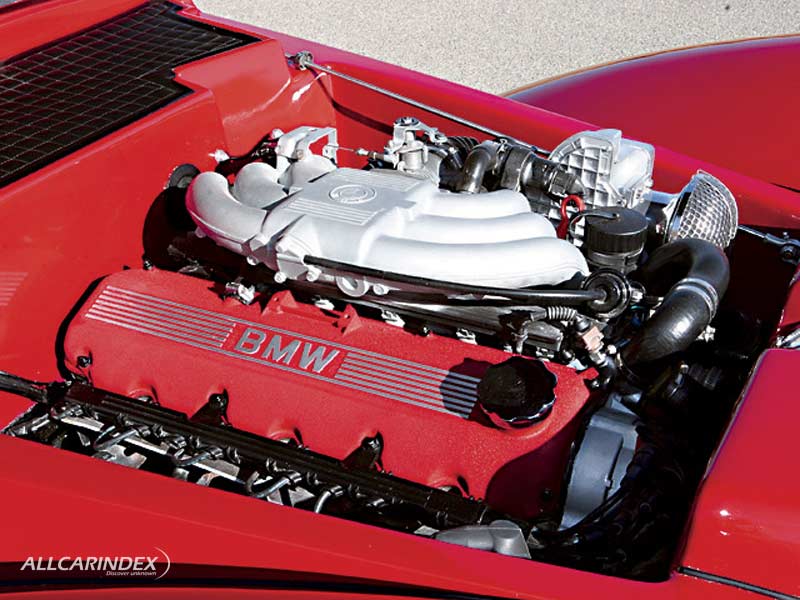
Brown selected BMW components for the drivetrain. The engine came from a BMW 325i and retained its 2.5-litre, inline-six configuration. Stainless-steel exhaust headers, a less restrictive intake and a revised engine-management chip raised output to 227 hp. Installed in a car weighing 2,310 lb, the modified engine produced a stated 0–60 mph time of 5.6 seconds.
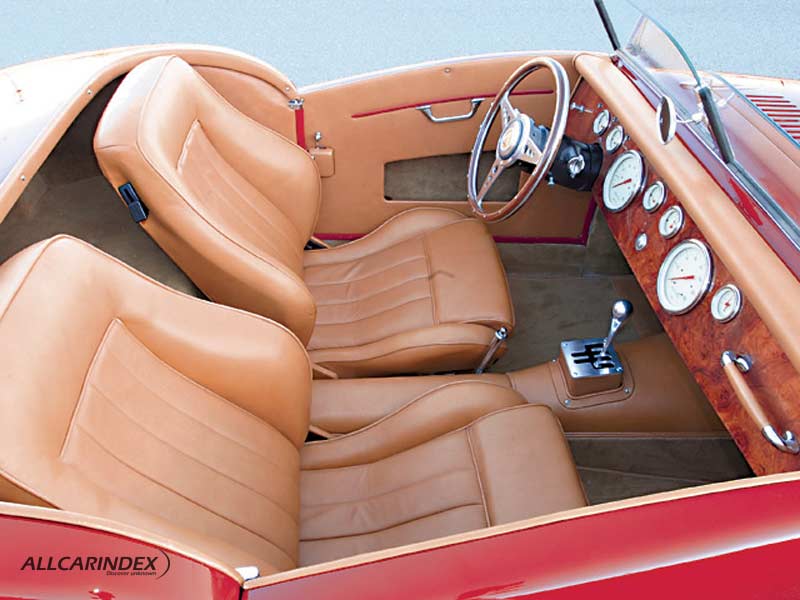
Power reached the rear wheels through a five-speed BMW gearbox. The standard shifting arrangement was replaced by a gated mechanism, while the lever and knob were machined as a single component from 6061 aluminium. Rather than fitting a high-output engine unsupported by the rest of the chassis, the project used the moderate weight of the car to obtain its performance.
A contemporary road test described a rigid passenger compartment with little cowl movement over uneven surfaces. The steering was reported as precise but initially over-assisted, a characteristic Brown subsequently corrected. The test also recorded tight panel fit and doors that required little effort to close. These observations concerned the prototype chassis; the proposed customer cars were expected to use a revised platform with newer steering, braking and suspension components.
Inside, the mechanical basis was largely hidden behind materials associated with traditional coachbuilding. The seats were trimmed in tan glove leather, and the dashboard was finished in Carpathian elm. Classic Instruments manufactured a dedicated set of analogue gauges carrying Apollo identification.
The long doors were designed to simplify entry and exit, while their inner panels included storage pockets. Period descriptions placed the maximum intended driver height at approximately 6 ft 3 in, although the auction catalogue quoted 6 ft 2 in. Pedal position, seat padding and controls were among the features Brown planned to adjust for individual owners.
Apollo Design’s proposal extended beyond different upholstery colours. Customers were to be offered sports, touring or racing seats and a choice of dashboard finishes that included elm, burl walnut, leather and engine-turned aluminium. Exterior changes could alter the character of each car through different wheel designs, rear-wing treatments, paint combinations and brightwork.
The planned production chassis was expected to incorporate either BMW or Corvette suspension and braking hardware. Engine choice was also left open. Contemporary material discussed configurations ranging from four to twelve cylinders, while more specific proposals included a 333 hp BMW M3 engine, a 4.4-litre BMW V8 and a 400 hp, 6.0-litre Chevrolet Corvette LS2. Prices for cars similar to the prototype were expected to begin at approximately $246,000. Construction was to be contracted to specialist craftsmen, with only a small number completed each year.
The red Monza remained the development prototype for this proposed series. Its fiberglass construction, original BMW drivetrain and early chassis distinguished it from the aluminium-bodied customer cars described in Apollo Design’s plans. Contemporary auction documentation continued to present it as the first and only Monza prototype.
An announcement published in 2005 stated that the car would be sold at one of the Scottsdale auctions in January 2006. It later appeared at RM’s Auburn Fall sale in 2011, offered without reserve. Although built and introduced as a 2005 Apollo Monza Spyder, the auction catalogue included an addendum explaining that the vehicle’s title recorded it as a 1964 model.
The Monza therefore represented several stages of Brown’s career within one project. Its name connected it with the Apollo GT and Verona programmes, its construction demonstrated the services offered by Apollo Design, and its BMW drivetrain provided the modern mechanical package around which the prototype was developed. Only one example of this original specification was produced.