
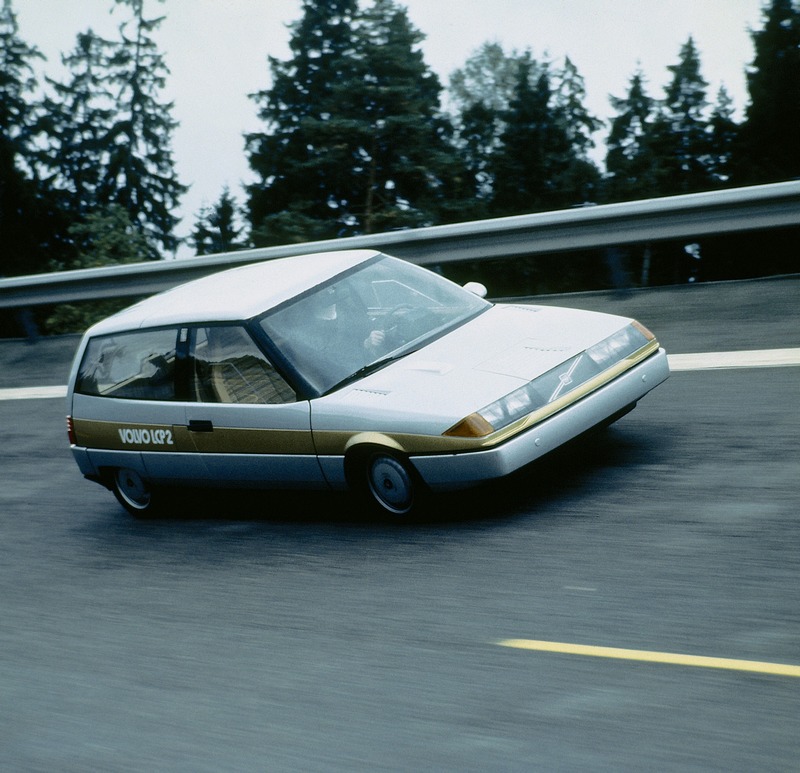
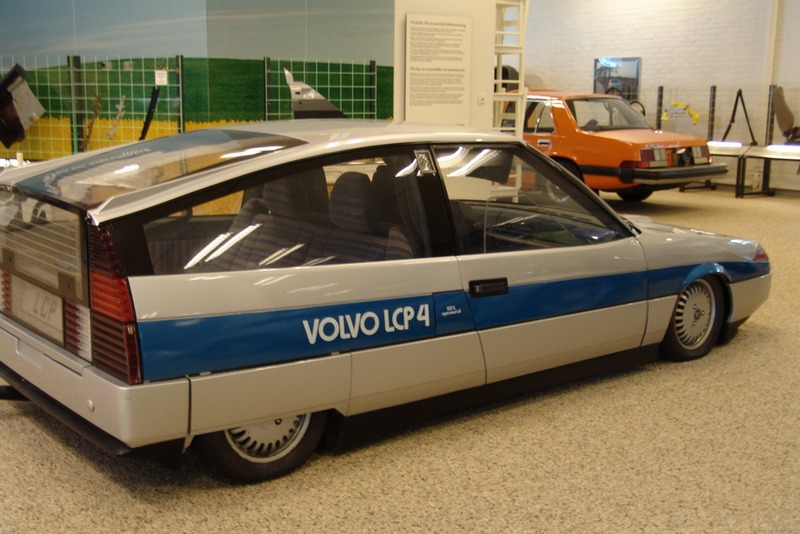
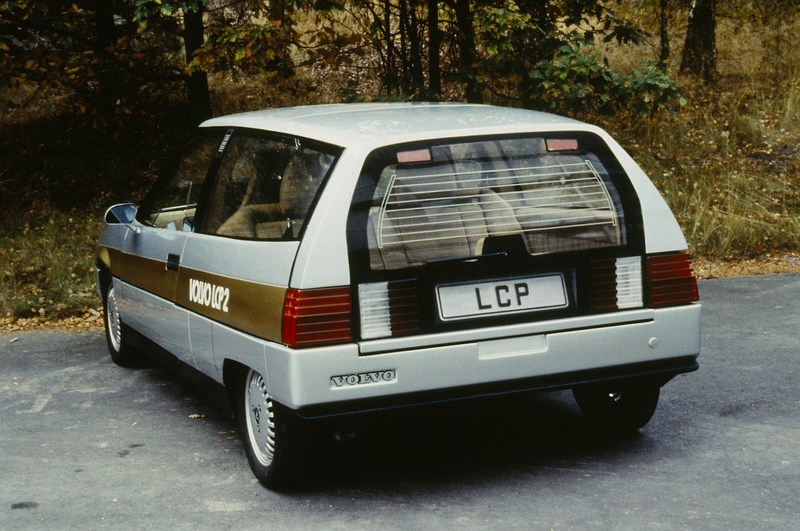
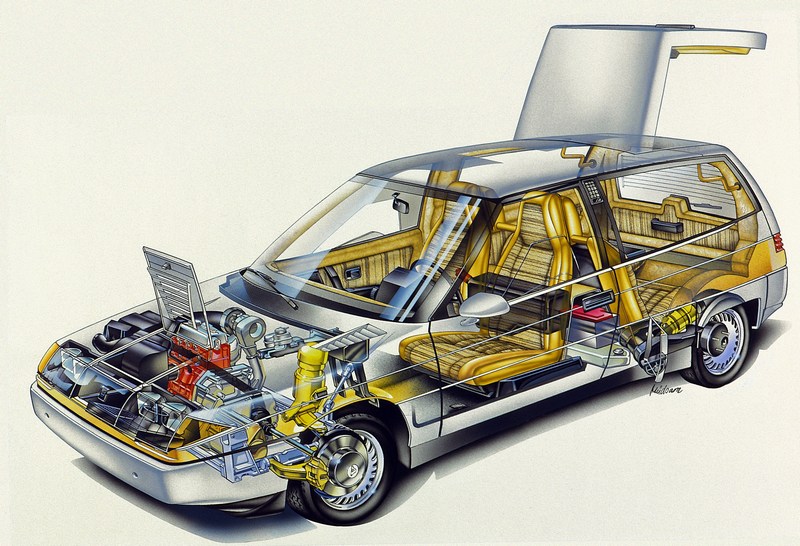
The Volvo LCP 2000, an abbreviation for Light Component Project, was a research vehicle project shown by Volvo in the summer of 1983 at its headquarters in Gothenburg, presented to an international gathering of research engineers. By autumn of that year the cars had reached full driveable condition and were made available to the press for test drives. Four examples were built, differing in their drivetrains, and offered as either a compact sporty estate or a fastback coupe with two side doors. The design, featuring an aerodynamically rounded front with covered headlights, a rising beltline, a contrasting side stripe running into the taillights, and a wraparound lower bumper, was developed by the British firm International Automotive Design in Sussex, chosen ahead of proposals from Bertone and an American studio.
The project began at the end of 1979 in response to anticipated raw material and energy shortages, led by Rolf Mellde, formerly associated with Saab rally success, heading a six-person Volvo team supported by specialist outside firms from eight nations. Targets included a kerb weight of no more than 700 kg, average consumption of 4 l/100 km, a top speed of 150 km/h, 0-100 km/h in 12 seconds, and a drag coefficient of 0.3 or below. The layout used front-wheel drive, two seats plus an occasional 2+2 arrangement with rear seats facing backward for aerodynamic and safety reasons, and a large boot.
Three engines were developed: a Volvo/Ricardo turbo-diesel three-cylinder of 1279 cc (also cited as 1269 cc) producing 52-53 hp and 94 Nm; an Elko (Ludwig Elsbett) turbo-diesel three-cylinder of 1387 cc fitted with turbocharging and intercooling, producing 88 hp and 165 Nm; and a Volvo/Renault four-cylinder petrol unit of 1397 cc producing 70 hp and 108 Nm. A continuously variable transmission was developed with Kongsbergs Vapenfabrikk in Norway, though prototypes initially used a five-speed gearbox. Construction used a load-bearing aluminium platform rather than a unibody, with a magnesium subframe, magnesium components including the engine block and wheels totalling around 50 kg, aluminium cylinder heads and brake components, GFK bodywork, polycarbonate glazing, and carbon-fibre door surrounds. Dry weight was 645 kg. Wind-tunnel testing at Mira produced drag coefficients between 0.25 and 0.28, and the cars passed American frontal, side, and rear crash-test standards. Dimensions were a 2540 mm wheelbase, 1650 mm width, 1300 mm height, and 3980 mm length, with a top speed of 185 km/h using the Elko engine.